
Issue Briefs

Environment and Energy

Integrated Solutions for Interconnected Challenges: Building Climate Resilience in India

Rising global temperatures are intensifying climate hazards at an unprecedented rate. In 2025, the global annual average temperature increase reached 1.44 ± 0.09 °C (2.60 ± 0.17 °F) above the pre-industrial period, making it the third warmest year on record (Berkeley Earth, 2026). India, among the most climate vulnerable countries, experienced extreme weather events on 99 […]

Foreign and Defence Policy

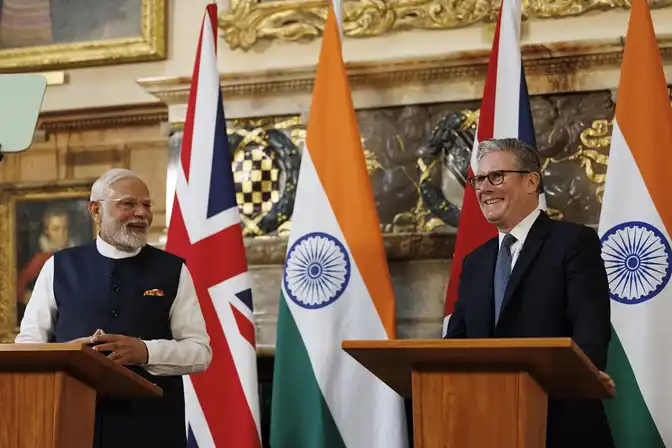
India-UK Vision 2035: A Renewed Defence Partnership

Introduction The recently concluded India-UK Free Trade Agreement (FTA) is a landmark deal in the growing strategic partnership between the two countries across wide-ranging industries including fintech, renewable energy, education, and even film production. A key aspect of this revitalised economic relationship is the ‘India-UK Vision 2035’, a roadmap for renewed defence partnership, forging a […]

From TADA to PRAHAAR: Evolution of Counter-Terrorism Law and Policy in India

Framing India’s Counter-Terrorism Strategy Terrorism has been an unfortunate reality in India for several decades. In India’s independent history, the country faced several threats from internal and external terrorism groups, claiming several lives. The leadership of India has strongly opposed and drafted laws against terrorism over the decades to confront these unprompted instances of violence. […]

Environment and Energy

Natural Hazards Do Not Wait—Neither Should Risk Insurance or Innovative Financing for Recovery

Introduction In 2025, India experienced extreme weather events on 99% of the days from January to September, resulting in over 4,000 deaths, with heavy rains, floods and landslides accounting for the majority of these fatalities (Down to Earth, 2025). The recent floods in Punjab have affected nearly 20 lakh people with more than 3 lakh […]

Integrating Non-Conventional Data Sources for Evidence-Based Policymaking and Better Governance in India 

Data is one of the fundamental pillars of evidence-based decision-making, fostering trust through transparency, which ultimately leads to better governance in a country. While developed economies have already established a robust national statistical ecosystem to ensure a steady flow of data within their countries, developing nations still struggle to generate even the most basic statistical […]

State of Mind: The ‘Lunatic’ in Prisons 

The prevalence of mental illness in prison settings is significantly higher than in the general population—approximately 3-6 times higher, as available evidence indicates (Andersen, 2004; Fazel & Danesh, 2002; Lamb & Weinberger, 1998; Taylor, 2010; Wilper et al., 2009). Substance use disorders (alcohol, nicotine, cannabis, opioid, cocaine, benzodiazepines and other drugs) are the most frequently […]

The Use of Psychological Risk Assessment Tools in Sentencing

Introduction In criminal justice systems around the world, the question of “How dangerous is this person?” often shapes the outcome of sentencing and parole decisions. While several countries have turned to structured psychological tools such as the Historical-Clinical-Risk-20 (HCR-20) and Static-99 to bring transparency and consistency to these high-stakes judgments, India continues to rely almost […]

Economy and Society

Up in the Air! Policy Overview of the Indian Drone Industry

Introduction Perhaps nothing exemplifies the delicate balances that are crucial for successful growth of any industrial sector than the Indian drone industry, today. Caught between the disruptions and innovations of the fourth industrial revolution, risk and possibilities of an emerging nation in an increasingly globalizing world, policy regulation and liberalization, and, economic growth and inclusion—the […]

Economy and Society

Did the PLI Reap what it Sowed? An Intermediate Case Study of the Textile Sector

Introduction As India grapples with leveraging its manufacturing prowess to fuel its growth story with challenges emerging on the fronts of international trade, a closing demographic window, concerns of premature deindustrialization, etc., an analysis of what has been called as her de facto Industrial Policy—Production Linked Incentives, announced in 2020—becomes imperative (Dhar, 2024). Launched to […]

Governance

Navigating India’s AI Governance Framework: Future Directions in #AIforAll

From healthcare to education, Artificial Intelligence hype has covered every sector, with some calling it the greatest breakthrough since splitting the atom (Price, 2023) while others leveling up their research on existential threats due to AI (Future of Life Institute, 2023). Whether or not AI is worth the hype, constant and steady progress is being […]

Economy and Society

India’s Shifting Demographics and the Challenge of Elderly Care

India’s demographic dividend—having more working-age than dependent population—provides for a significant opportunity for economic growth. The median age of the country stands at 28.4 years, which is significantly lower than countries like China, Japan, and the USA, which stand at 39.6, 49.4, and 38.3 years respectively (United Nations, n.d.). India’s current working age (15 to […]

Environment and Energy

Yamuna Rejuvenation: Reimagining the Future of the River

Background  The Yamuna River is deeply entrenched in historical & cultural significance but yet it stands as a stark contrast to its once life-giving form. Flowing through the heart of Delhi, the river has been overwhelmed by decades of unchecked urbanisation, untreated sewage, and now stands as a reminder of the ecological consequences of urbanization […]