Background
The Supreme Court in India has taken a welcome step in securing the rights of persons with disabilities (PWD) and their rehabilitation. On January 19, 2024, the SC ordered all states to report on prevailing conditions across all homes for abandoned children and adults with intellectual or psychosocial disabilities within eight weeks.
India has a large number of custodial institutions for people with disabilities along with government-recognised national institutes. These facilities, although necessary, have witnessed an increase in the number of abandonment of people with disabilities from their families. Furthermore, the cases of nonconsensual institutionalization of persons with disabilities have also severely threatened their agency and right to life. Women with disabilities are further subjugated and suffer from two-fold discrimination, often becoming targets of sexual violence. Alarmingly, almost 93% of women and girls with disabilities in India have and continue to be denied their respective rights and bodily autonomy. The risk of such occurrences in custodial institutions could be affected by the conditions and the continued exposure to threats for prolonged periods.
The ongoing case of Justice Sunanda Bhandare Foundation vs. Union of India has led to much legal discourse on the band of rights of disabled persons concerning education, social security, employment, and preferential allotment of land. Since the case’s original filing date in 1995, major changes have taken place such as the new Rights of Persons with Disability Act of 2016 which broadened the understanding of disability by considering social, environmental and relational factors along with biological factors. Similarly, the act adopted a larger purview and more progressive approach to defining mental illnesses. The Act was amended again in 2024 however, the case remains pending with many states not having reported on the prevailing conditions as ordered by the SC earlier in the year.
Institutionalisation of Disabled Persons and Rehabilitation
According to the last Census of 2011, India has around 2.68 crore people with disabilities, which make up 2.21% of the total population. More than a decade later, limited data sources are available on disability. Disability data is essential to monitor the quality and outcomes of policies for PWD.
A Human Rights Watch report conducted across six cities in India, found that more women and girls with psychosocial or intellectual disabilities have been forcibly institutionalized. In fact, out of the 200 interviews conducted, none of the women & girls were admitted with their free will. Another major concern was the long-term warehousing, where many of the interviewees could have been forced to live in the home for decades.
Overcrowding of these institutions is often another challenge to the maintenance of quality of care and hygiene. The report takes the example of the Asha Kiran, a government institution for people with intellectual disability in Delhi which houses nearly double the capacity of its residents.
Since this report in 2014, the government has taken little initiative in prioritising the need to develop alternatives to long-term residential-based care for PWD. While some local community support and independent living initiatives are available in India; NGOs mostly support these and have not been met with adequate & inclusive policy framework. It is also important to note that these may not be accessible to people living in smaller cities or coming from low-income families.
While the need for institutionalising is not to be taken for granted for caretaking purposes, it is equally important to address the need for deinstitutionalisation, family reunification, community integration and support systems all of which cannot be built without policy & government support in managing the rights of PWD. The SC’s order takes the first step in recognising the need for state-wise data to create momentum for these good practices in different parts of India.
Rights of Disabled Persons: Policy & Legislation
The Convention on the Rights of Persons with Disabilities (CRPD) has been a central tenet of India’s recognition of the rights of persons with disabilities. Although India had the Persons with Disabilities Act of 1995, the Act primarily focused on welfare-based approaches to rehabilitation, education, employment, reservation, etc. yet it overlooked provisions of rights of individuals with disabilities.
A rights-based approach was required which led to the Rights of Persons with Disabilities (RPwD) Act, 2016 which aligned with the CRPD. The 2016 Act took a more holistic approach and progressed into covering a wider range of aspects of care including housing, healthcare and protection for women and children with disabilities. Under the new rules, the shift a supported decision-making model as promoted by the CRPD did not occurt. It also did not create a framework to guarantee the right to legal capacity and the right to independent living. Even with the new law in place, the gaps in enforceability and specificity persisted creating room for ambiguity in the protection of the rights of PWD.
addressing these shortcomings, the Rights of Persons with Disabilities (Amendment) Rules, 2024, builds on the 2016 Act, with enhanced clarity and stronger enforcement mechanisms. It introduces an explicit framework for supported decision-making, emphasizing respect for the autonomy, will, and preferences of individuals. Measures to ensure independent living are strengthened, including mandates for accessible housing, transportation, and deinstitutionalisation, favouring community-based living arrangements.
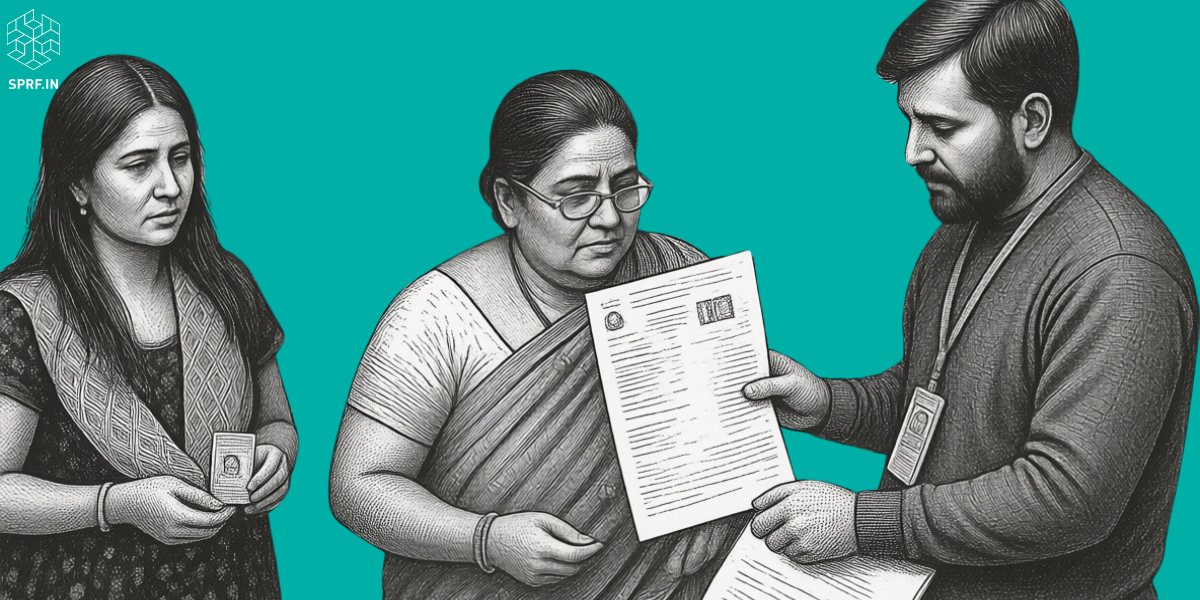
The amendment also adopts an intersectional lens, acknowledging the compounded challenges faced by women, LGBTQ+ individuals, and persons with disabilities from marginalized backgrounds, which earlier laws did not address adequately. It also refines the process of applying for the disability certificate and Unique Disability Identity card.
While India has made substantial progress in transitioning from a welfare-based to a rights-based approach for persons with disabilities, the amendment underscores the importance of robust implementation and active participation of the disability community to ensure that these rights are effectively realized.
Conclusion
India has come a long way in protecting the rights of its people with disability however, safeguards are needed not only for welfare but also to create bodily autonomy, deinstitutionalisation and community care. The strong familial and community structures in India offer significant potential for advancing the deinstitutionalization for PWD.
Unlike many Western countries, India does not have a significant history of large-scale institutionalisation of persons with disabilities. Instead, the care of individuals with disabilities has traditionally been managed within familial and community settings. There is community care.
By creating a policy structure that aligns with these natural support systems, India can foster greater inclusion, independence, and dignity for persons with disabilities, aligning with the principles of the CRPD. Strengthening community-based care models, empowering families with resources, addressing systemic barriers, and focusing on creating supported or assisted decision-making are the first few steps in ensuring PWD protection, especially those forced into endless warehousing. Women and children with disabilities face a unique set of challenges and a new intersectional approach under the 2024 Rules could fill the gaps in policy and practice to create agency and support in determining the needs for reproductive rights. This approach not only aligns with global best practices but also reflects India’s rich cultural ethos of collective care and responsibility, offering a sustainable path toward a more inclusive society.