Over the past few years, Delhi’s Yamuna River has emerged as a significant topic in the context of urban environment, public policy, and social life. Despite being one of India’s major rivers, the Yamuna’s condition in the capital region reflects a profound environmental crisis.
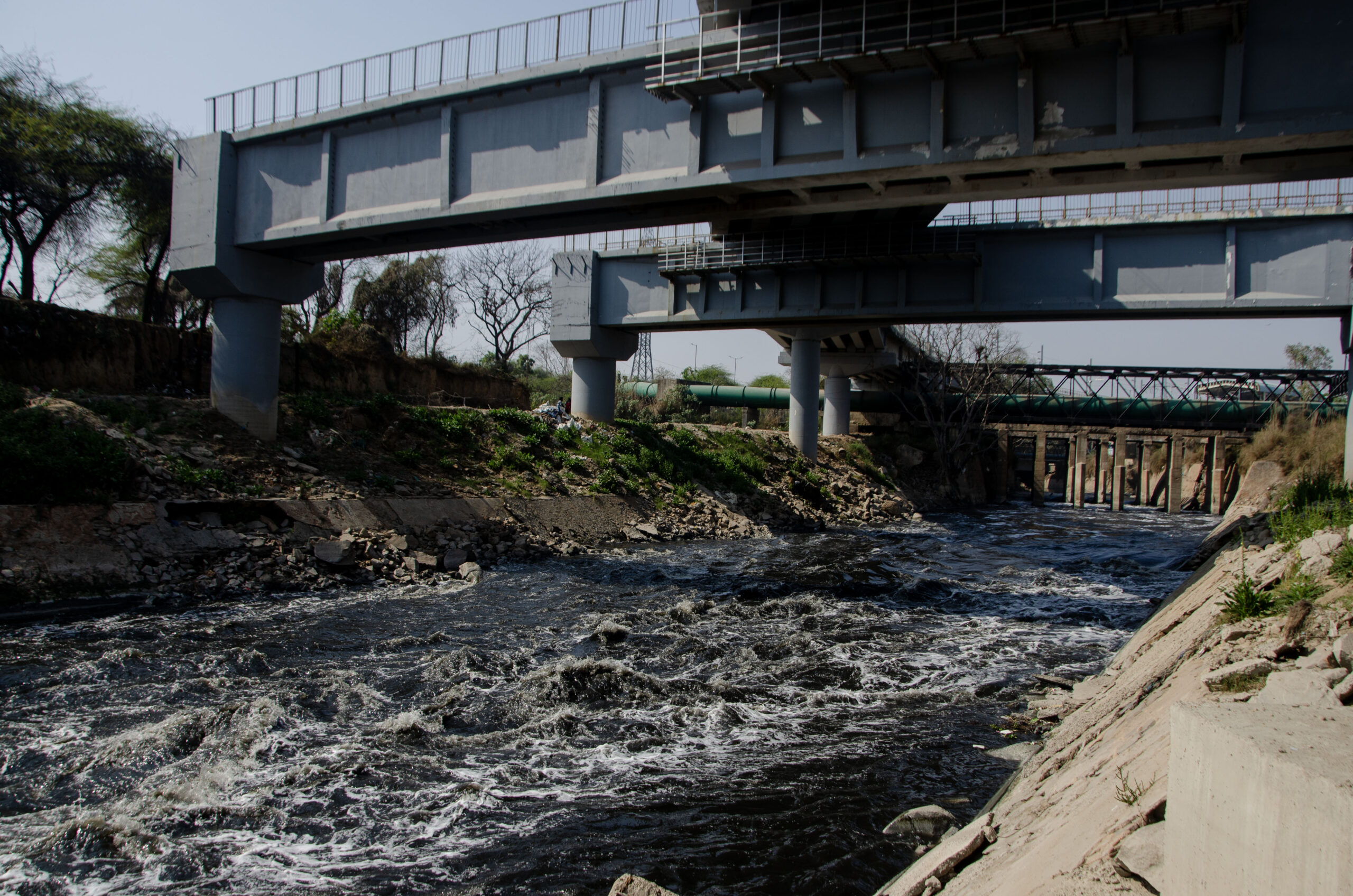
Nafagarh Drain near Metro Line, Delhi. February 2026
This photo story visually captures the evolving realities of daily life, religious beliefs, and pollution along the river. Since 2019, various stretches of the Yamuna River in Delhi have been documented, attempting to understand the city’s changing relationship with the river.
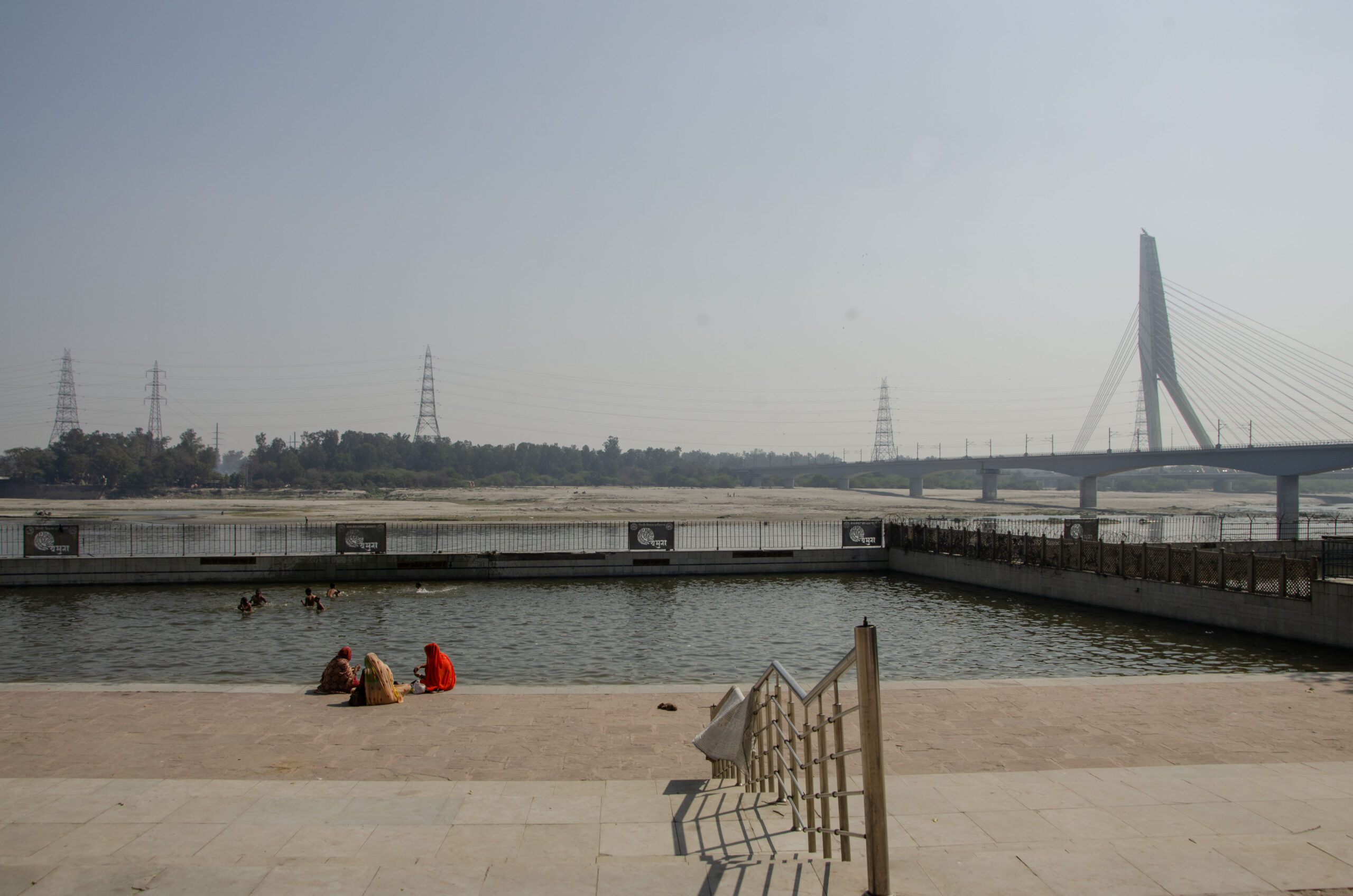
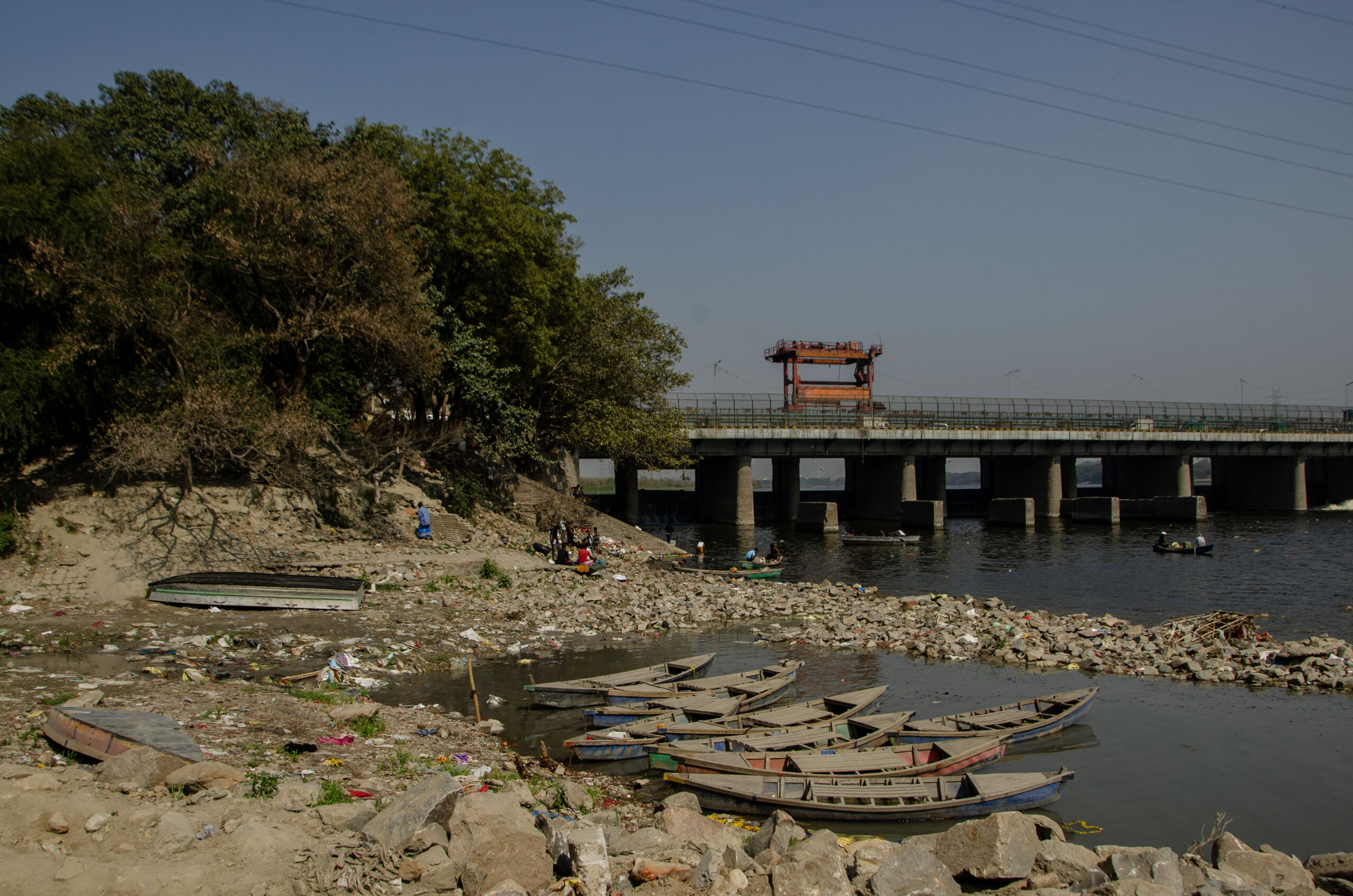
Signature Bridge, Yamuna River, Delhi | February 2026
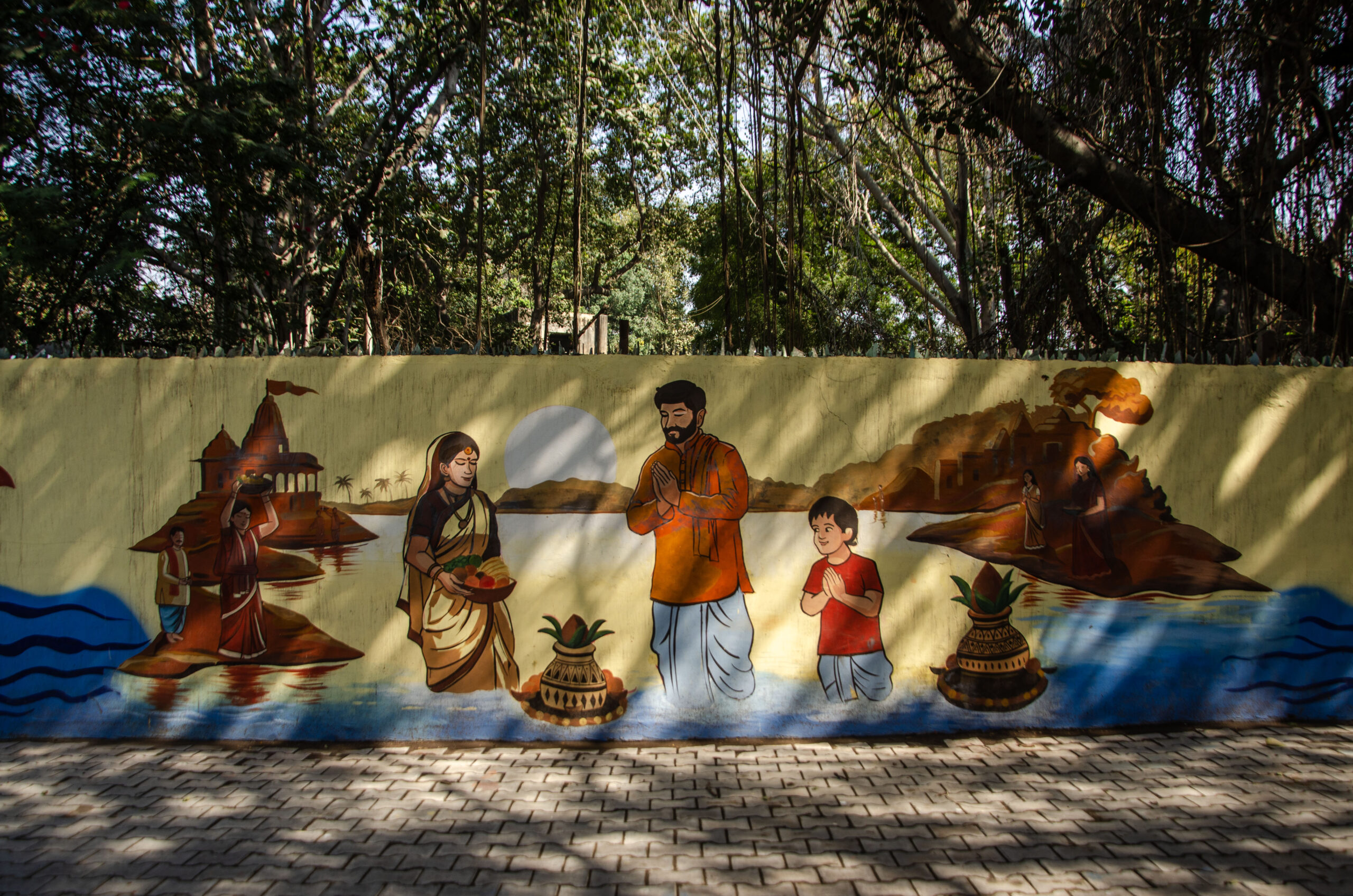
Sur Ghat, Yamuna River, Delhi | February 2026
A wall painting at Sur Ghat reflects ongoing beautification efforts along a stretch of the Yamuna marked by ecological stress.
This project also has a personal and geographical background. Growing up in a different social environment in the Gorakhpur region of Uttar Pradesh, there was an early understanding that rivers are not just natural resources but an integral part of cultural and community life.
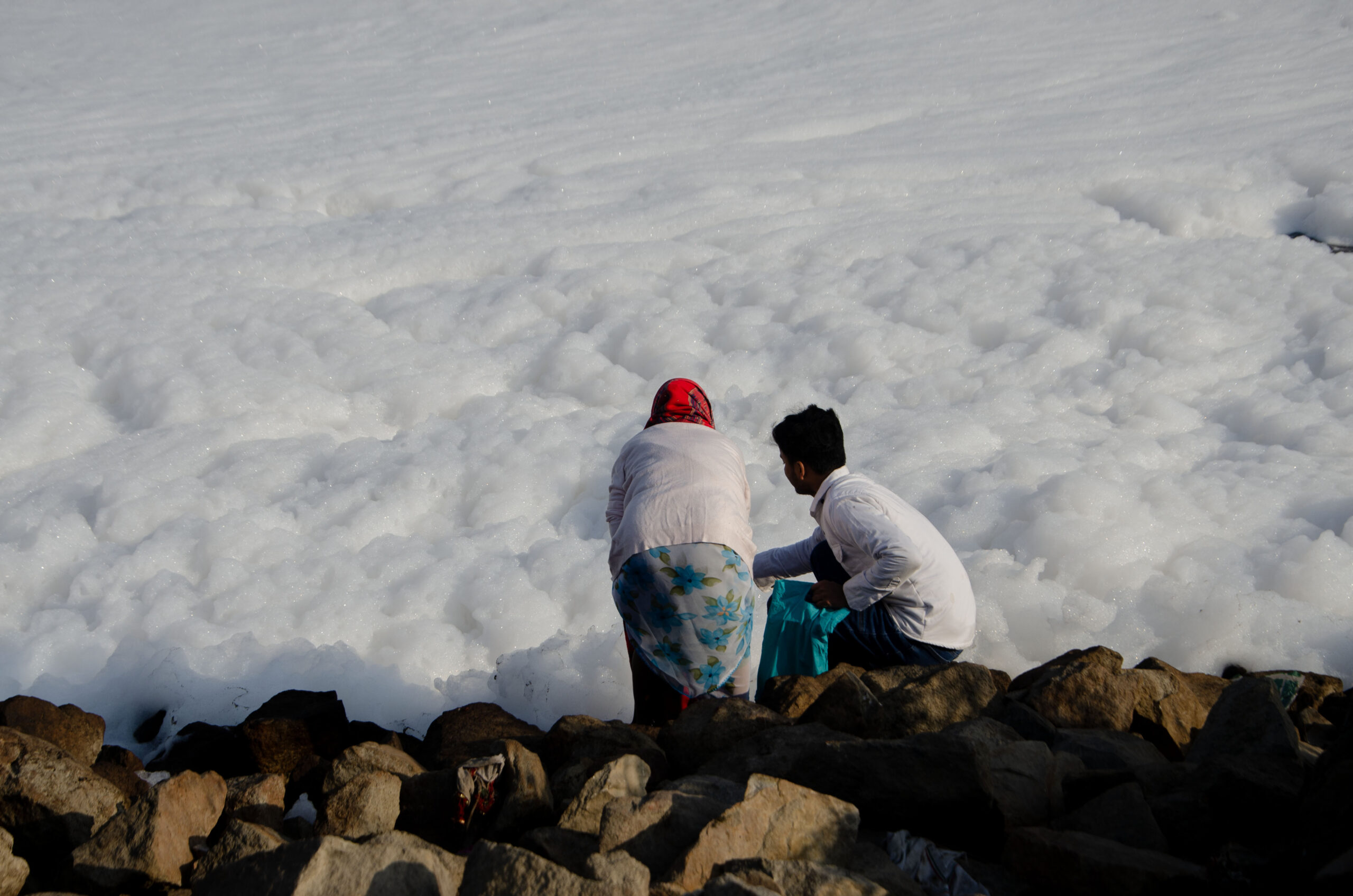
Kalindi Kunj, Yamuna River, Delhi | February 2026
A woman and child perform a ritual in the Yamuna at Kalindi Kunj as foam gathers on the water’s surface nearby.
In rural and semi-urban contexts, the river is deeply intertwined with agriculture, livelihoods, bathing, religious rituals, and community activities.
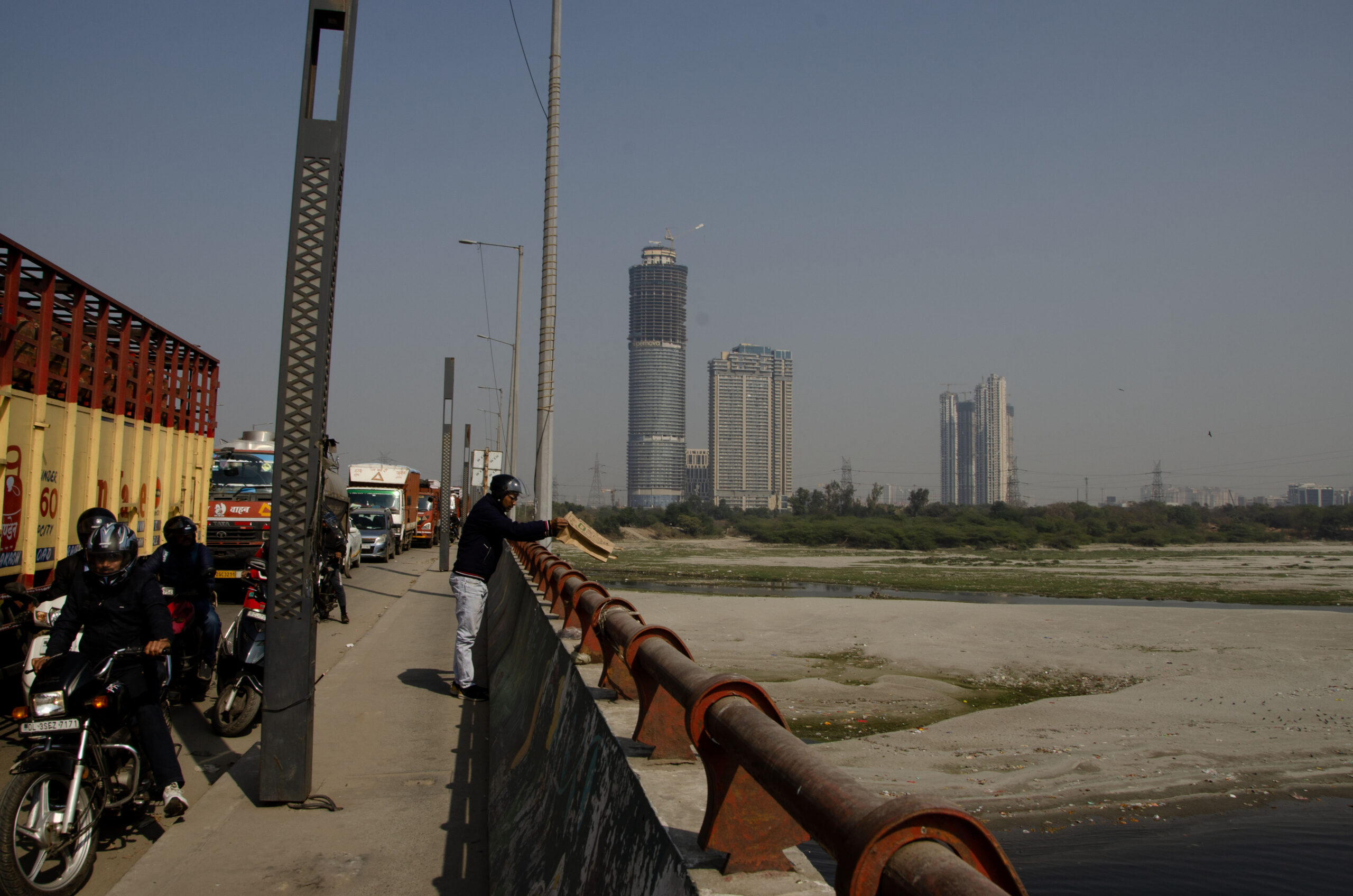
Kalindi Kunj, Yamuna River, Delhi | February 2026
A man discards puja materials into the Yamuna from a bridge at Kalindi Kunj, reflecting ritual practices that intersect with the river’s already stressed condition.
Later, while working as a private engineer in Delhi-NCR, when I observed the Yamuna River in a metropolitan context, the state of the river and the city’s treatment of it emerged as a significant question. This question became the inspiration for this long-running photographic documentation.
There are several locations along the Yamuna River in Delhi where the river’s appearance and associated activities are clearly visible. Kalindi Kunj, Nigam Bodh Ghat, Wazirabad, Sonia Vihar Pushta, and the area around Signature Bridge have been key sites in this visual journey.
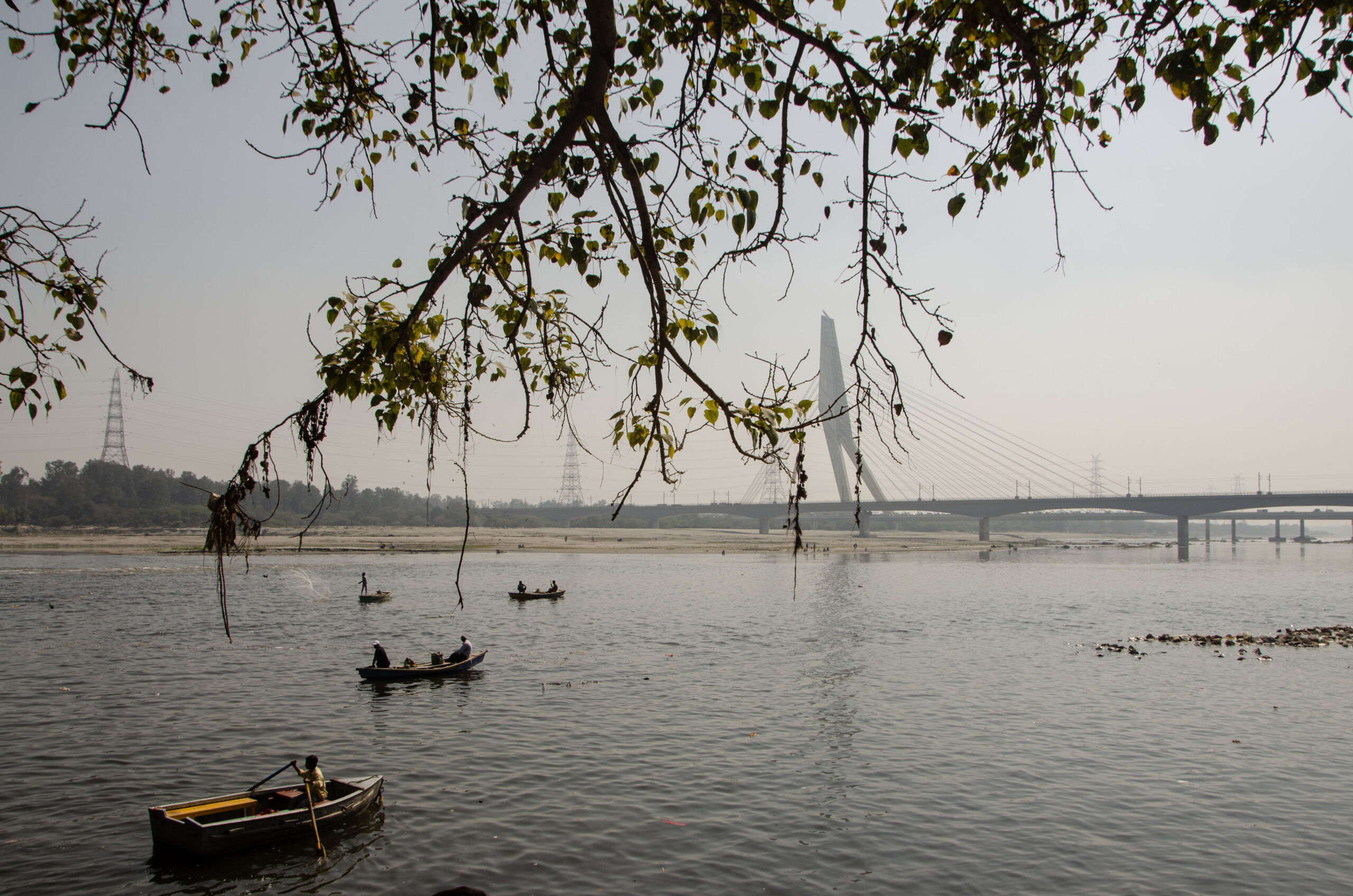
Signature Bridge, Yamuna River, Delhi | February 2026
At these locations, the river’s view is sometimes serene and beautiful, and sometimes affected by pollution and infrastructural pressures.
The landscape at Kalindi Kunj often appears serene in the morning. The soft light of sunrise falls on the river’s surface, while a layer of white foam floating on the water indicates the river’s true state.
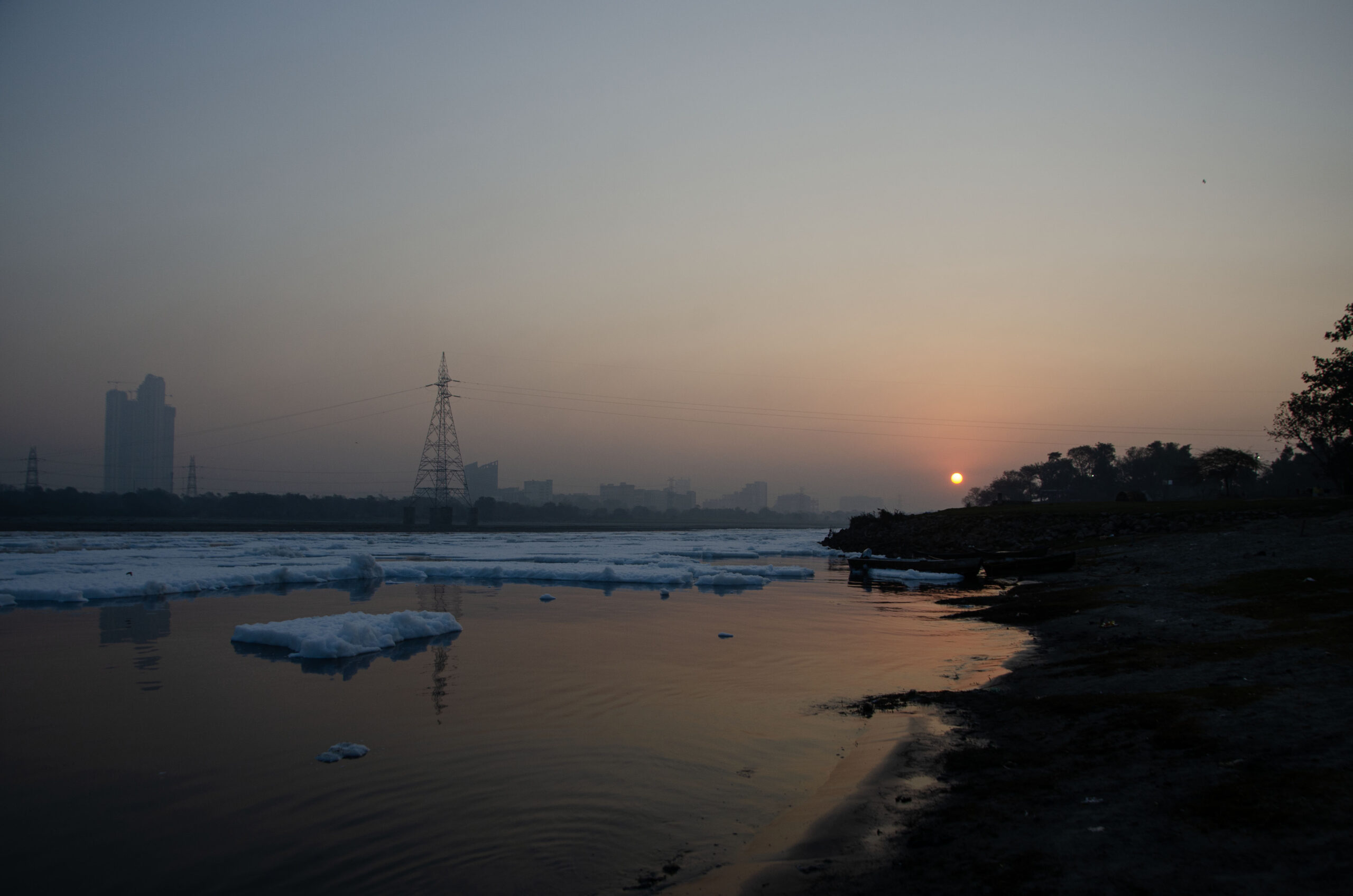
Kalindi Kunj, Yamuna River, Delhi | February 2026
In the early morning light, foam accumulates along the surface of the Yamuna at Kalindi Kunj. The visible white froth contrasts with the calm appearance of the river at sunrise, indicating the presence of untreated or partially treated wastewater. The scene reflects the ongoing gap between river rejuvenation efforts and the material condition of the water on the ground.
The small activities of daily life are also visible along the riverbank—such as boatmen preparing for their morning, locals coming to the ghat, or sitting on the banks making tea. These scenes demonstrate that, despite its pollution, the river remains a vital part of local life.
A significant aspect of the Yamuna’s pollution problem is the large city drains that flow directly into the river. The Najafgarh drain near Wazirabad is one of Delhi’s largest drains, carrying wastewater from a large part of the city.
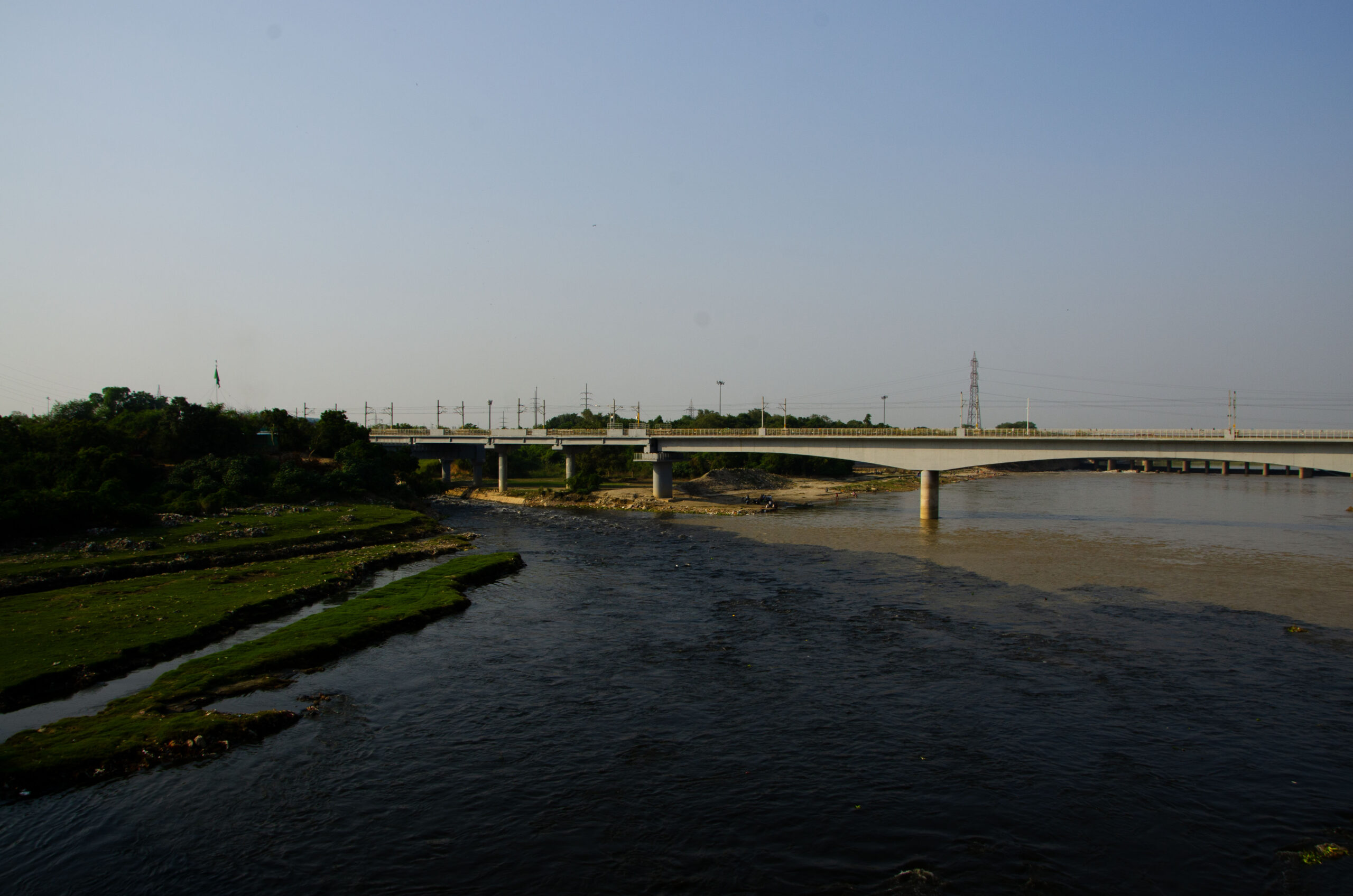
Left: Najafgarh Drain near Metro Line, Delhi | February 2026, Right: Wazirabad Barrage, Yamuna River, Delhi | February 2026
A detail view of the Najafgarh Drain flows beneath the elevated metro line, highlighting the intersection of wastewater infrastructure and urban transit corridors.
Viewed from the Signature Bridge area, it’s clear that the drain water changes colour and flow as it joins the river. Numerous small outfalls and pipelines are also visible along the riverbank, continuously discharging wastewater into the Yamuna.
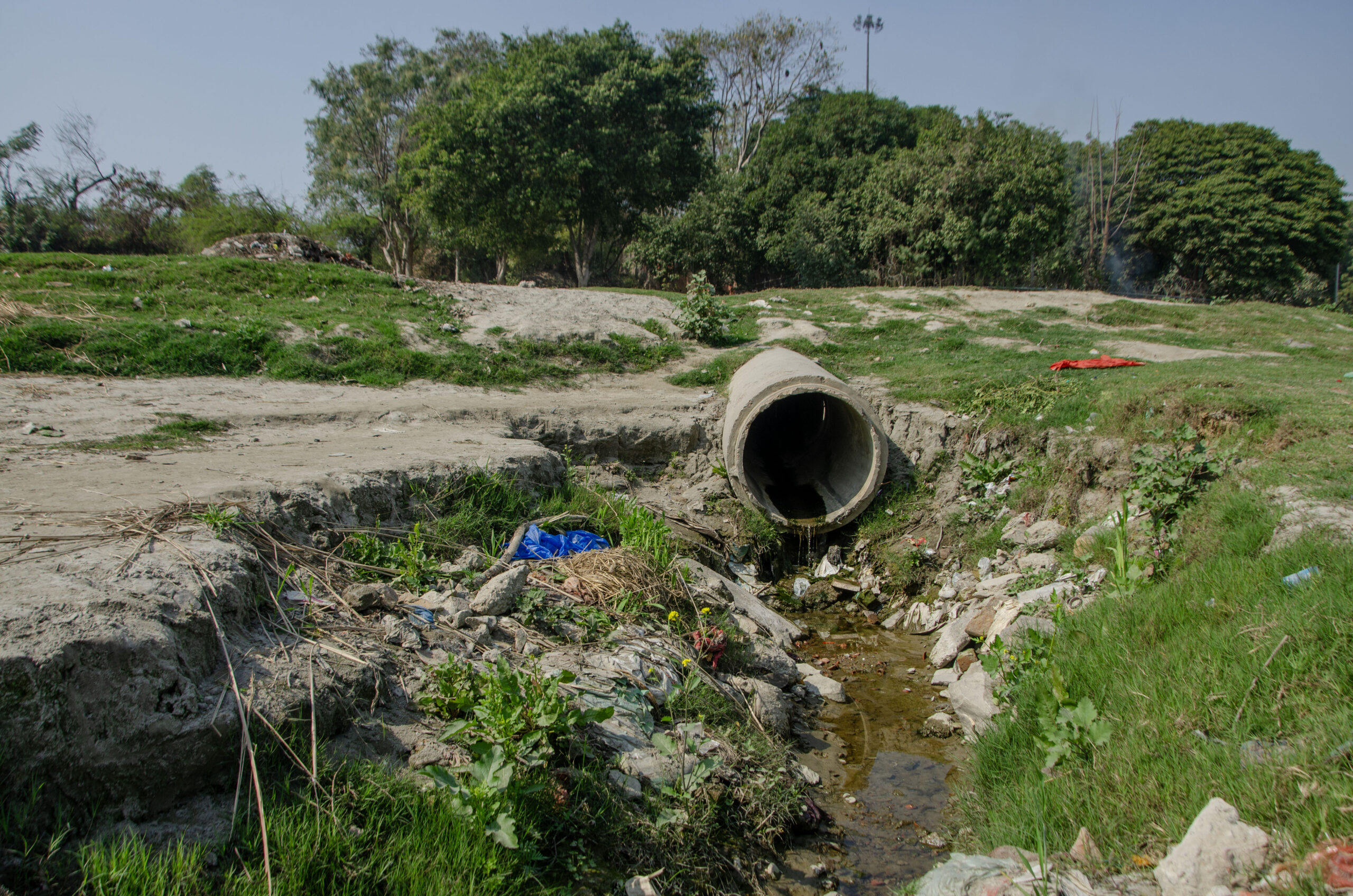
Wazirabad, Yamuna River, Delhi | February 2026
An outfall releases treated or partially treated water into the Yamuna at Wazirabad, illustrating the river’s role as a receiving channel for urban discharge.
The Madanpur Khadar and Shahdara drains near Kalindi Kunj also join the Yamuna. Thick white foam is often visible on the water surface at these locations, reflecting the impact of industrial and domestic waste. Plastic bottles, household waste, and chemical residues accumulate along the riverbanks.
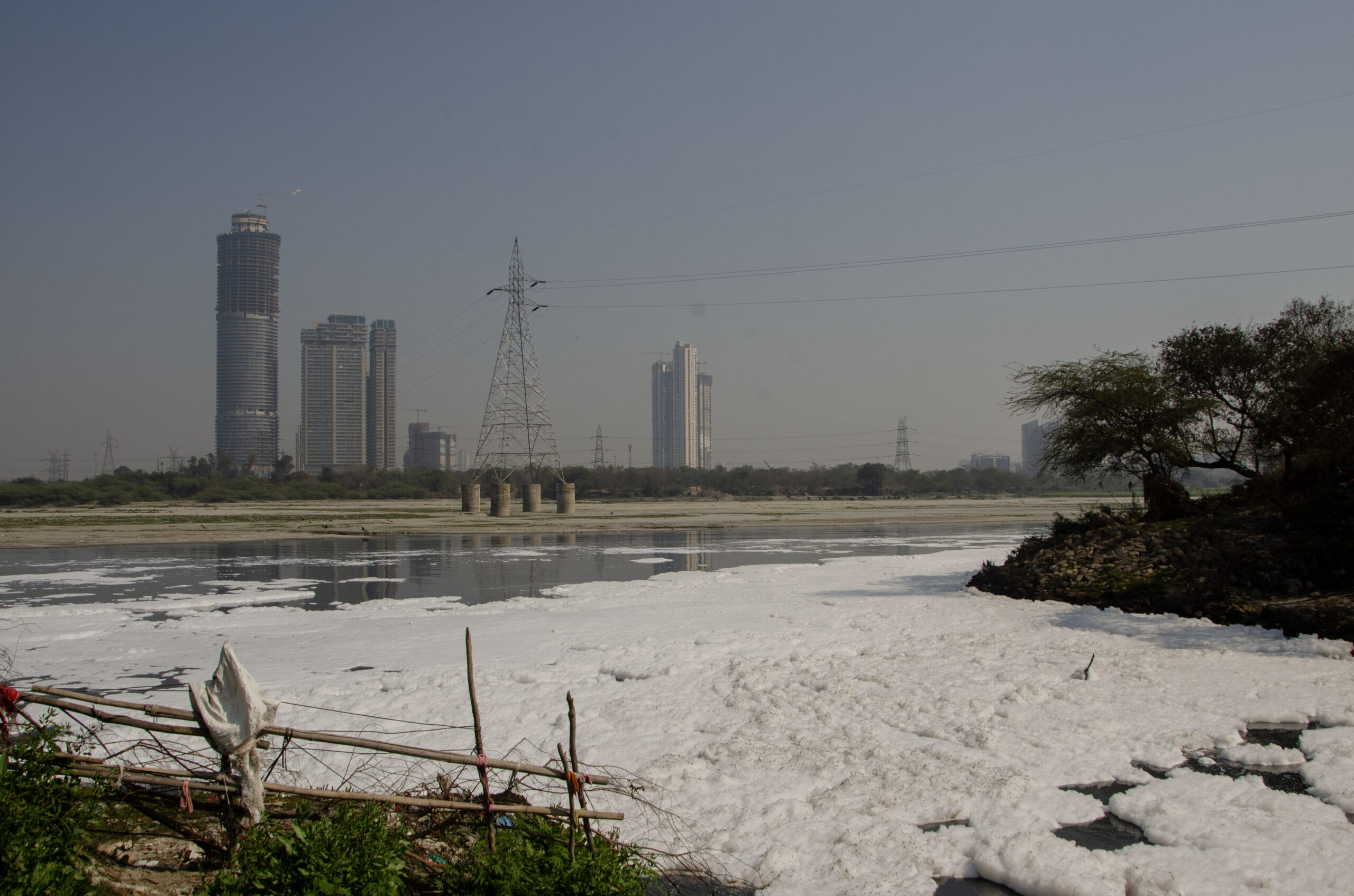
Below: Kalindi Kunj, Confluence of Madanpur Khadar Drain and Yamuna River, Delhi | February 2026
Foam-laden discharge from the Madanpur Khadar drain enters the Yamuna at Kalindi Kunj, indicating industrial
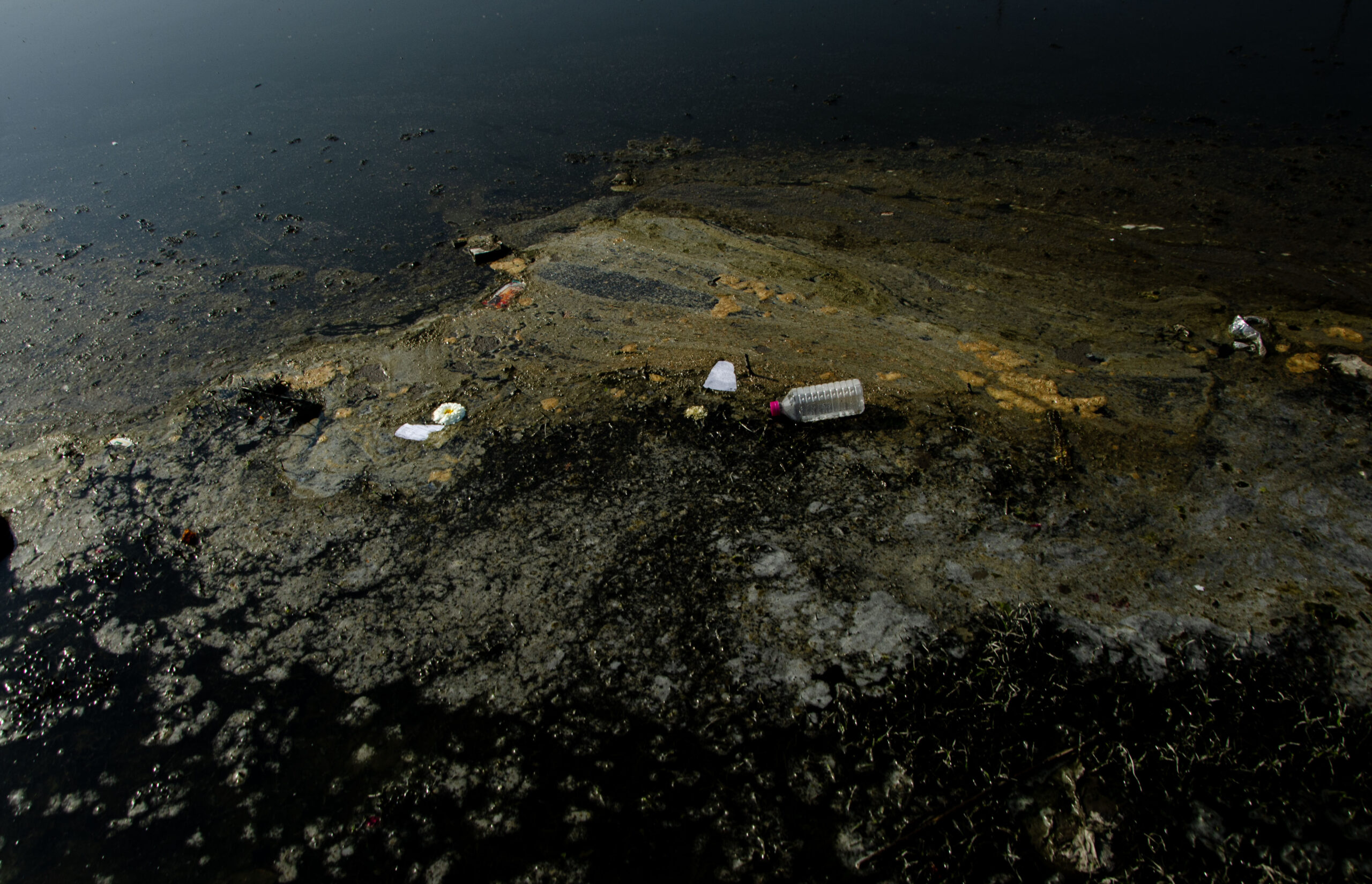
Kalindi Kunj, Yamuna River, Delhi | February 2026
Plastic bottles and foam accumulate along the river’s edge at Kalindi Kunj, indicating persistent solid waste and untreated discharge in the urban stretch of the Yamuna.
Despite this, human activities continue along the river. In many places, people use this water to wash vehicles. Livestock can be seen grazing in the dry stretches of the river, while some migrant farmers cultivate vegetables in the fertile soil along the riverbanks.
Another important dimension of the Yamuna is its religious and cultural significance. People regularly perform Shraddha, Tarpan, and other religious rituals at Delhi’s many ghats.
Puja materials, lamps, and flowers are immersed in the river. During festivals, especially Chhath Puja, thousands gather along the riverbanks and offer prayers to the rising and setting sun. The belief in the river’s purity is particularly strong on these occasions, even though the actual condition of the water is affected by pollution.
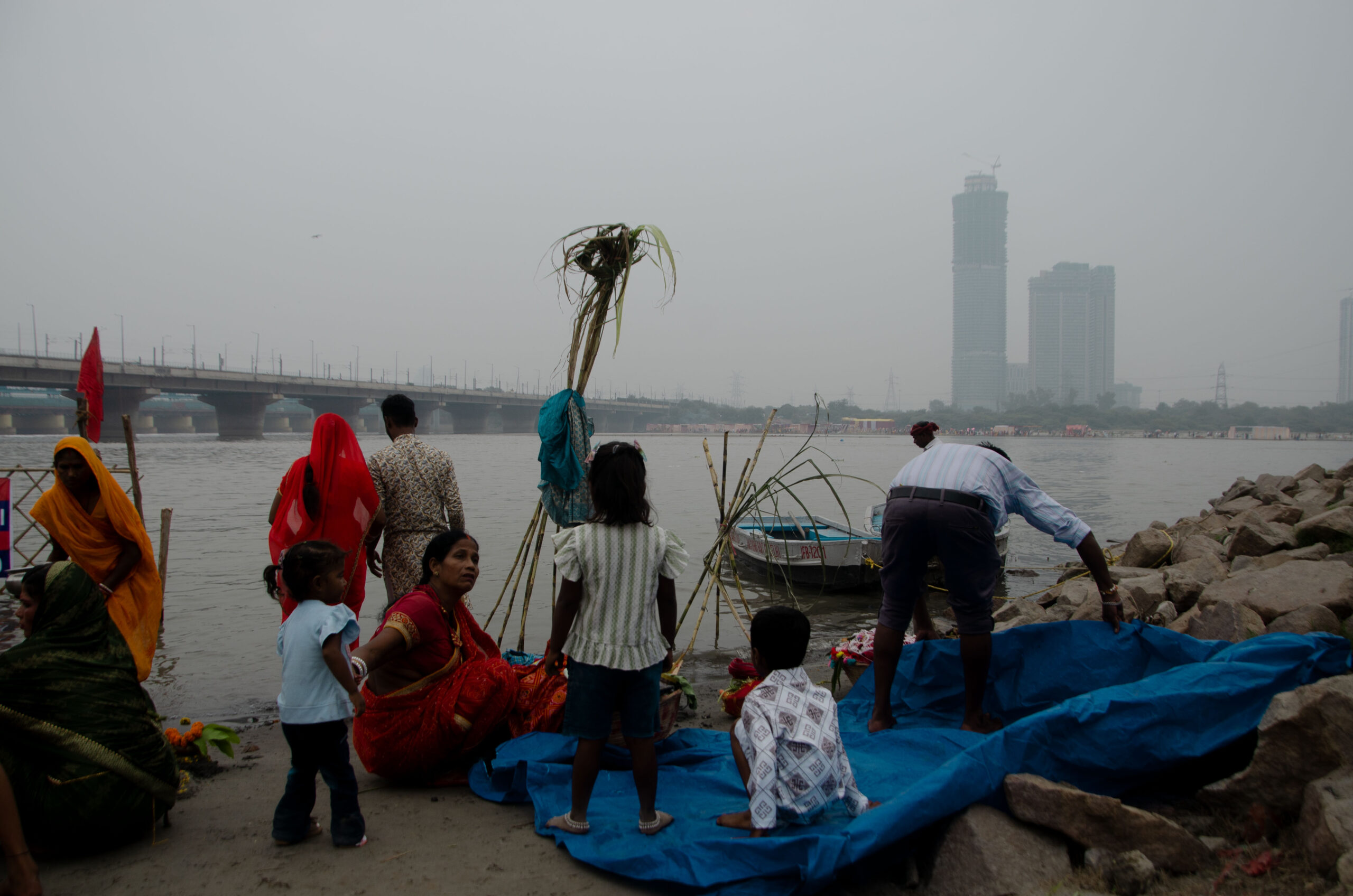
Yamuna Riverbank, Delhi | November 2025, Kalindi Kunj
Preparations for Chhath Puja line the river’s edge, marking seasonal ritual use of the Yamuna.
At some points, the Yamuna appears relatively calm and still. Near Sonia Vihar Pushta, the stretch of the river sometimes resembles a tranquil lake. A small boat slowly moving on the water’s surface adds a unique sense of serenity to the scene. However, the surrounding bridges, barrages, and urban structures also highlight how the river is surrounded by the city’s infrastructure.
The pictures collectively show that the Yamuna is not just a symbol of an environmental crisis, but also a complex social landscape. Environmental challenges, urban development, livelihoods, and religious beliefs are deeply intertwined here. A single frame depicts a serene morning, yet the same scene also bears signs of pollution.
This photo story presents Delhi’s Yamuna River as a place where the relationship between the city and the river is constantly changing. The life, activities, and scenes along the riverbanks reveal the disconnect and complexity that exists between urban development, environmental policies, and social behavior.
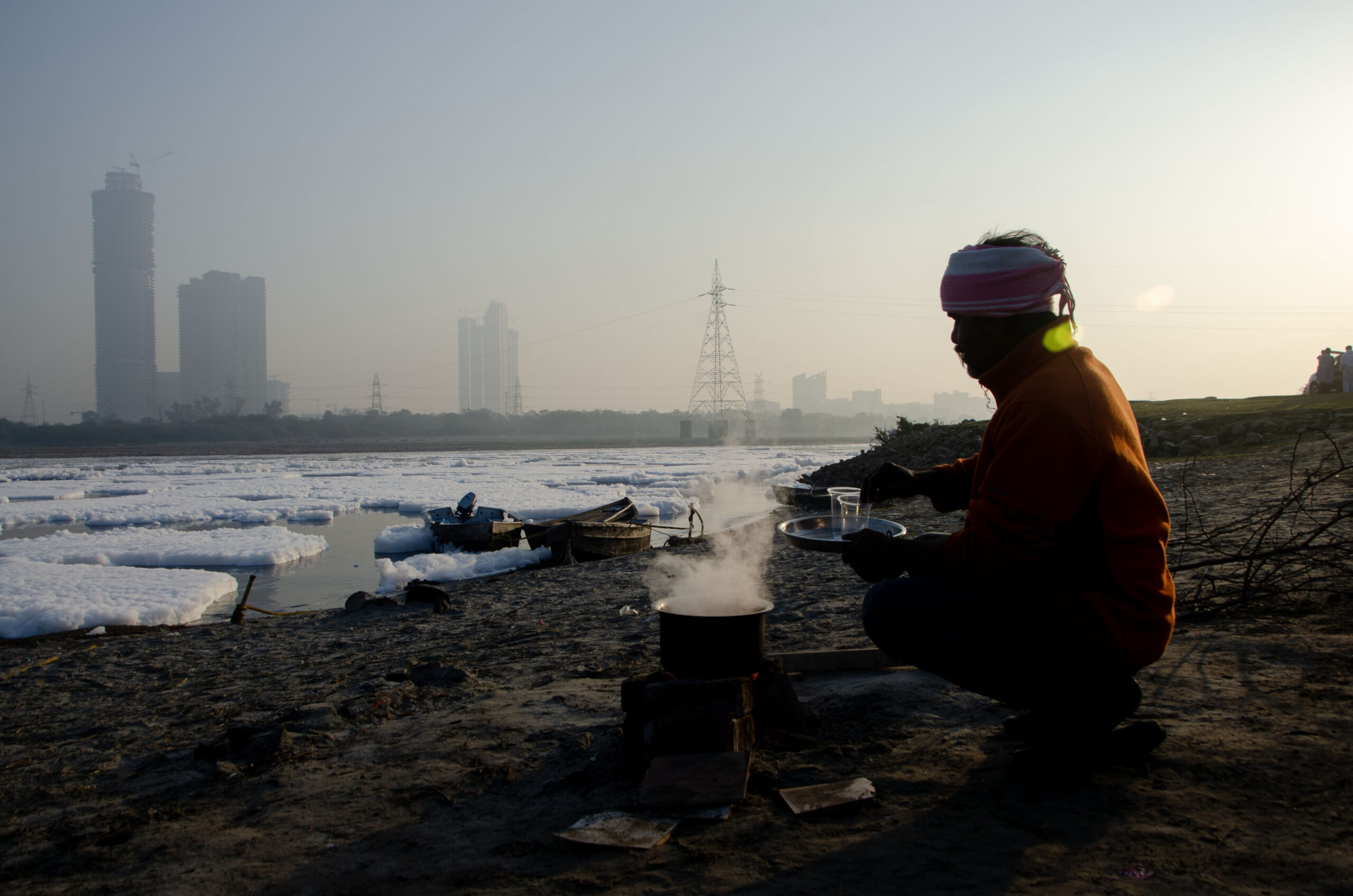
Kalindi Kunj Ghat, Yamuna River, Delhi | February 2026, 7:20 AM
A boatman prepares tea along the riverbank at Kalindi Kunj in the early morning, reflecting everyday social and cultural interactions that continue alongside the Yamuna’s altered ecological state.
The Yamuna continues to flow through Delhi, but the scenes along its banks raise questions about the future direction of the relationship between the river and the city.