Menstruation and Marginalization: Socio-cultural Barriers and Policy Failures Affecting Girls in Rural Kashmir

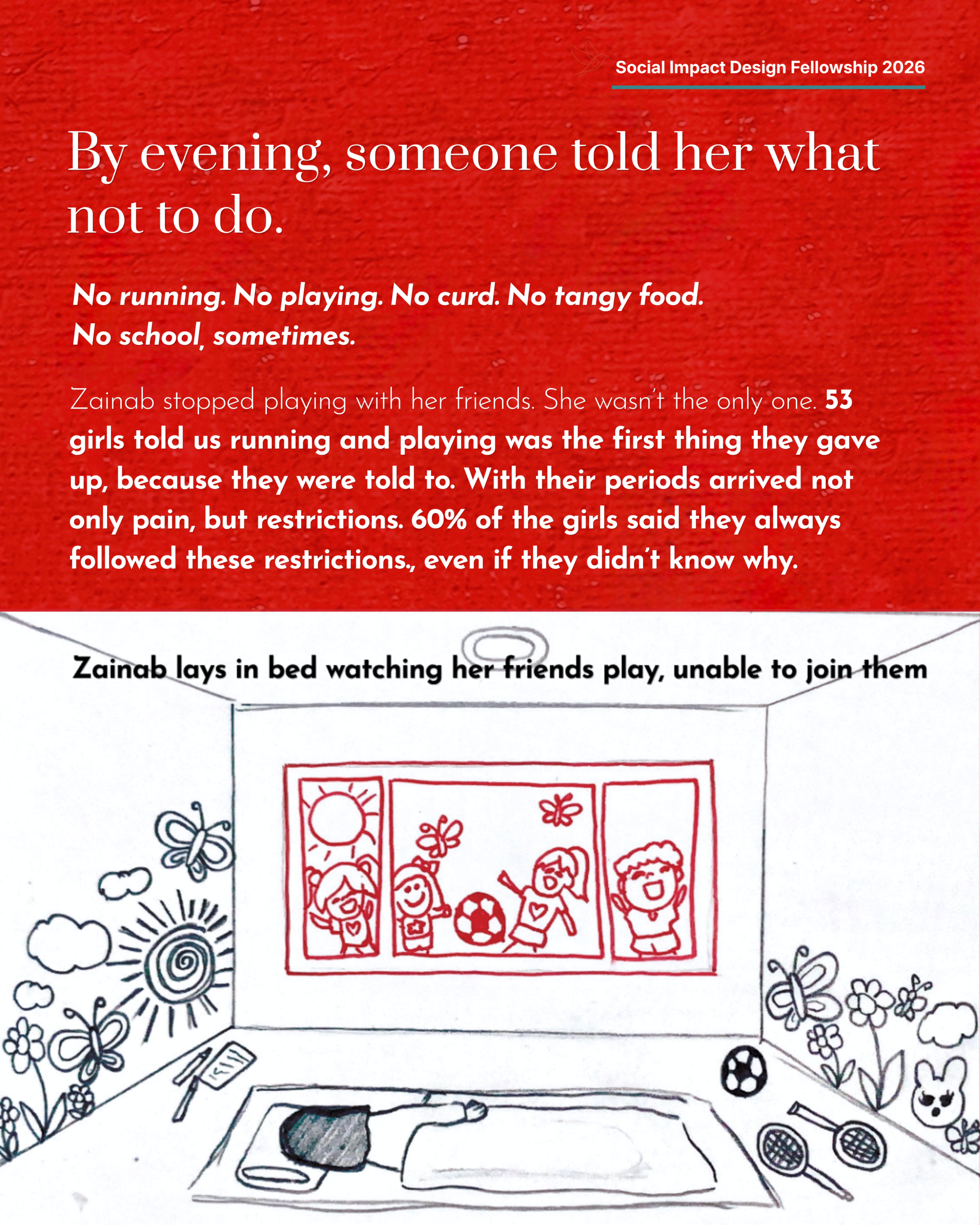
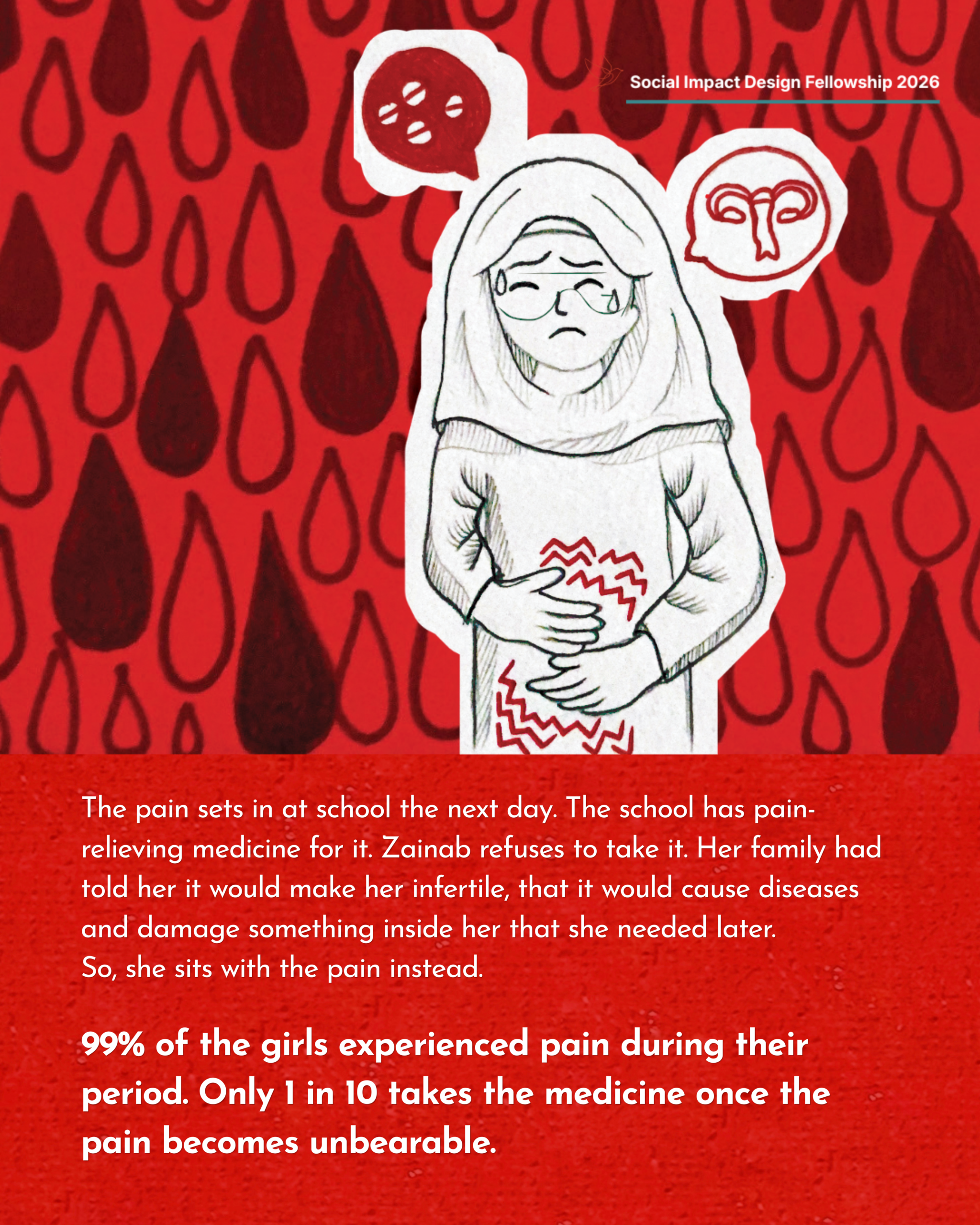
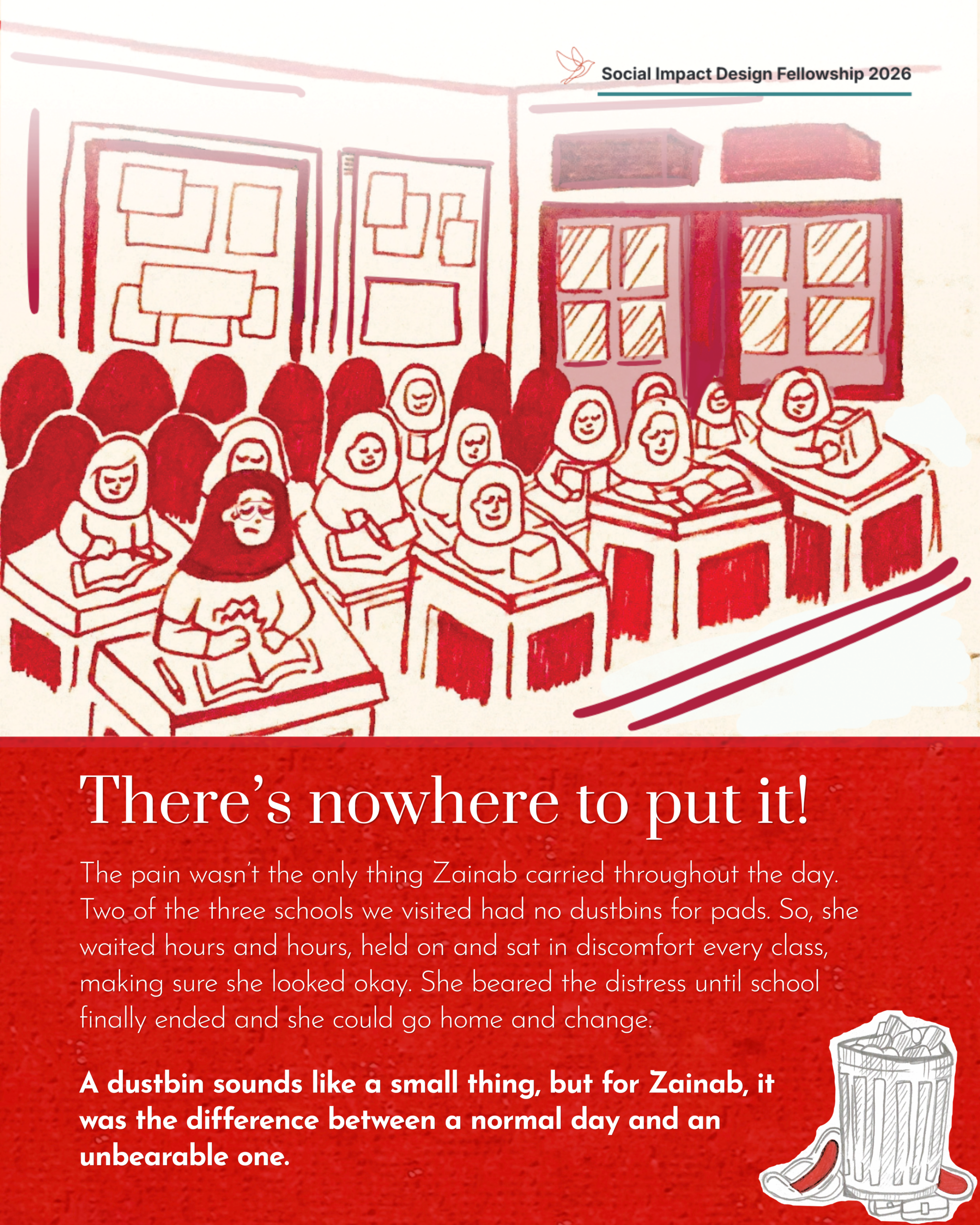
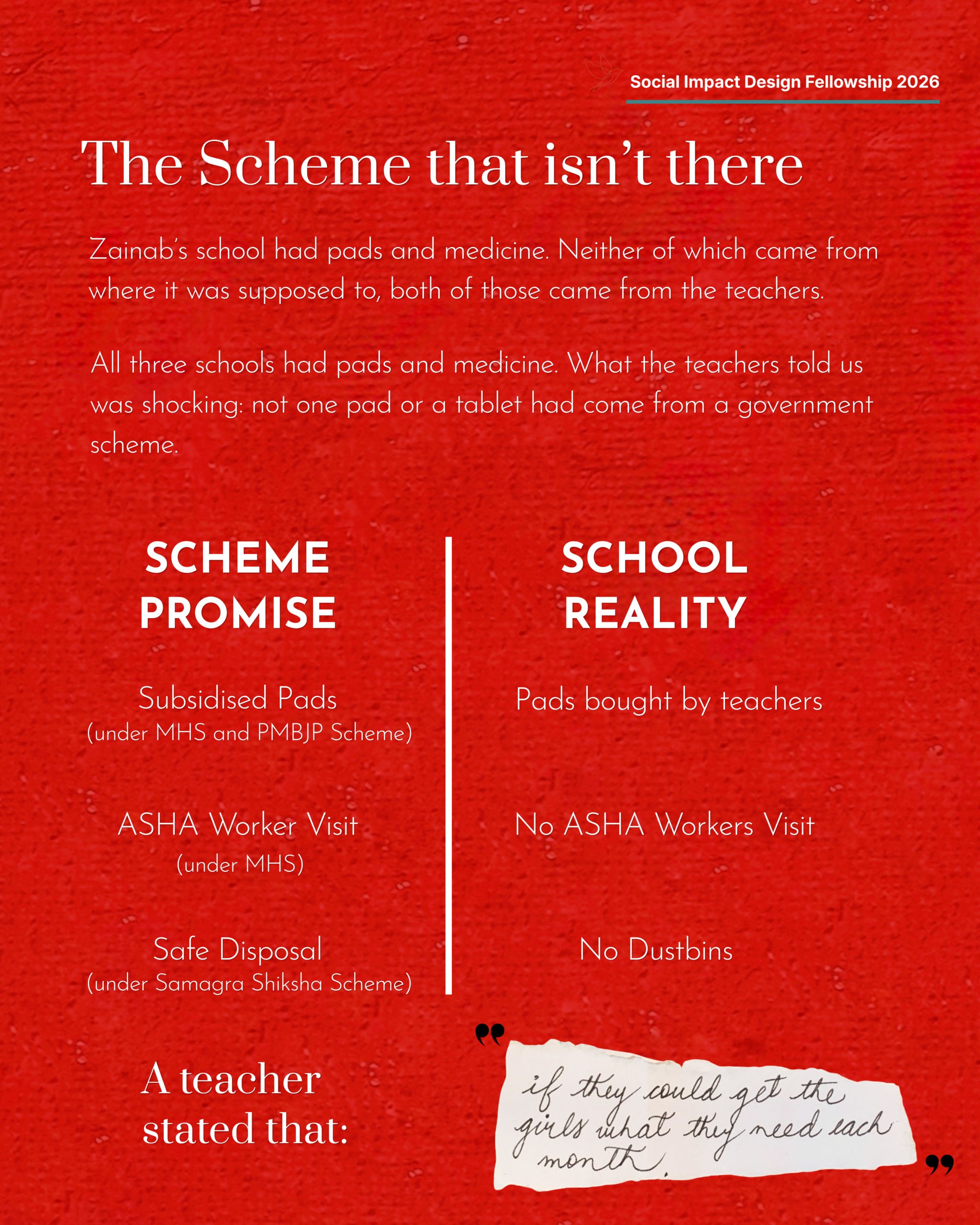
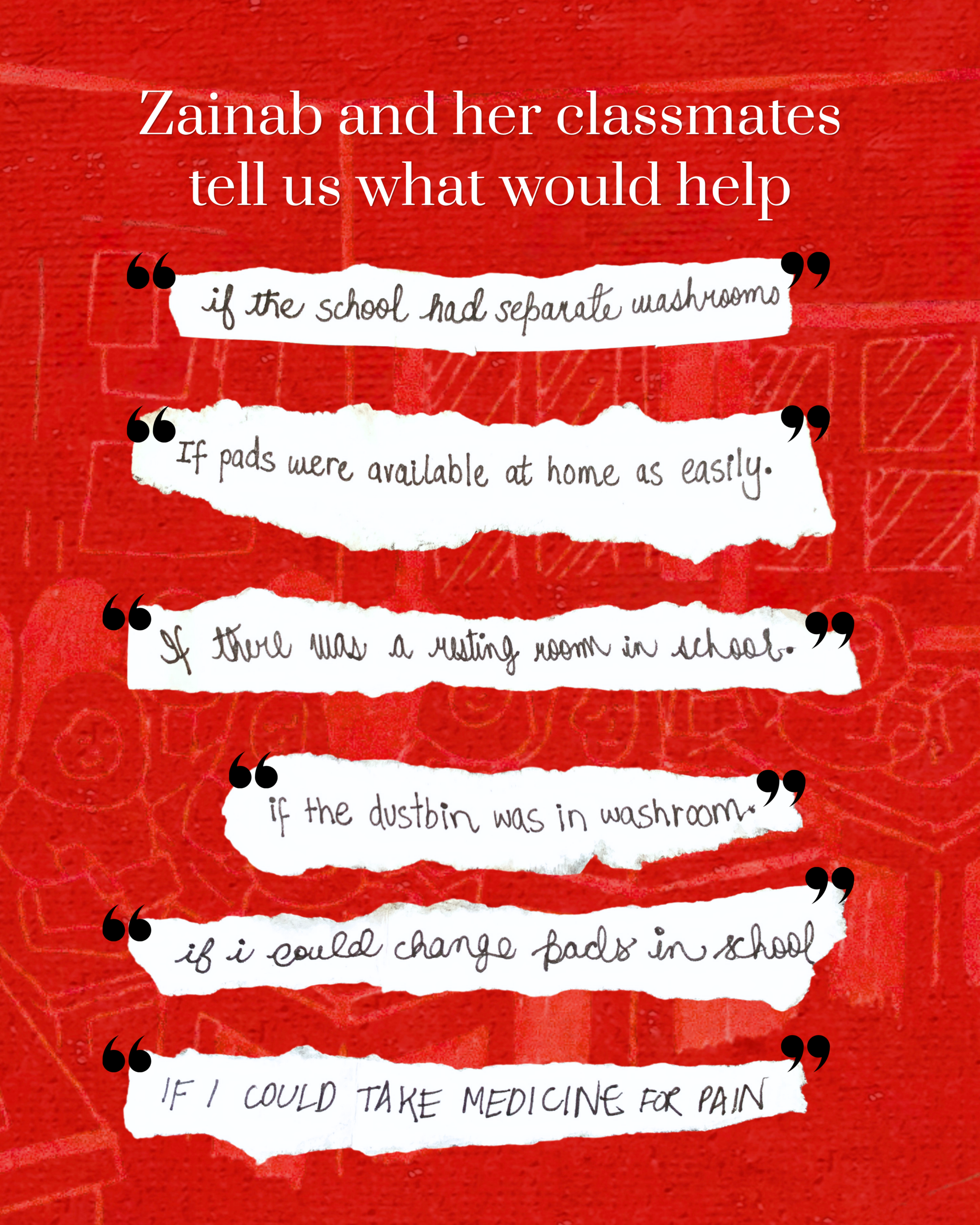
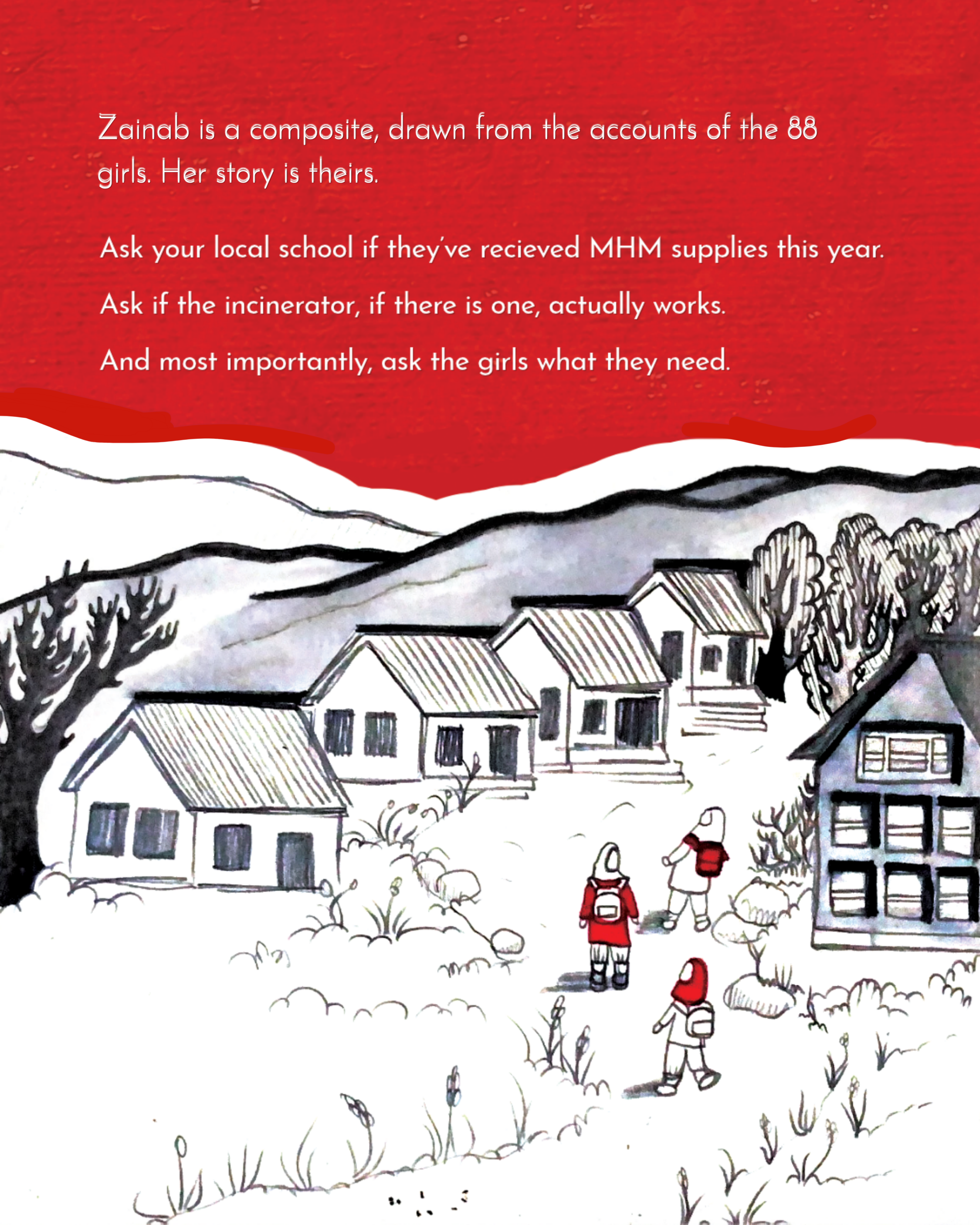
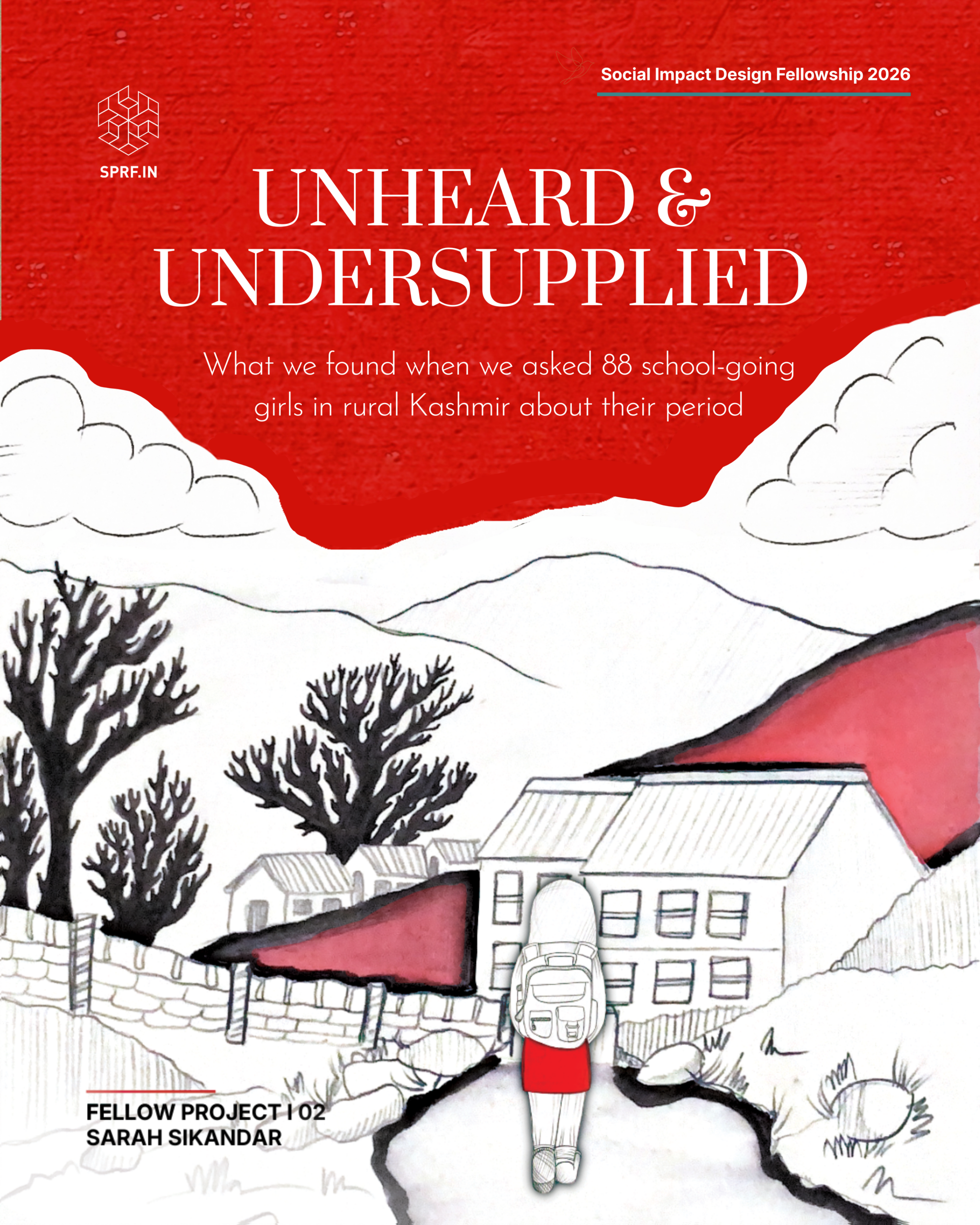
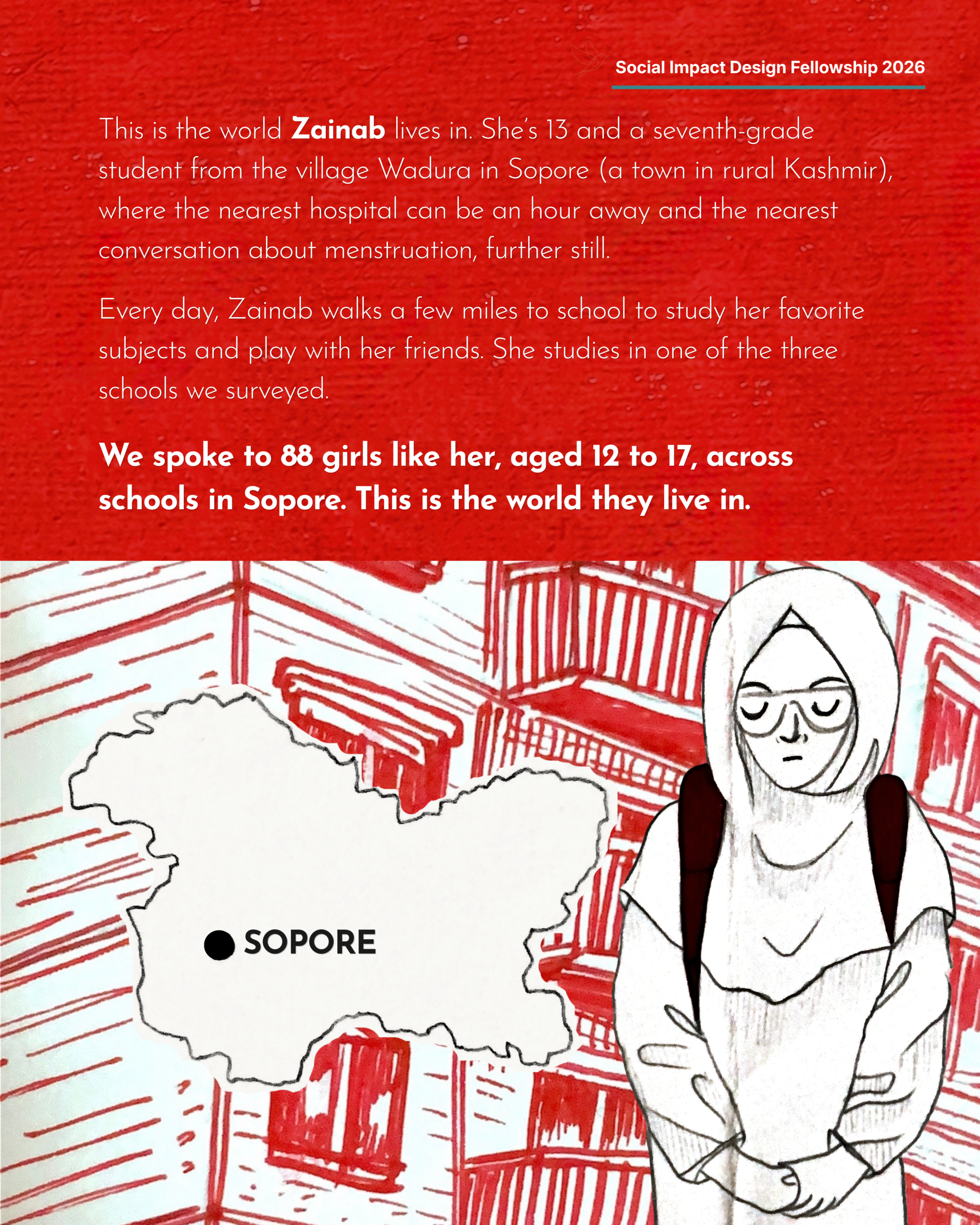
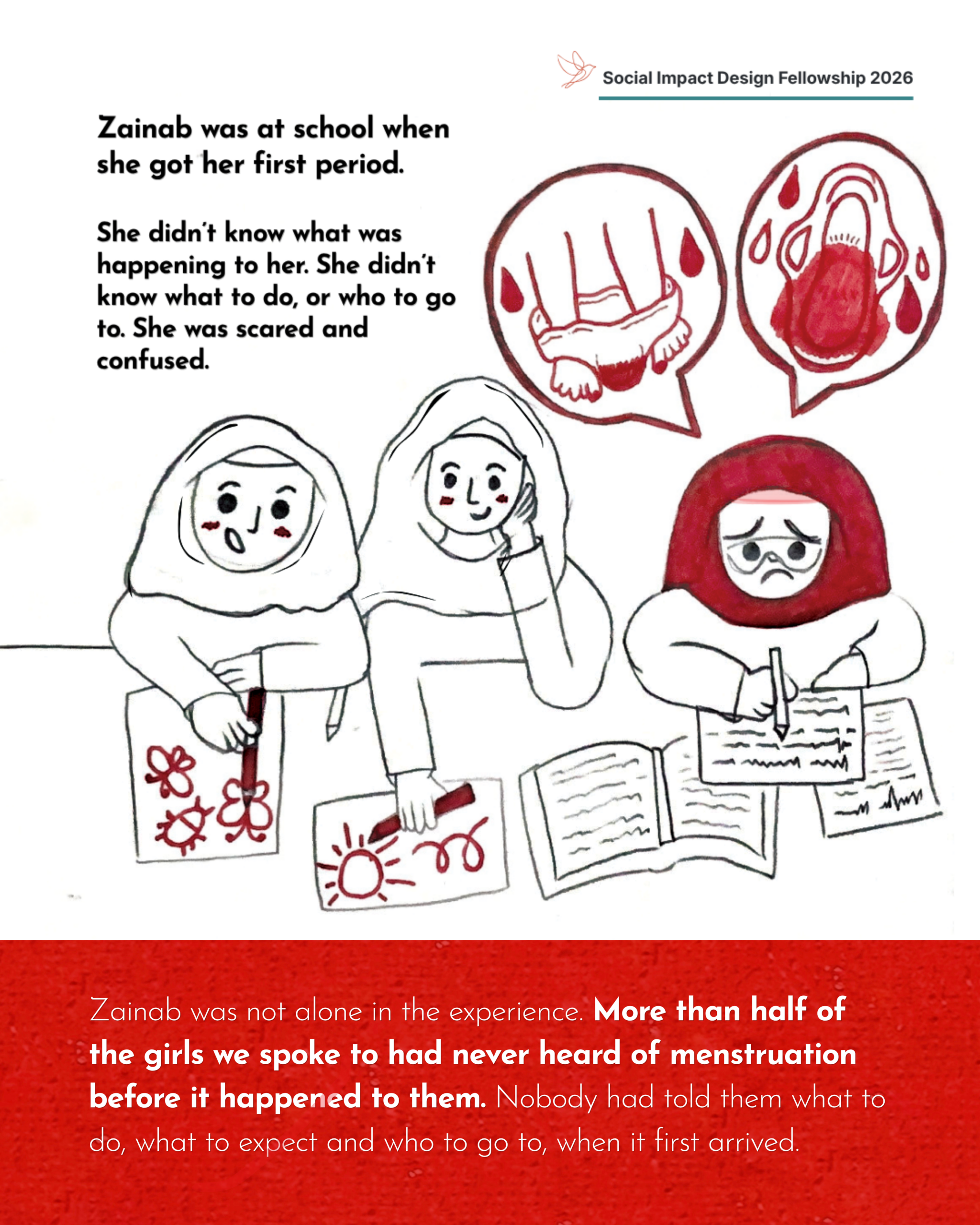
As part of the Social Impact Design Fellowship 2026, this project examines how socio-cultural taboos around menstruation affect adolescent girls and shape the uptake and implementation of menstrual health schemes in rural Kashmir, with a focus on Sopore. The study highlights how cultural restrictions, shame, medical mistrust, and gaps in the implementation of government schemes continue to influence girls’ menstrual health and education. It also draws attention to the need to understand menstrual health beyond the availability of sanitary products, by recognising the social and institutional barriers that shape girls’ experiences.

These findings have been translated into an illustrated visual series, using visual storytelling to make conversations around menstrual health more accessible and visible. The project highlights the importance of addressing both social taboos and governance gaps to improve menstrual health outcomes for adolescent girls.
Sarah Sikandar

Sarah Sikandar is a Social Impact Design Fellow based in Jammu and Kashmir and is currently a third-year student with interests spanning literature, climate, policy, and creative expression. Her work brings together research and storytelling through engagements with ecological and feminist thought, poetry, fiction, and visual narratives.

Found this post insightful? Share it with your network and help spread the knowledge.

Suggested Reads

Kheta: Weaving a Tale of Women Empowerment, Kinship, and Inheritance

The term Shershabadi (original Shershabadia) has direct reference to the community’s place of origin, i.e., the former Jawar-e-Sarsabad, which comprised parts of Murshidabad, Malda in West Bengal, and Sahibganj district in Jharkhand.

Owing to various social, political, and environmental reasons, they migrated from their place of origin, and are now settled in Kishanganj and its neighbouring districts, in Bihar. Originally a community of settled agriculturists, they slowly dispersed along the river banks and tried to make a living through cultivation.