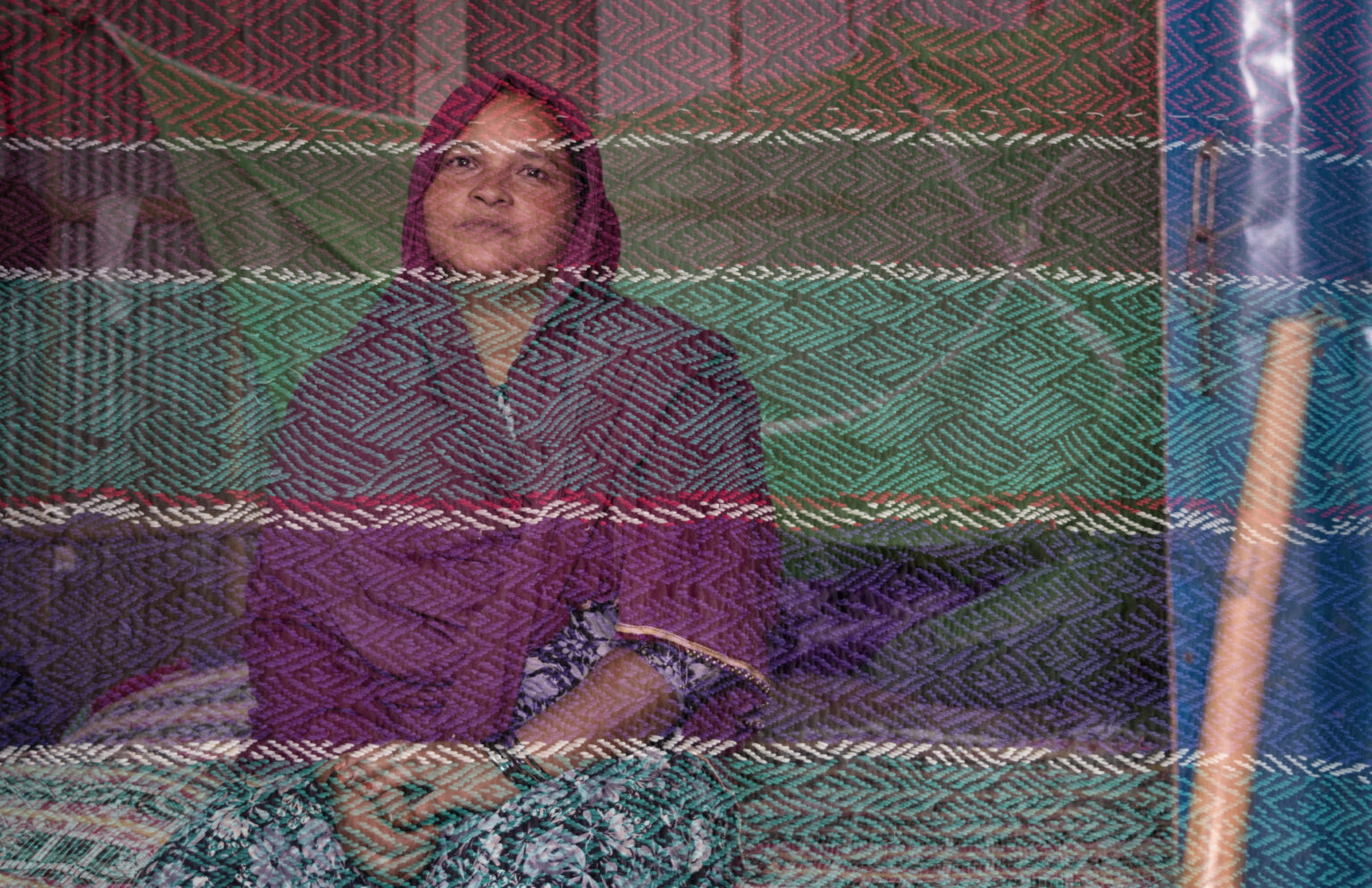
Triveni is his daughter-in-law. She is in her late twenties, has two children and her work begins before the sun is up. Before she reaches the clay, Triveni has already cooked the morning meal, cleaned the house, and walked the children to school. By the time Shankar Rao sits at the wheel, she has been working for hours. She breaks the chunks of hard clay, heats it, soaks it, and works it into a mass of the right consistency and moisture, removing the small stones and air pockets that would crack a pot in the kiln. She also carries them outside to dry. Then the wheel turns. Again, she finishes the pots by painting them. On every 15th day, depending on the order, she loads the kiln and monitors the firing. She unloads the pots and carries them to dry them. Outside, the elderly women from the house sell them, sitting in the sun in front of the house until buyers come.
The wheel is perhaps less than a half an hour of a pot’s life. Everything before and after it belongs to Triveni.
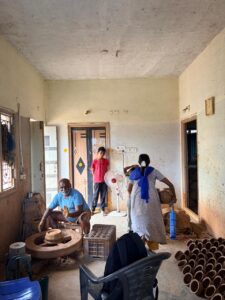
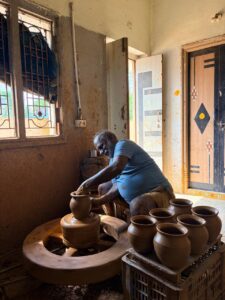
The wheel is also the most visible, legible, photographable part of pottery. It is the part that craft schemes recognise, artisan documentation captures, and tourism brochures feature. Women’s labour— long before and after—that makes the wheel-work possible, is classified as ‘domestic help’ within the family unit. It does not appear in surveys of craft workers or qualify for artisan scheme benefits. Women’s hands are in every pot but their names are in none of the paperwork.
When someone comes to buy a pot and asks who made it, they mean the man at the wheel. This invisibility is not accidental. It is the specific form that caste and gender take together in a craft economy where men’s work is named as skill and women’s work is classified as help. On one hand, it is an artisanal skill—one that is worth preserving. On the other, it is sustained by an invisible form of labour: help that begins before dawn, knows from the colour of the kiln smoke when the firing is right, and yet remains unrecognised, with no place in any government scheme for artisans. Even the women themselves are now conditioned to believe that theirs is not a skill rather something that they simply do.
Another thing that caught our attention was how men at the wheel work in postures that allow more shade and more stillness. Women move in the blazing sun and carry and tend the fire. The day we visited Kolakaluru, the recorded temperature was 42 degrees, while Google shows the temperature was 48 degrees. To make matters worse, the kiln burns at a thousand degrees.
There is a phrase arriving in climate policy circles: the heat tax. It refers to the disproportionate burden that extreme heat places on those who cannot escape it: women who cook over open fires, agricultural workers who cannot leave their fields at noon, construction workers, women in unventilated homes. The heat tax is what your body pays when you have no choice but to stay in the heat, when rest is not an option your livelihood allows.
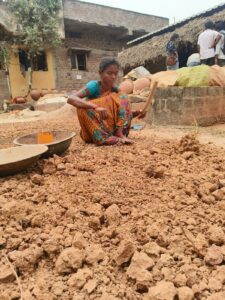

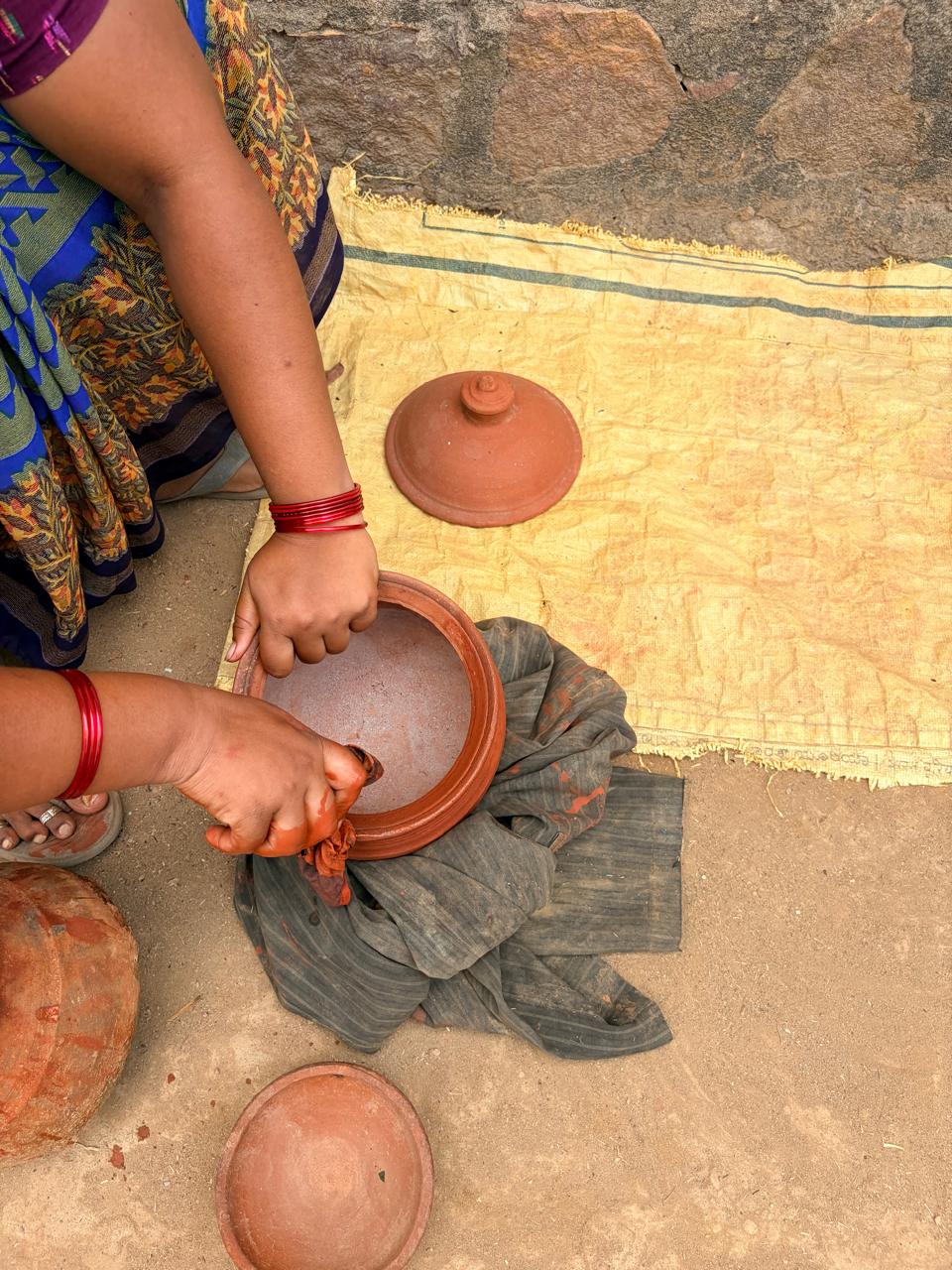
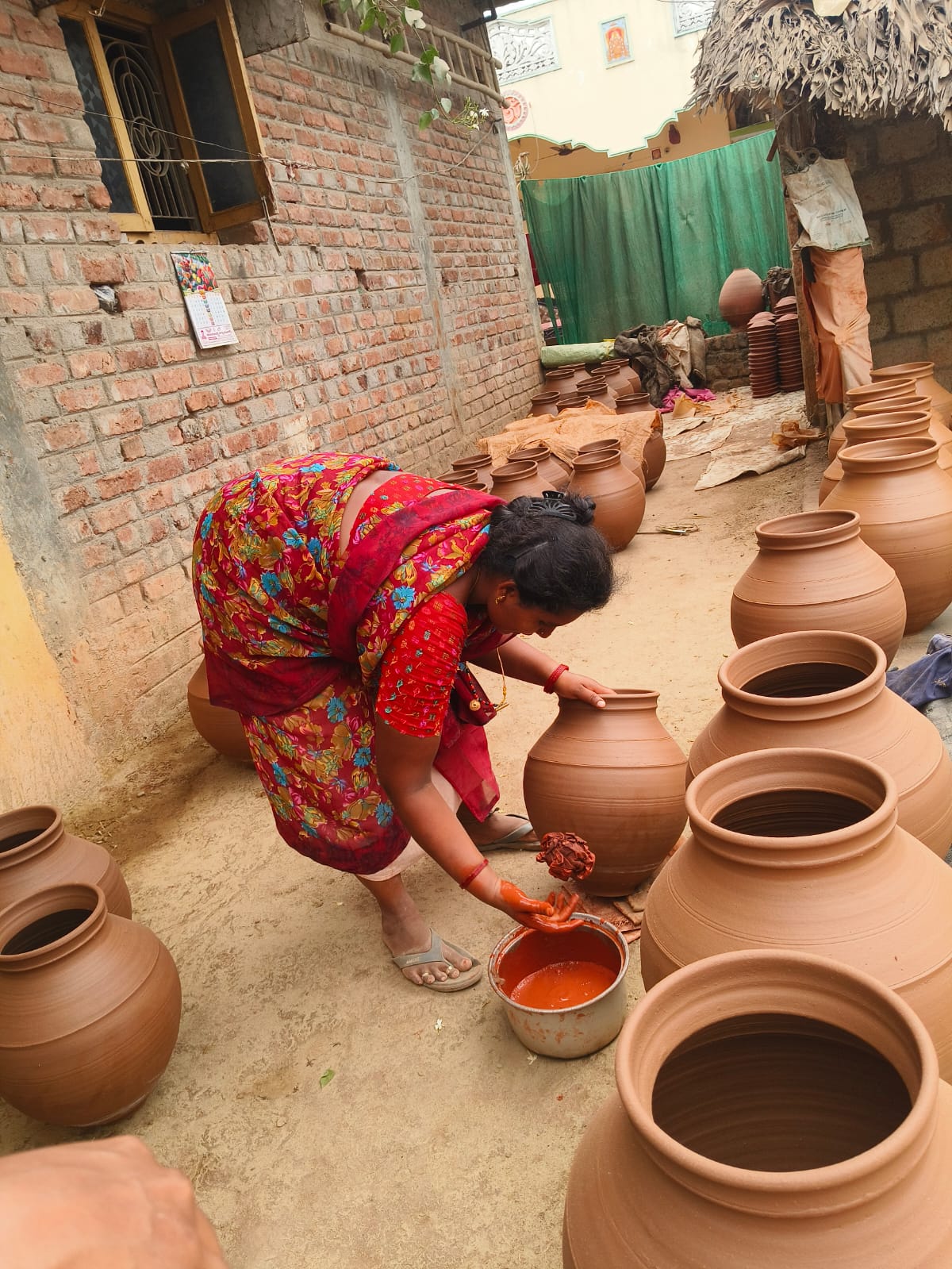
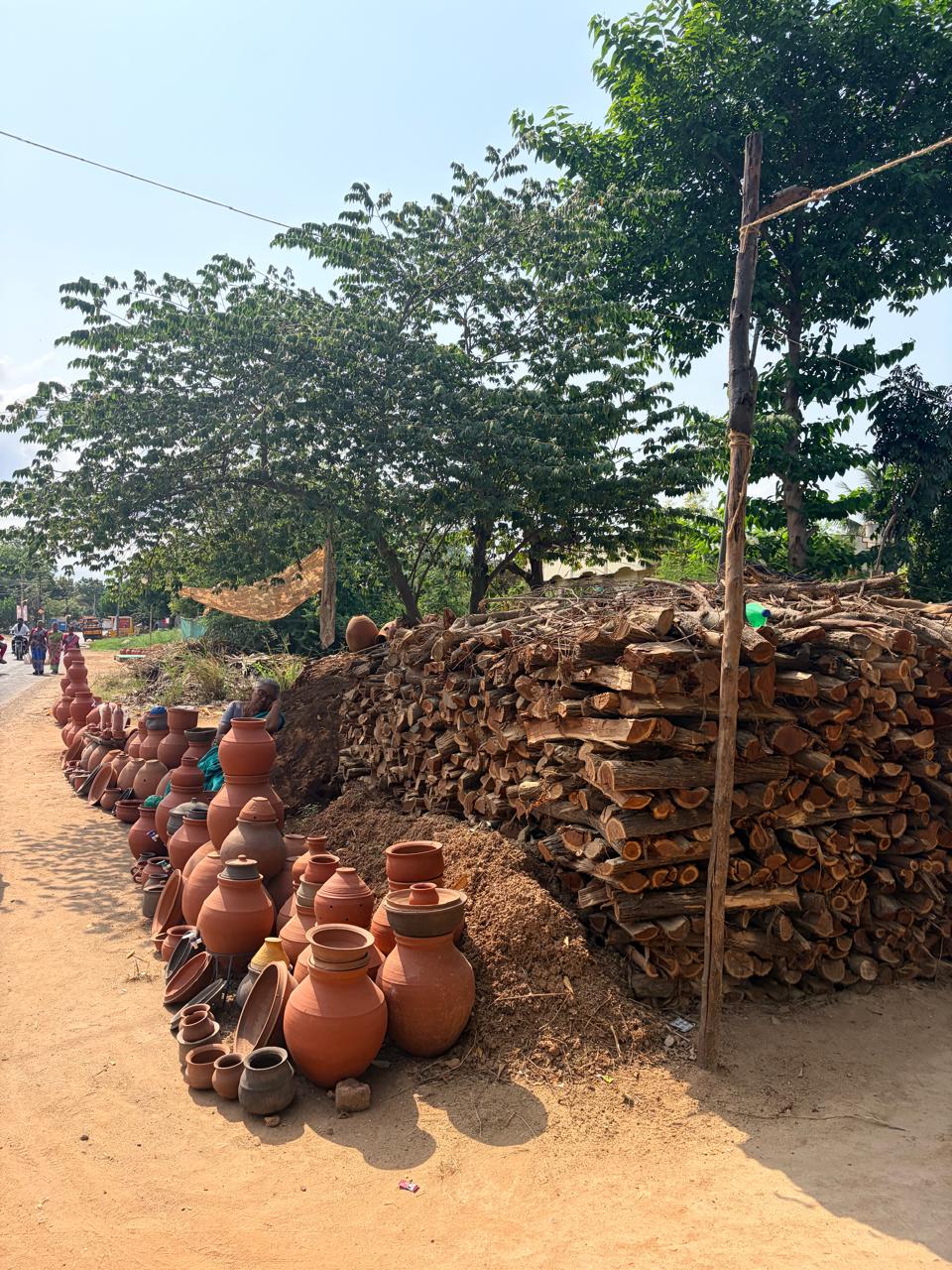
We asked the women if they rested during the hottest part of the afternoon. When Shankar Rao rests from the wheel, Triveni also stops. But she does not sit. In fact, she returns to the kitchen and the chores. The children are home from school and need to be fed. There is also cleaning that did not get done in the morning because the clay was waiting. When Triveni rests from the kiln, she moves on to the next form of labour.
His rest is rest, but hers is a shift.
The heat tax follows caste. The Kummari women of Kolakaluru pay it not only because they are women, though that is real: Shankar Rao works in more shade while Triveni moves and carries and tends the fire. They pay it also because caste has assigned them this labour, generation after generation, without asking whether it is safe or compensated. This is not a tax the Kummari women have recently been asked to pay. Caste assigned it long before researchers theorised it. The heat tax does not fall equally on all bodies. It falls hardest on bodies that caste has placed at the most exposed, least protected positions: and within those positions, gender determines who sits at the wheel and who stands in the sun beside the kiln.
We asked Triveni whether she finds it difficult to work in this heat. She smiled, slowly, the smile. “Difficult”, she said., “Alavatu ayyipoyindi” (But I’m used to it now).
Used to it. The phrase carries the weight of every generation that absorbed this heat without naming it, every woman whose endurance was called temperament rather than labour, every scheme that registered the craftsman and left the helper off the form. The heat tax is real, measurable and caste-assigned. It has been paid so long that the women paying it have stopped expecting it to be acknowledged at all.