INTRODUCTION
The month of June, also known as international pride month, marks half a year since the start of India’s vaccination programme. It is pertinent to place the world’s largest vaccination drive under a queer lens to examine how inclusive the nation’s vaccine policy is, particularly for trans persons.
As of 18th June 2021, the National Co-WIN Statistics (2021) recorded 21 crore citizens vaccinated in total. Of these, trans persons form 38,080, which is only 0.017%. Meaning that only 7.80% of the total transgender population has gotten their doses. However, the percentage of non-cis Indians vaccinated is likely lesser than reflected here since the latest count of transgender persons dates a decade back to the 2011 Indian Census. Then, the census recorded 4,87,803 trans-individuals, a number which has undoubtedly increased since, thereby changing the count.
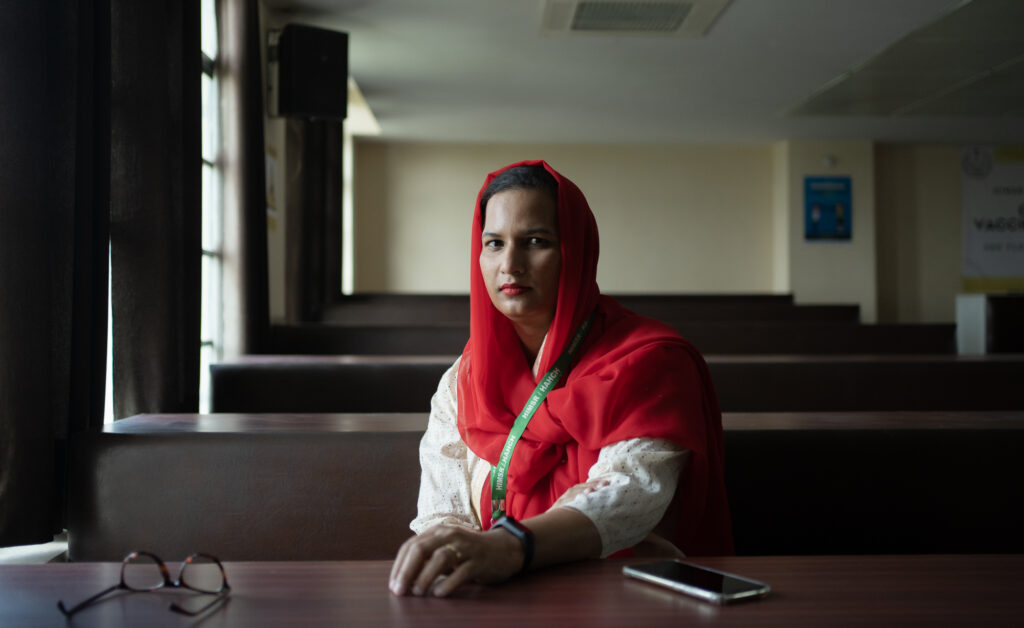
This paper attempts to understand a trans person’s experience with the vaccination process by breaking down each step and identifying the obstacles therein. The barriers span from vaccine awareness to lack of documentation. Dr Aqsa Shaikh, an Associate Professor at Hamdard Institute of Medical Sciences and Research and India’s first and only trans woman serving as a nodal officer at a vaccination centre, qualitatively enriched this research through her inputs during an interview with the author on 7 June 2021. Dr Shaikh holds an MD in Community Medicine and has worked on over 20+ research projects in Medical Education and Humanities, and is currently lending her expertise to Sangath and Thakur Foundation on TransCare Covid-19, a qualitative research seeking to document the healthcare experiences of transgender persons during the COVID-19 pandemic.
AN ODYSSEY TO THE VACCINE BOOTH: TRANSGENDER EXPERIENCE OF INDIAN HEALTHCARE

The CoWIN home page decrees three broad steps to register oneself. Register yourself using your mobile number, Aadhaar card, or any other government ID, choose vaccination location, and confirm your slot. Though it seems simple, immunisation of the world’s second-largest population is bound to run into obstructions. Vaccine shortages, quick booking of online slots, glitches in the CoWIN system (Sawant 2021; Pullanoor 2021) are inconveniencing many beneficiaries, that too those on the right side of the digital divide.
Such obstructions are secondary battles for the transgender community. Their primary battle is getting vaccinated with dignity in a system that chalked them into the procedure as an afterthought. Currently, each step is replete with challenges, from self-registering through the CoWIN portal with a valid government identity card to accessing preferred washrooms at the vaccination centre.