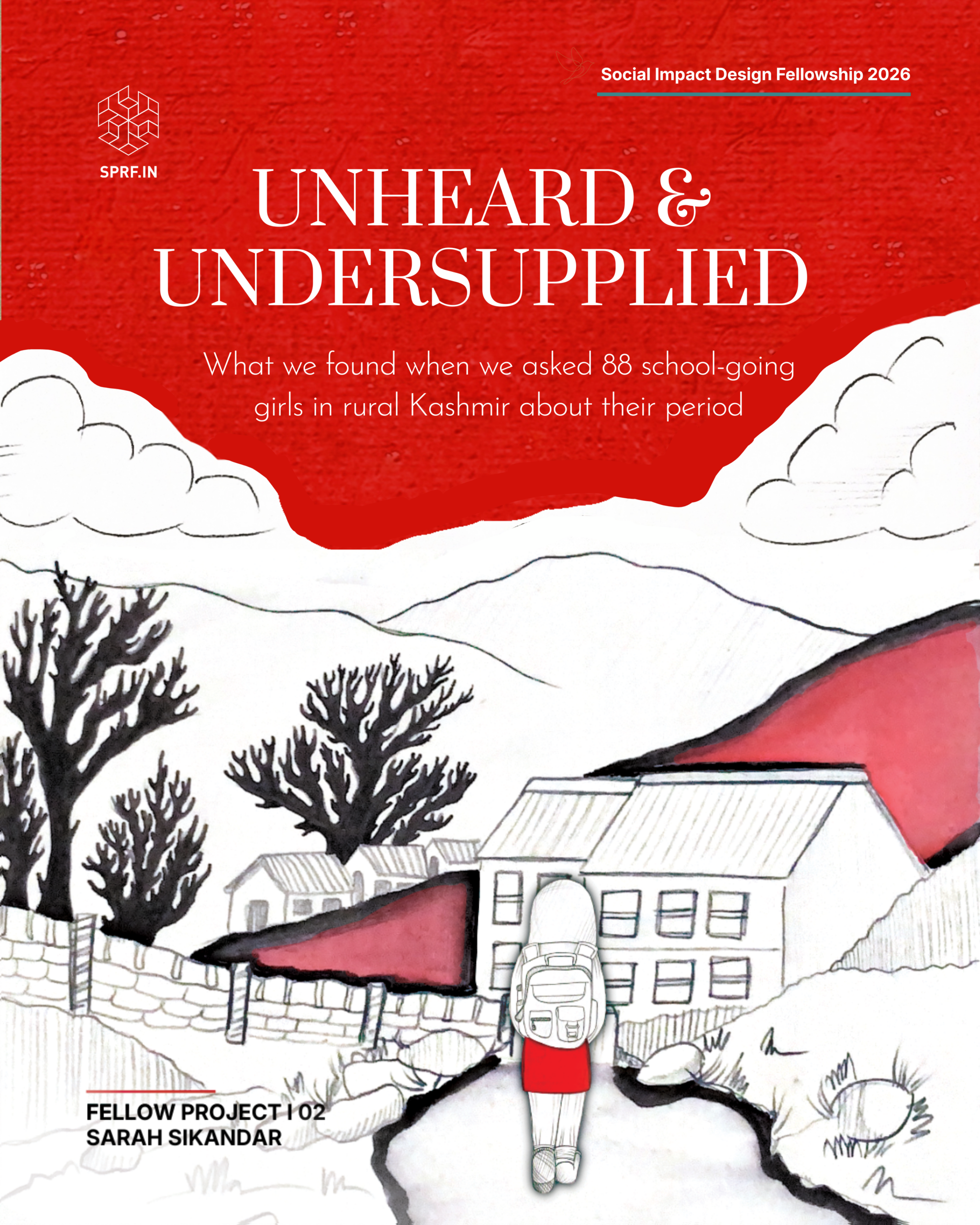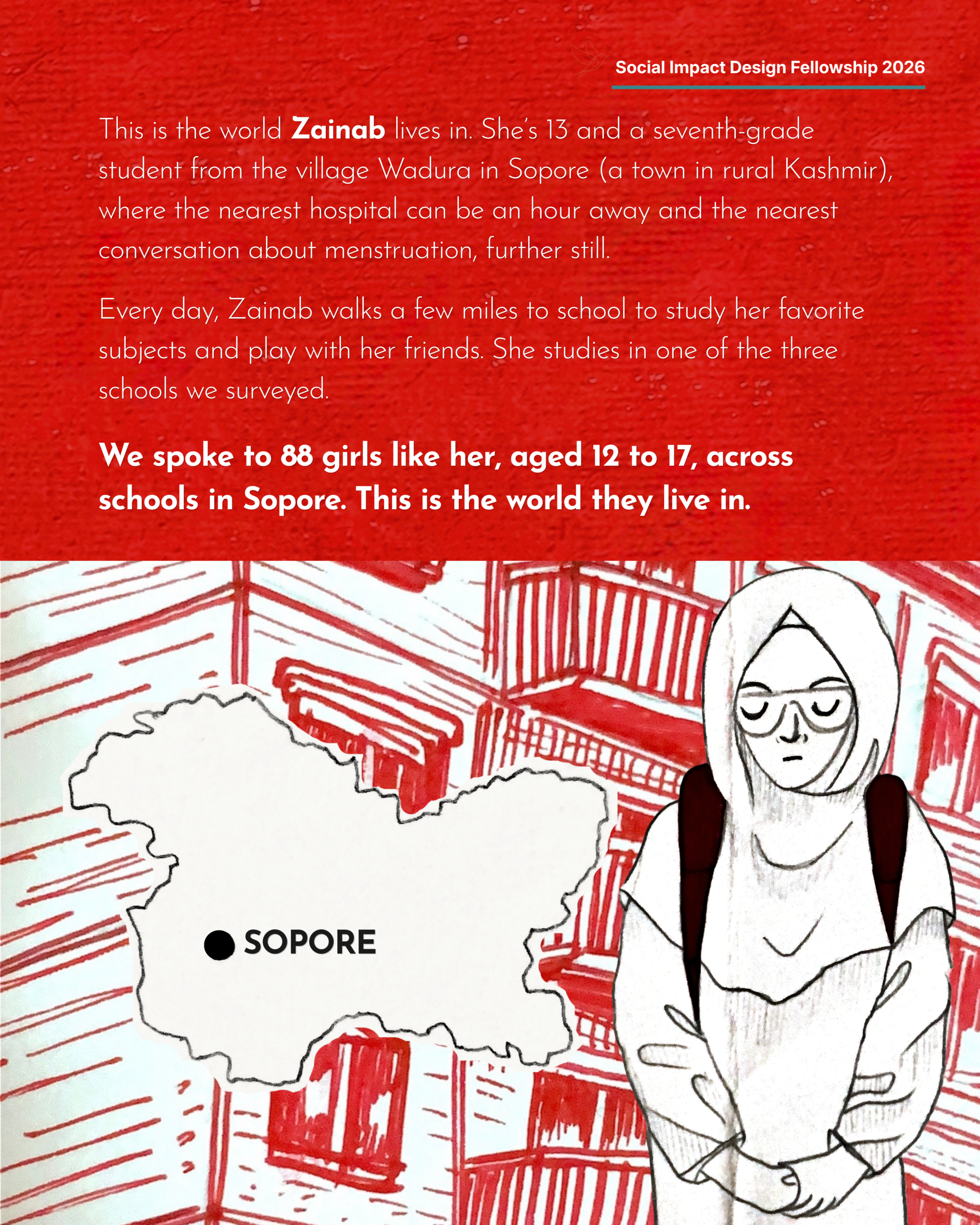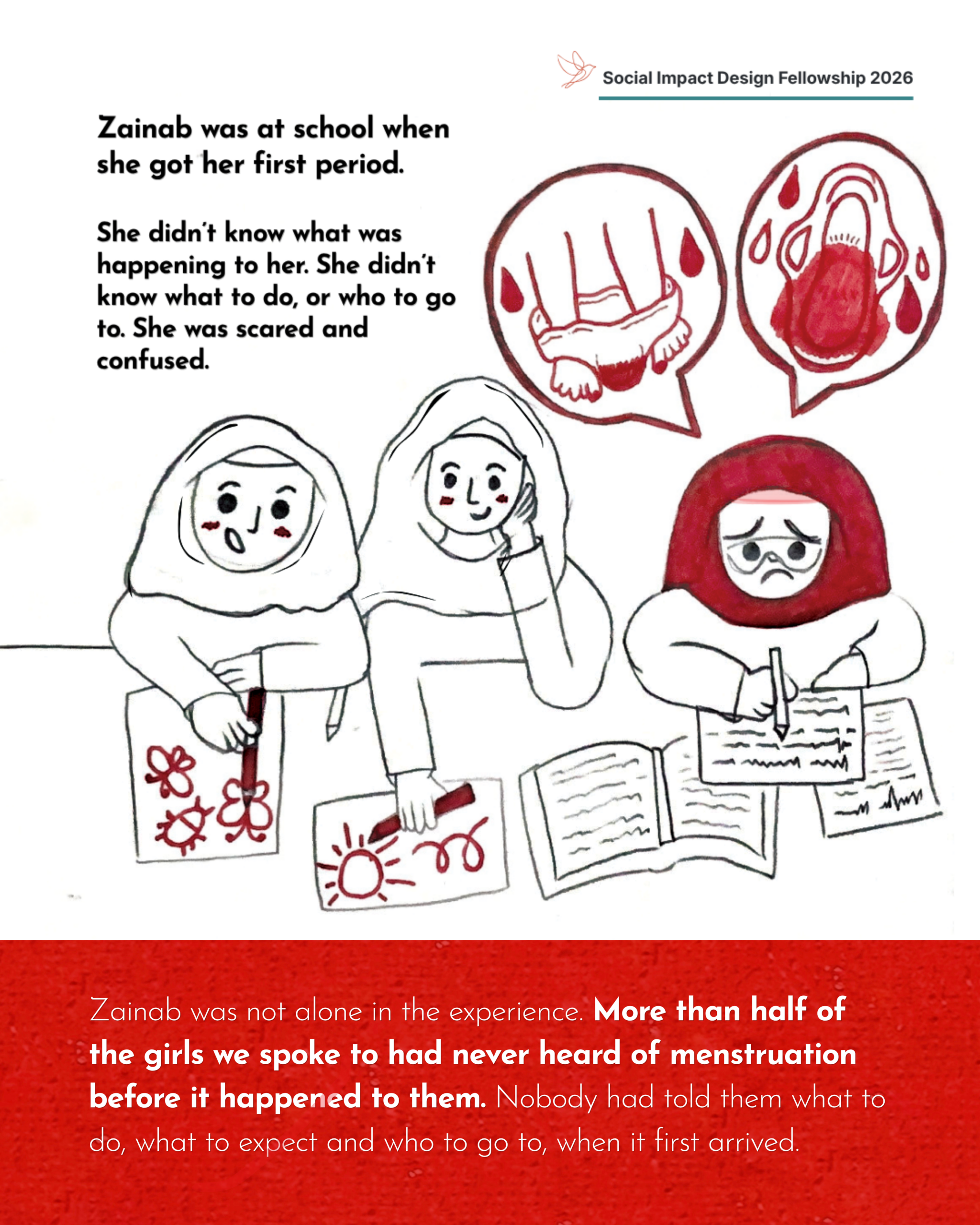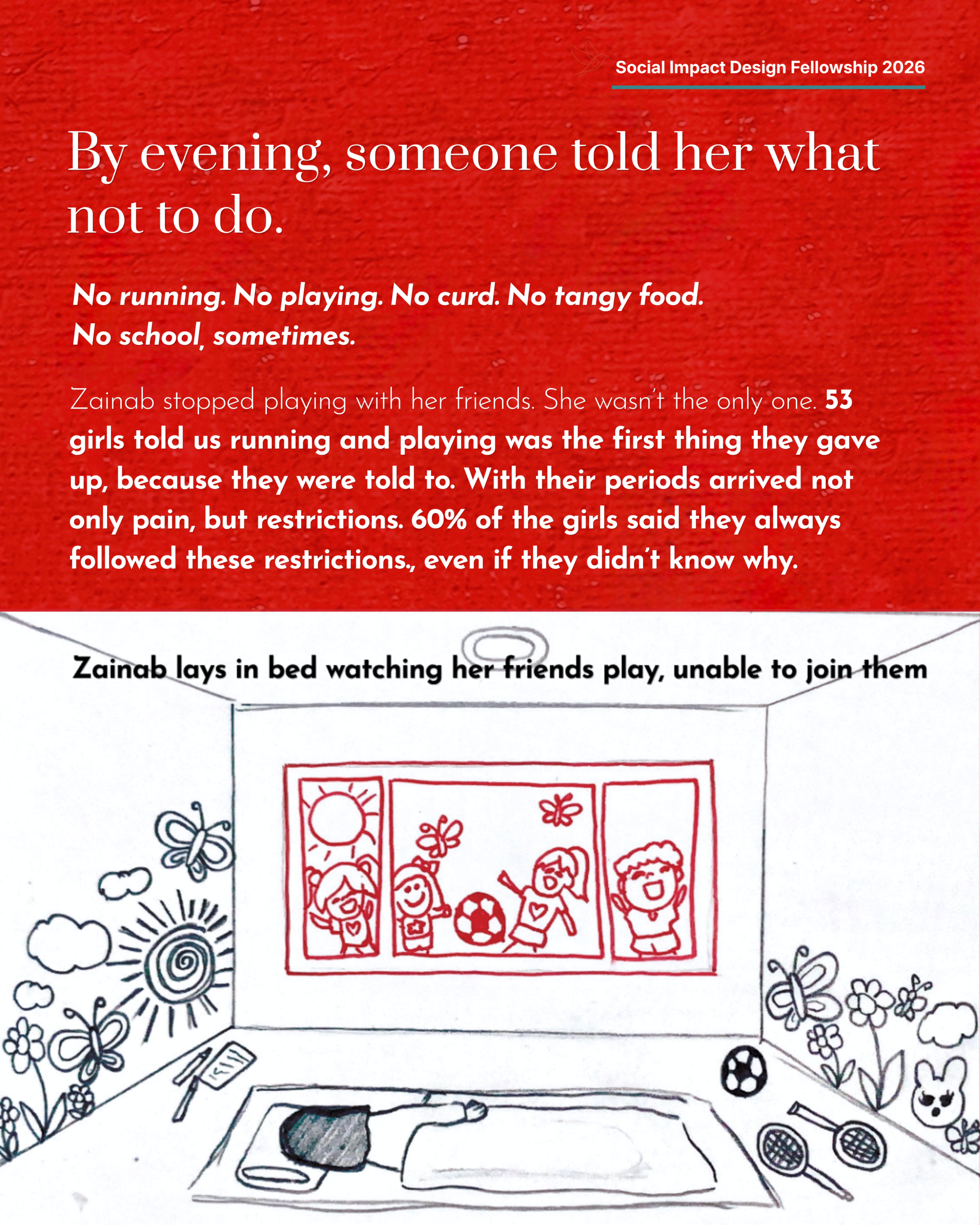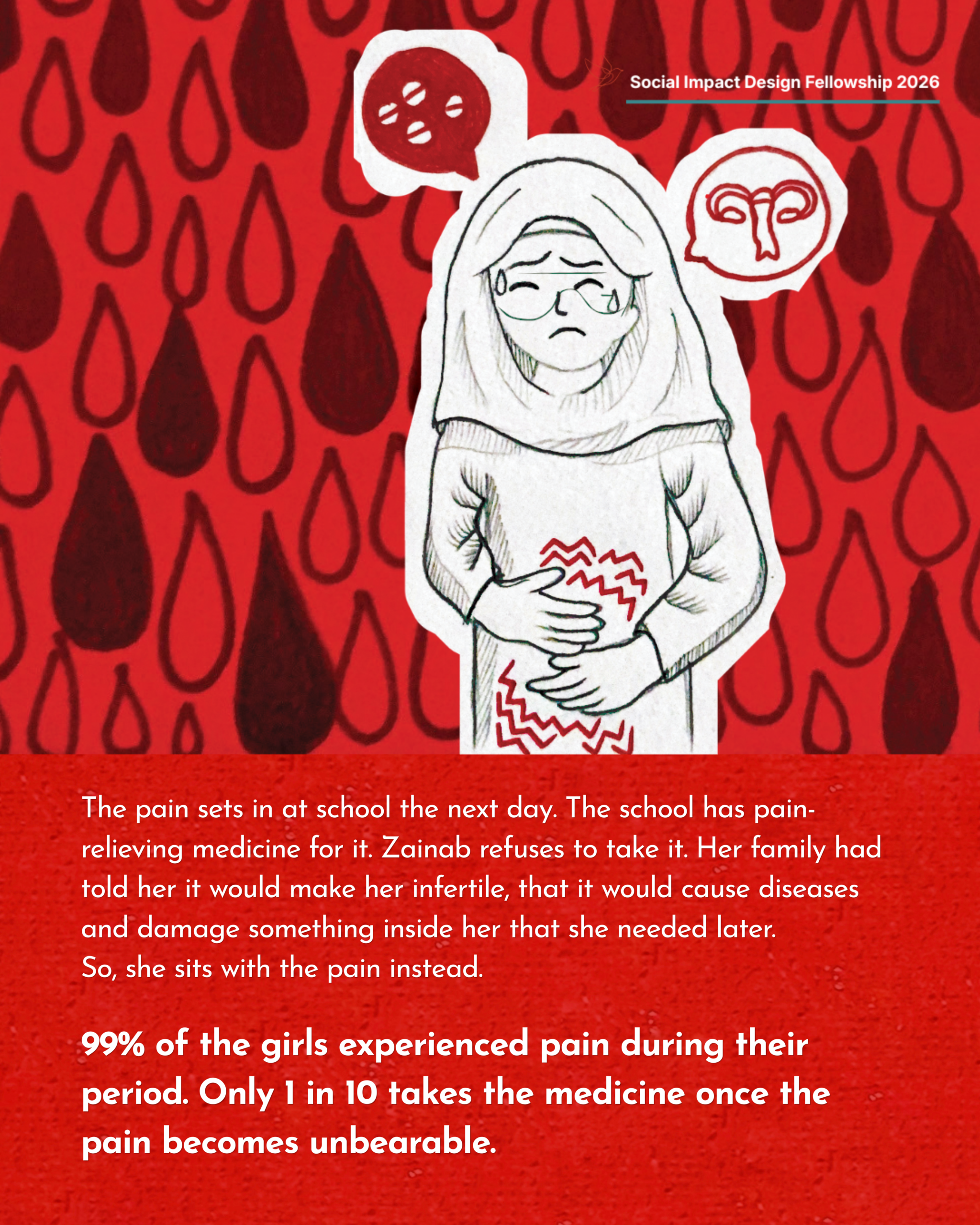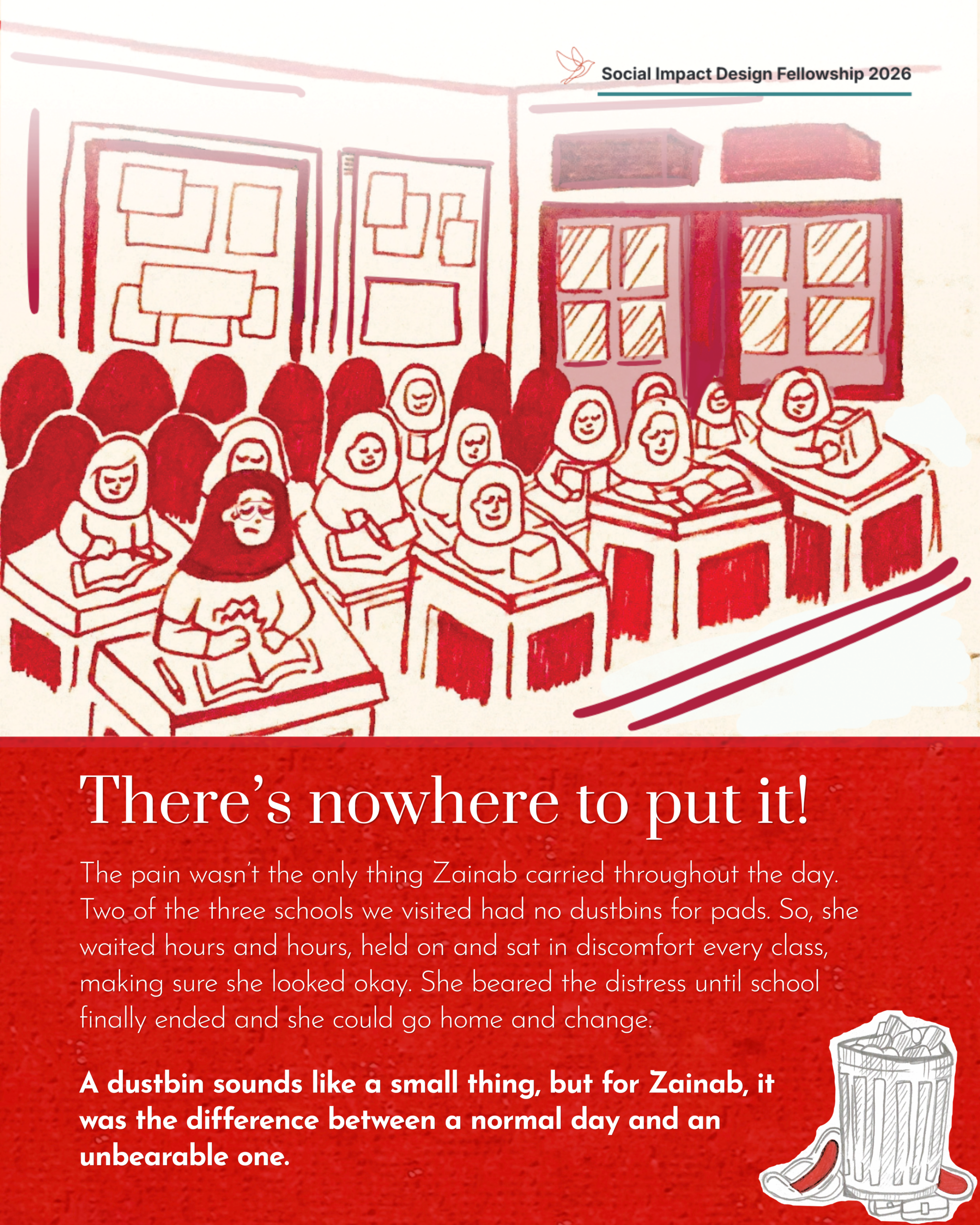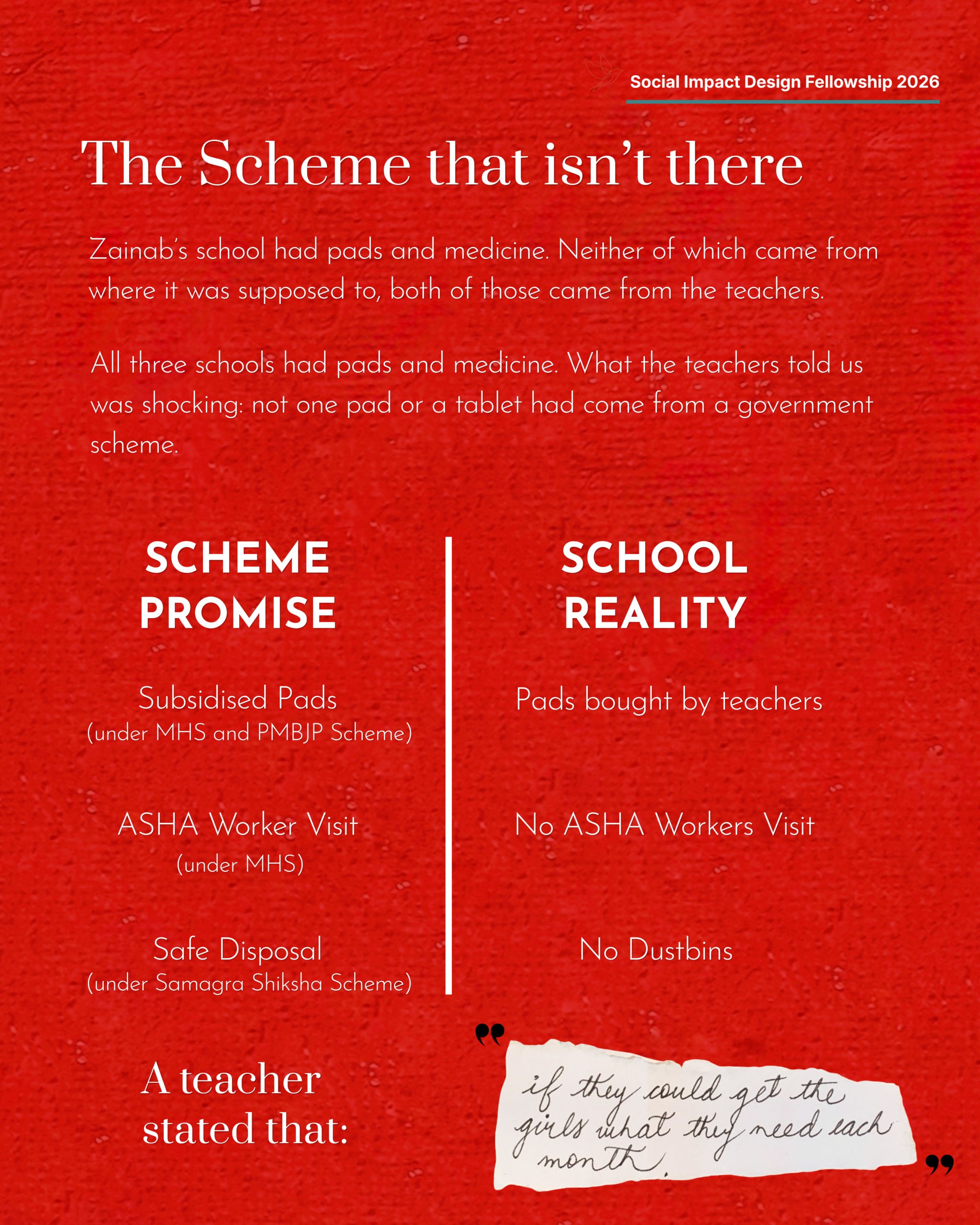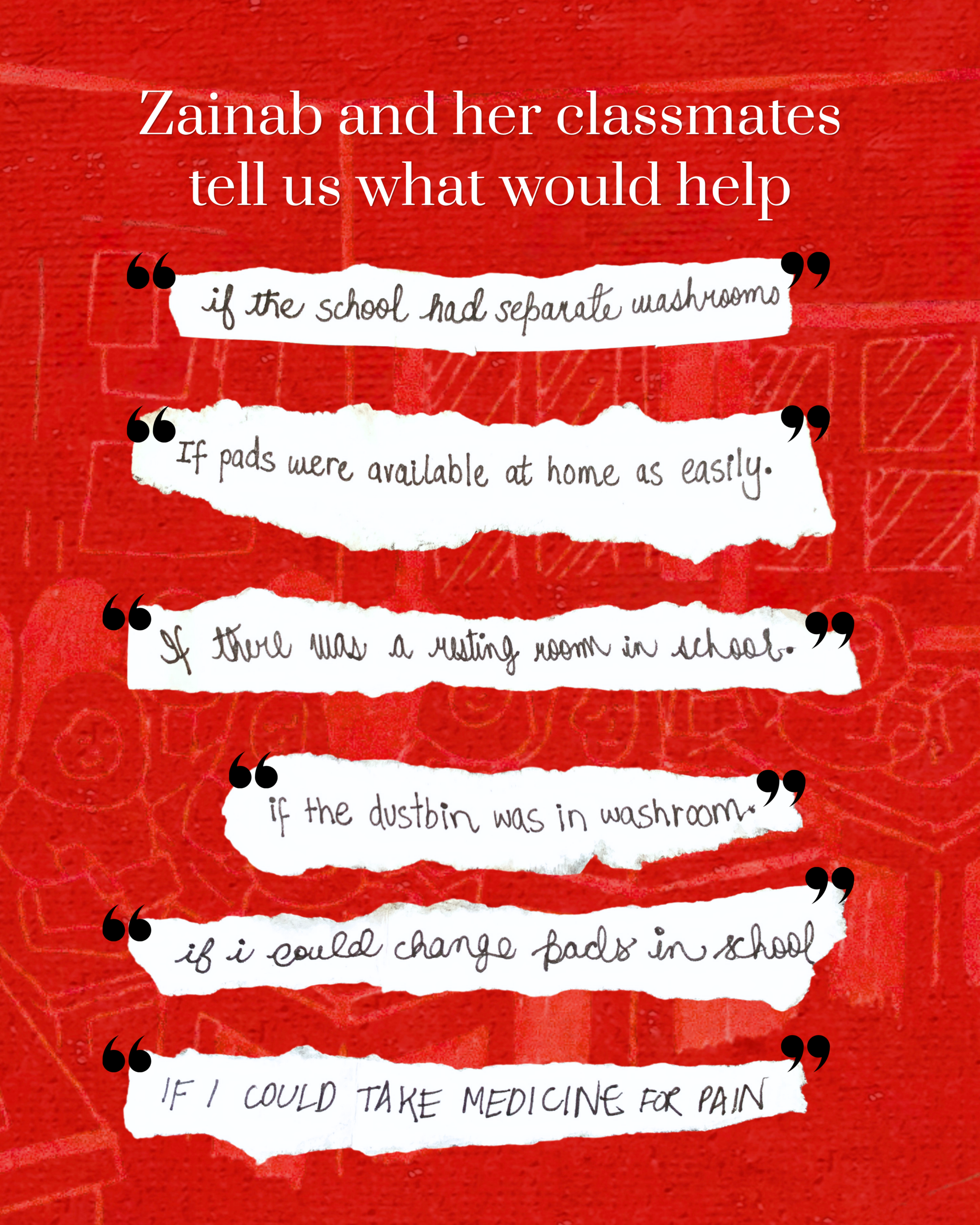
As part of the Social Impact Design Fellowship 2026, this project examines how socio-cultural taboos around menstruation affect adolescent girls and shape the uptake and implementation of menstrual health schemes in rural Kashmir, with a focus on Sopore. The study highlights how cultural restrictions, shame, medical mistrust, and gaps in the implementation of government schemes continue to influence girls’ menstrual health and education. It also draws attention to the need to understand menstrual health beyond the availability of sanitary products, by recognising the social and institutional barriers that shape girls’ experiences.
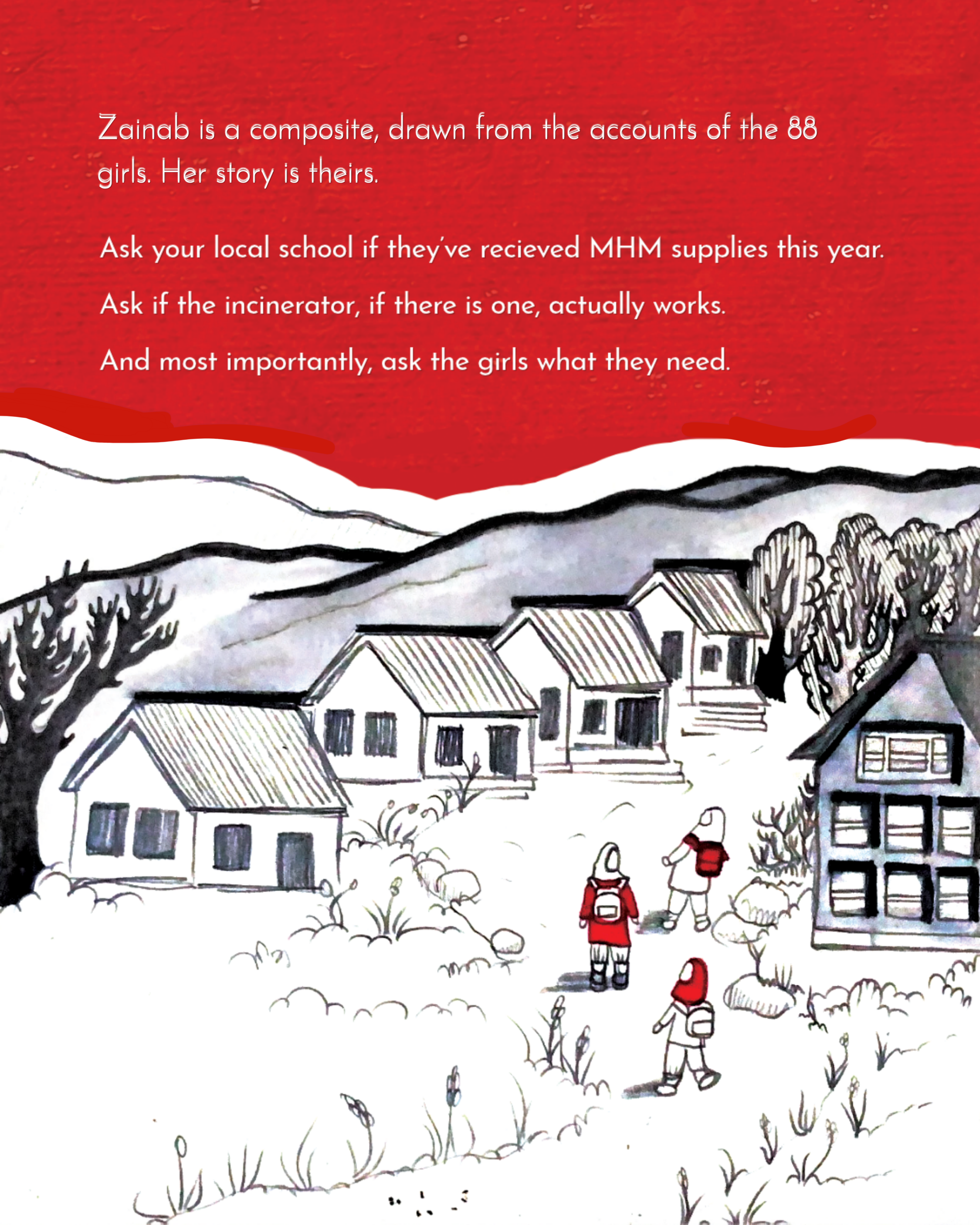
These findings have been translated into an illustrated visual series, using visual storytelling to make conversations around menstrual health more accessible and visible. The project highlights the importance of addressing both social taboos and governance gaps to improve menstrual health outcomes for adolescent girls.