Environment and Energy

Climate-Induced Internal Migration for Domestic Work in India: Gendered Pathways, Regional Dynamics, and Policy Responses

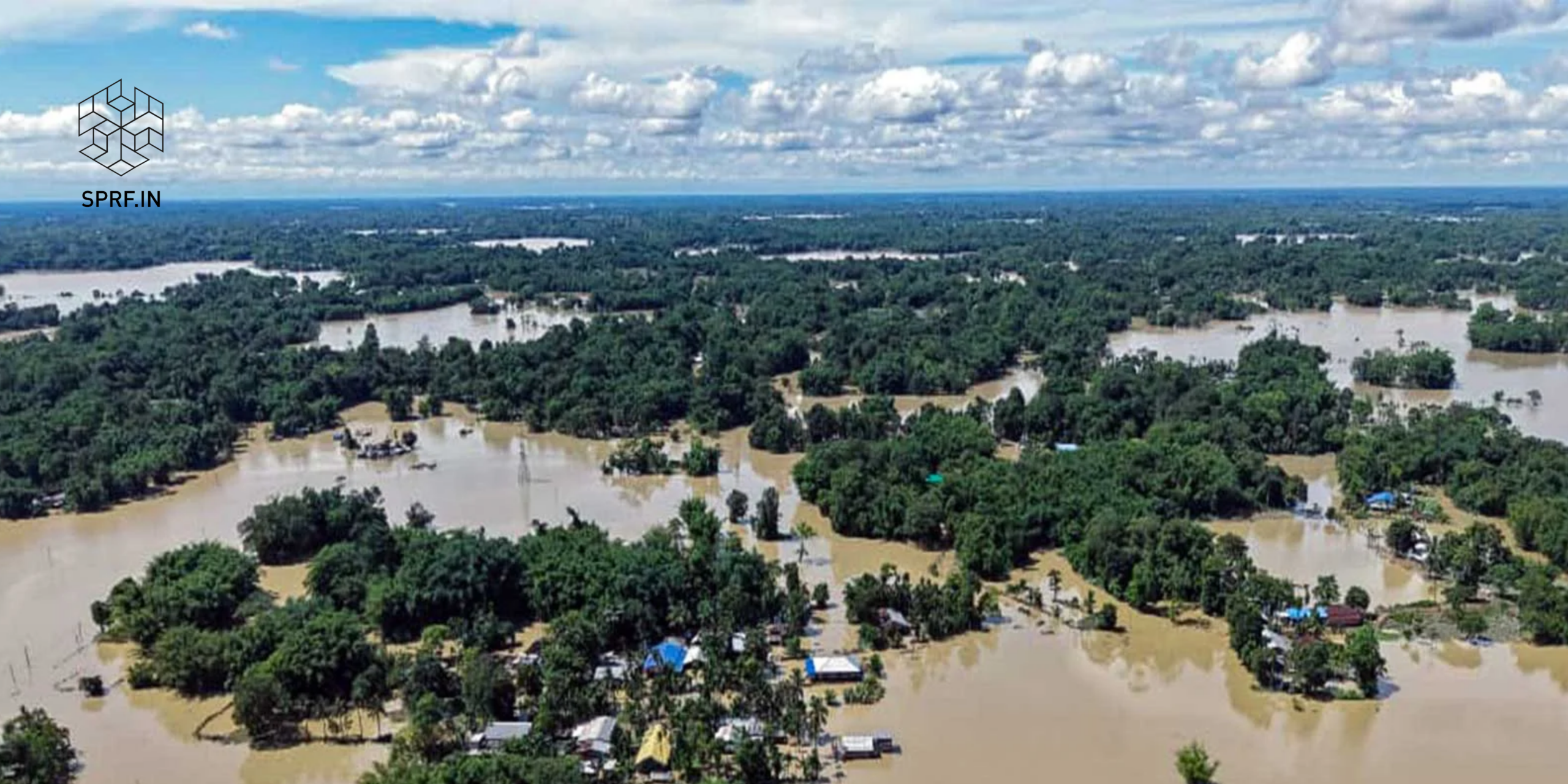
Abstract In India, internal migration for domestic work has emerged as a major form of feminised labour mobility, closely linked to the burgeoning impacts of climate change in affected areas, social marginalisation, and rural agrarian crises. The evidence from cyclone-affected coasts of West Bengal, floodplains of Assam, tribal tracts of Jharkhand, drought-affected Bundelkhand, and climate-affected […]

High Investment, Low Impact: Assessing the Cost-Effectiveness of Delhi’s CETP Network in Yamuna Rejuvenation (2015–2025)

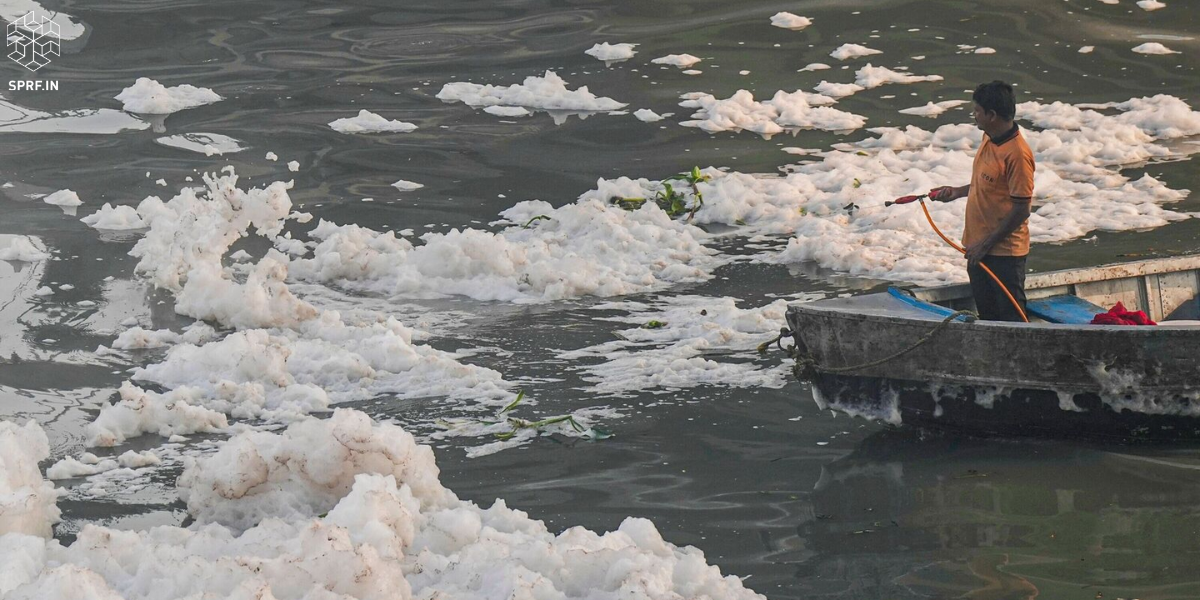
Abstract  The Yamuna River, spanning 1,376 kilometres from its source at Yamunotri to its confluence with the Ganga, faces a severe pollution crisis, particularly in its 22-kilometre Delhi stretch, which accounts for 79% of the river’s total pollution despite representing only 2% of its catchment area. Despite substantial budgetary allocations totalling ₹9,178 crores under the […]

Why do Najafgarh and Shahdara Dominate Yamuna’s Pollution?

Introduction The Yamuna’s pollution is largely contributed to by untreated sewage. It has been largely reported that the Najafgarh and the Shahdara drain contribute significantly to the pollution of the river along its Delhi stretch. The Najafgarh drain, which runs across the southwest part of the city, ultimately meets the river at Wazirabad. The Najafgarh […]

Community-Centred Approaches to Solid Waste Management in Delhi: Towards Inclusive, Sustainable Governance

Introduction Urban waste management is one of the most urgent challenges confronting India’s fast-growing metropolises, and Delhi represents the depth of this crisis. According to a recent life‑cycle assessment of Delhi’s solid waste management system, the city collects around 11,352 tonnes per day of domestic and commercial garbage, which in the absence of adequate segregation and […]

Case of the Great Indian Bustard

Introduction For many decades, in the quiet grasslands of western India, the Great Indian Bustard (GIB) has been disappearing. The GIB is a large bird of the bustard family, also known as one of the heaviest flying birds in the world.  The GIBs are tall omnivorous birds with long legs and distinctively long necks that […]

COP 30: Triple Adaptation Finance and Just Transitions

The Conference of the Parties under the United Nations Climate Change Conference met for the annual meeting in Belem between November 10 to November 22, 2025. In a time of climate uncertainty and a rapid call for urgency to recognize the urgency of climate change, the COP30 brings an opportunity for global collaboration and a […]

Intelligent Climate: Intersection of AI and Climate

Introduction The history of artificial intelligence is longer than the history of most modern democracies. Yet it was introduced to the public much later in the twentieth century. In 1950, the term Artificial Intelligence (AI) was discussed by an English mathematician and computer science pioneer, Alan Turing, in his paper on computer machinery and intelligence […]

Beyond Megawatts: Wind Energy and Just Transitions

Abstract  India’s rapid renewable energy (RE) transition, including the focus on solar and wind energy, is widely celebrated as a pathway toward low-carbon growth and energy security. The wind sector in India holds enormous untapped potential for energy transition. As government policies now focus on this growth potential, some challenges and constraints need to be […]