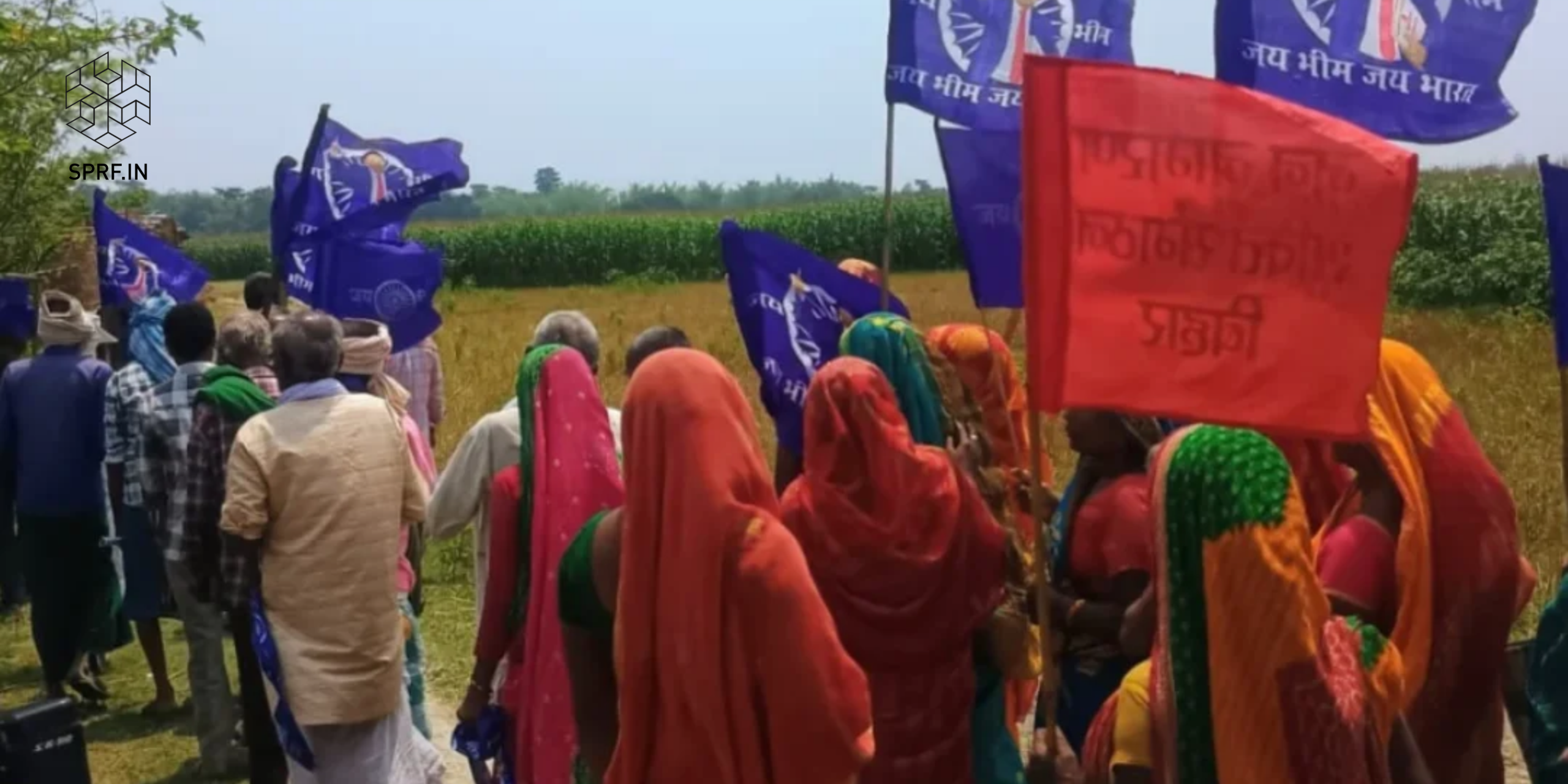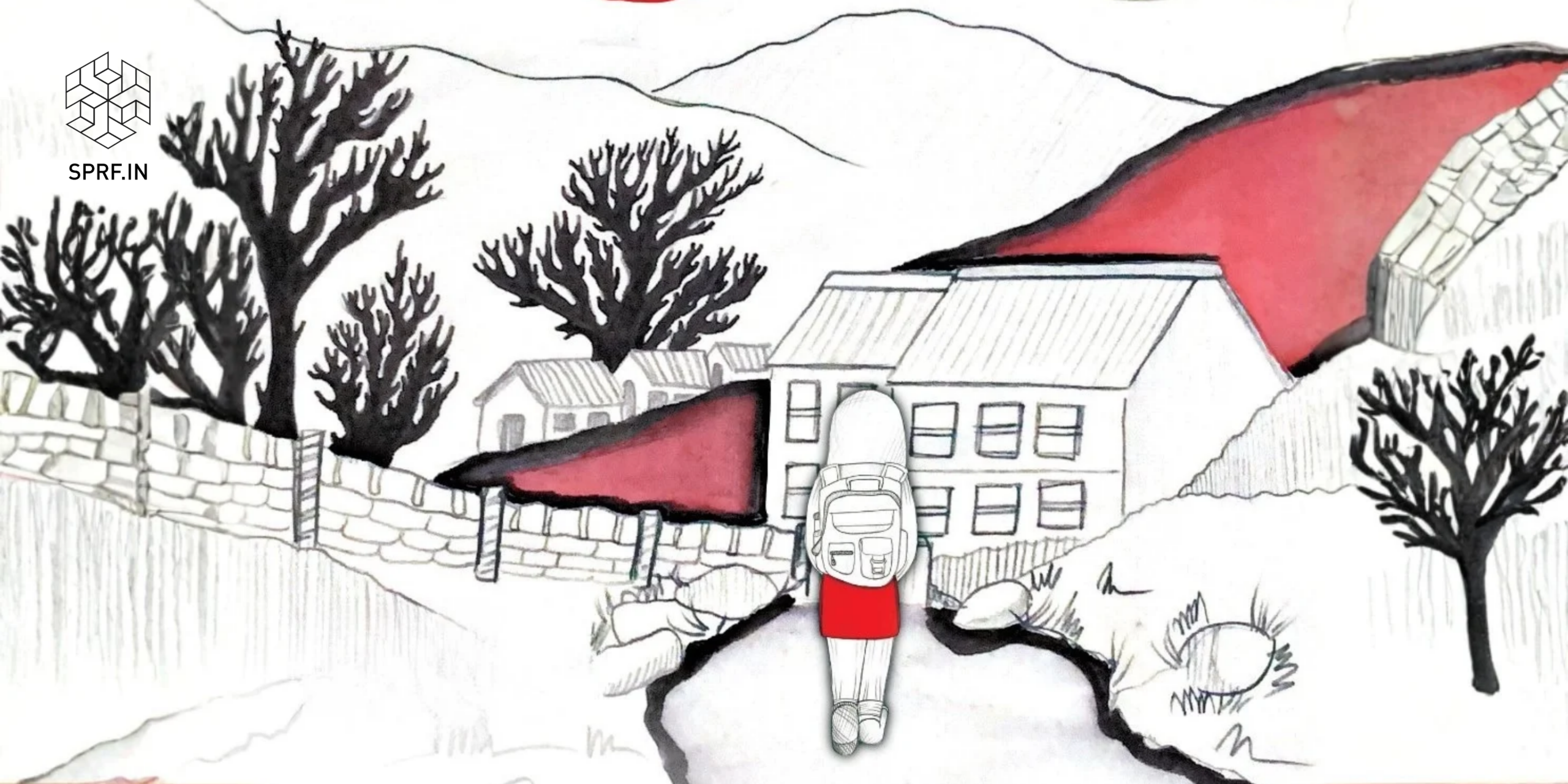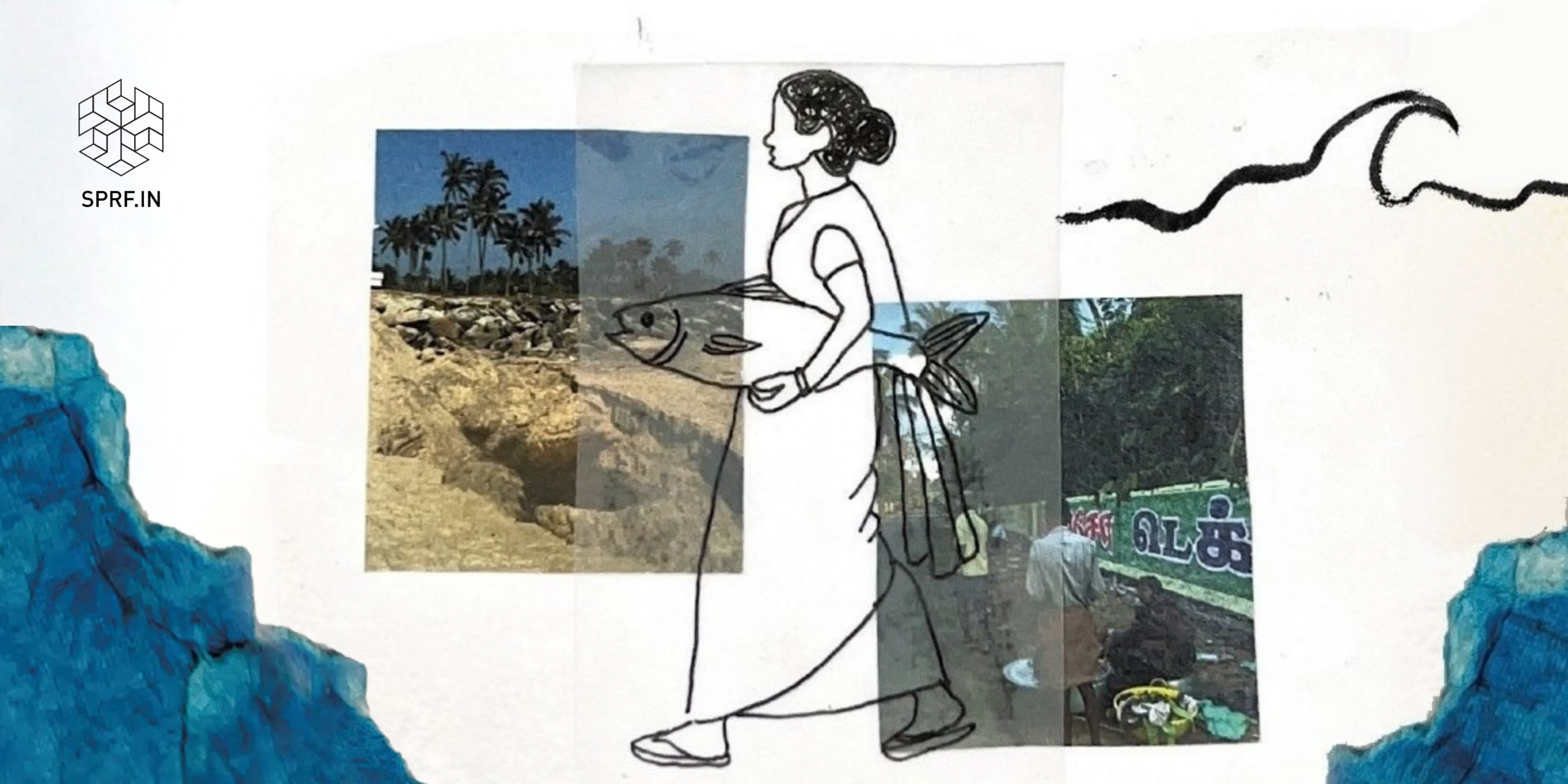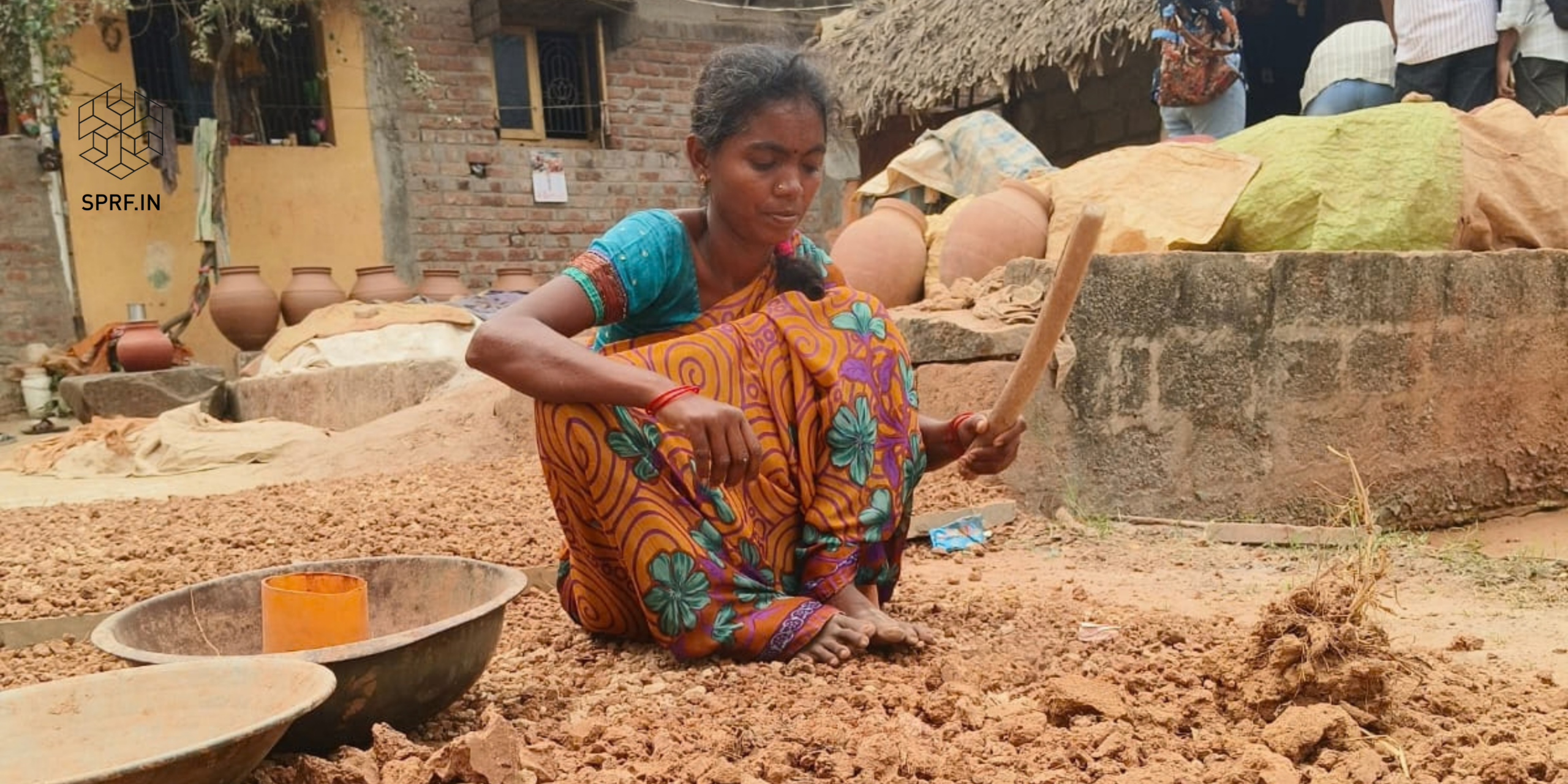
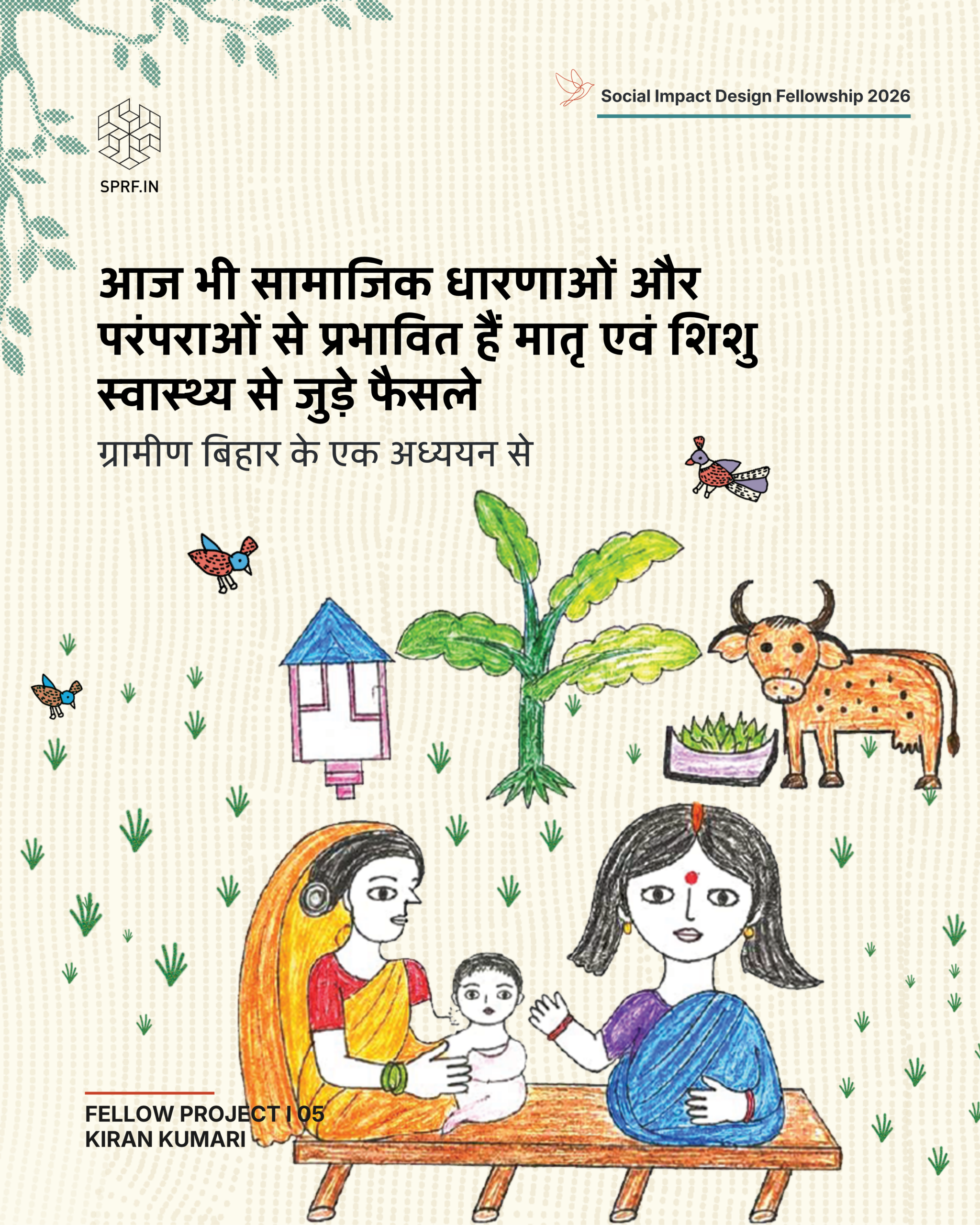
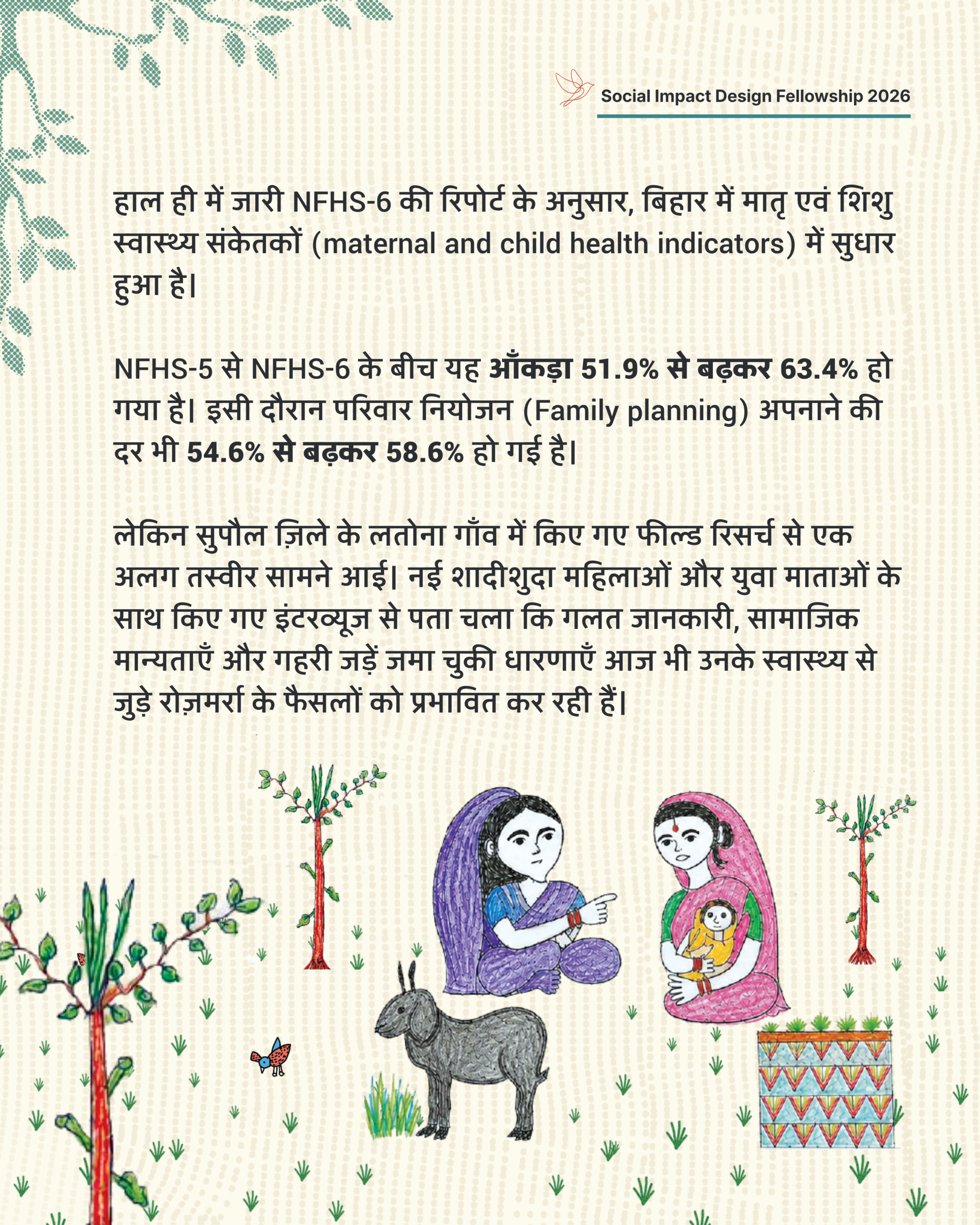
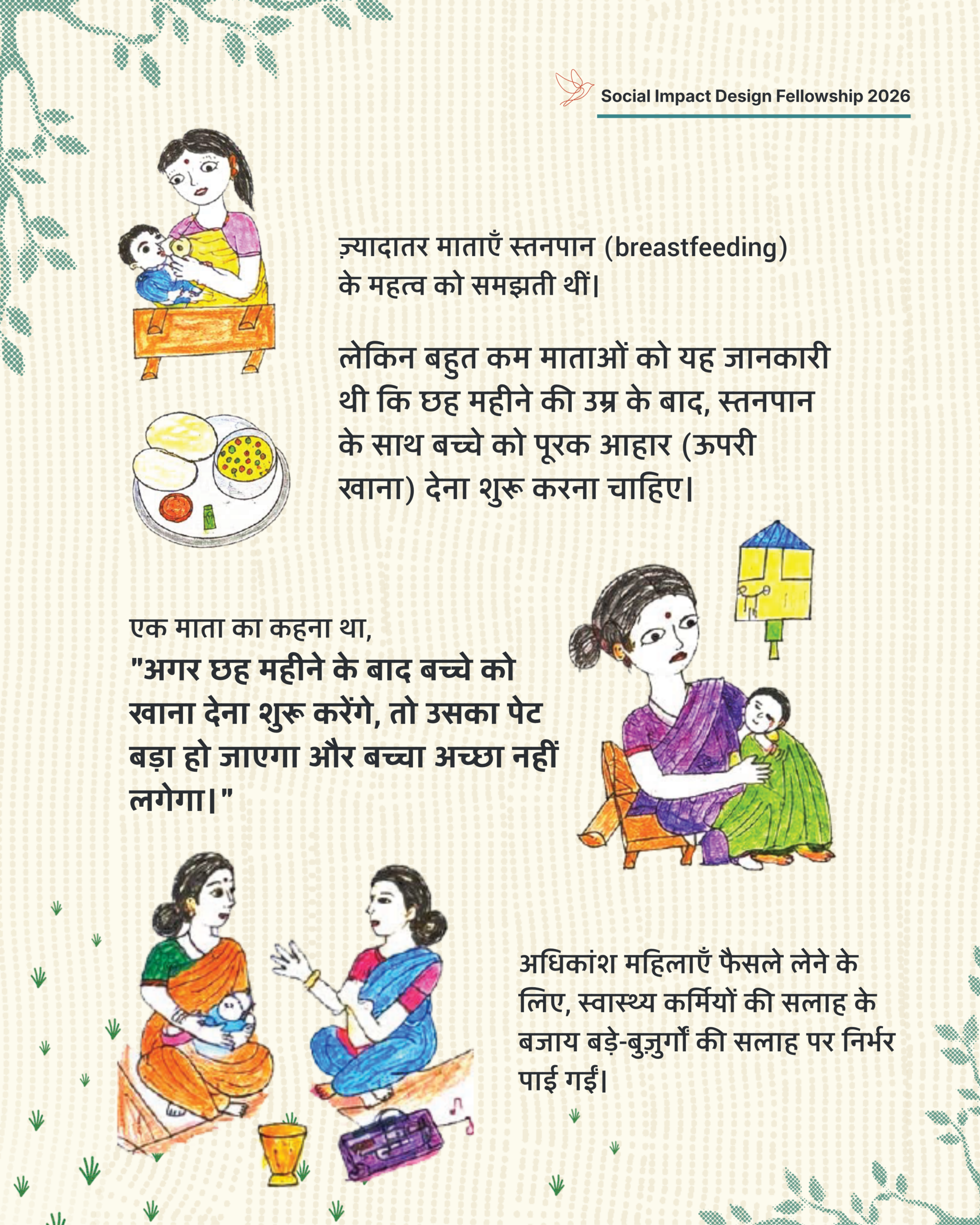
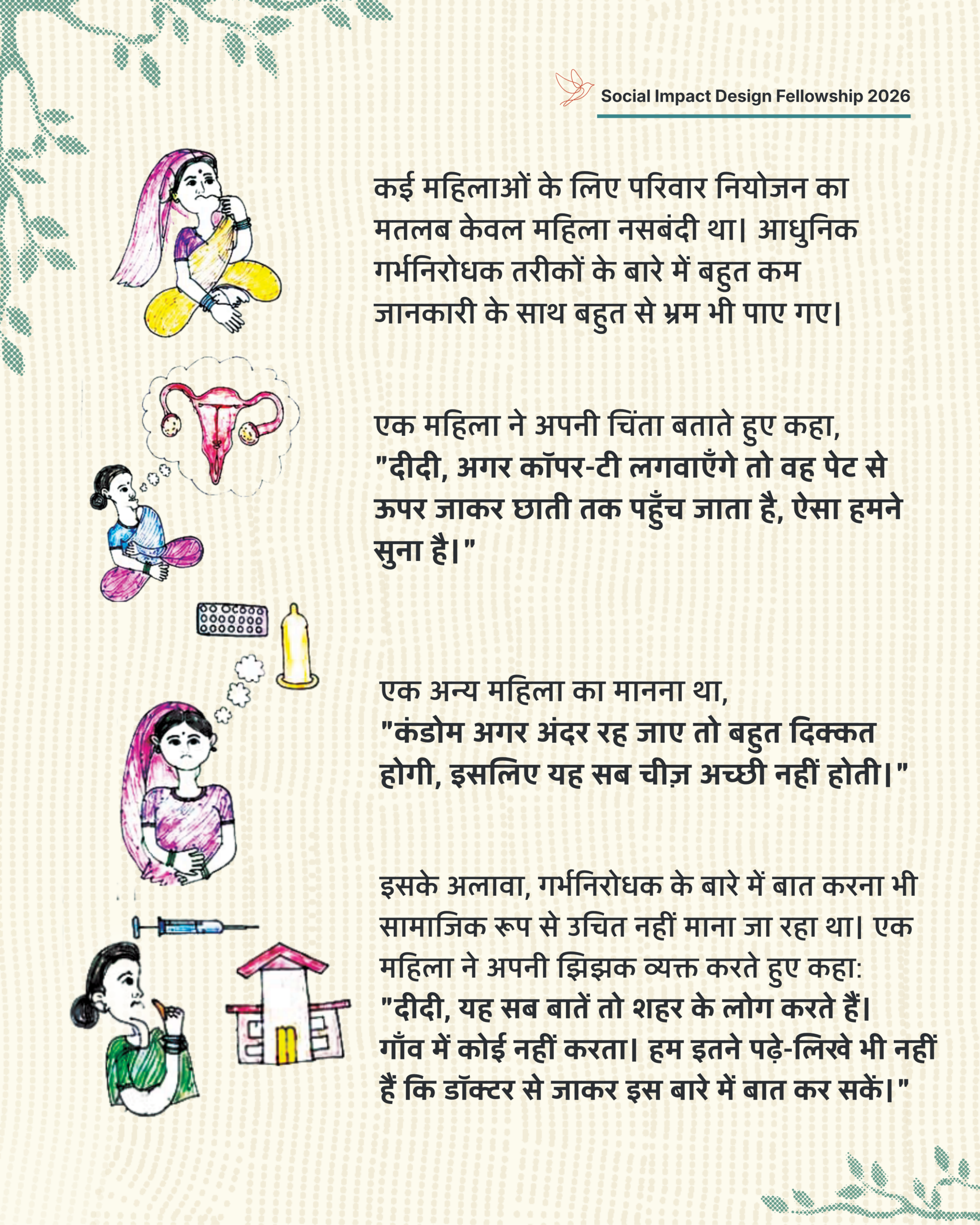
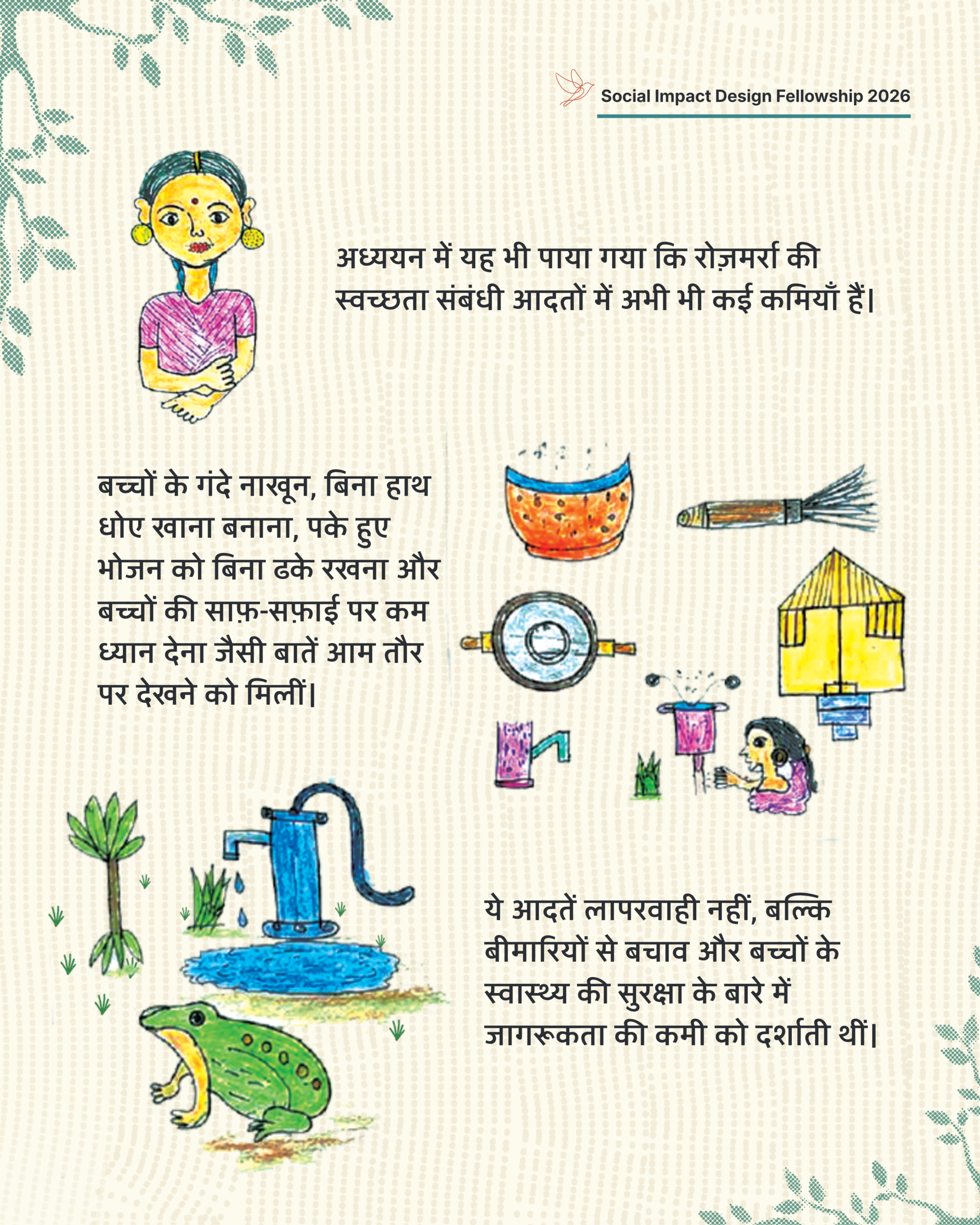
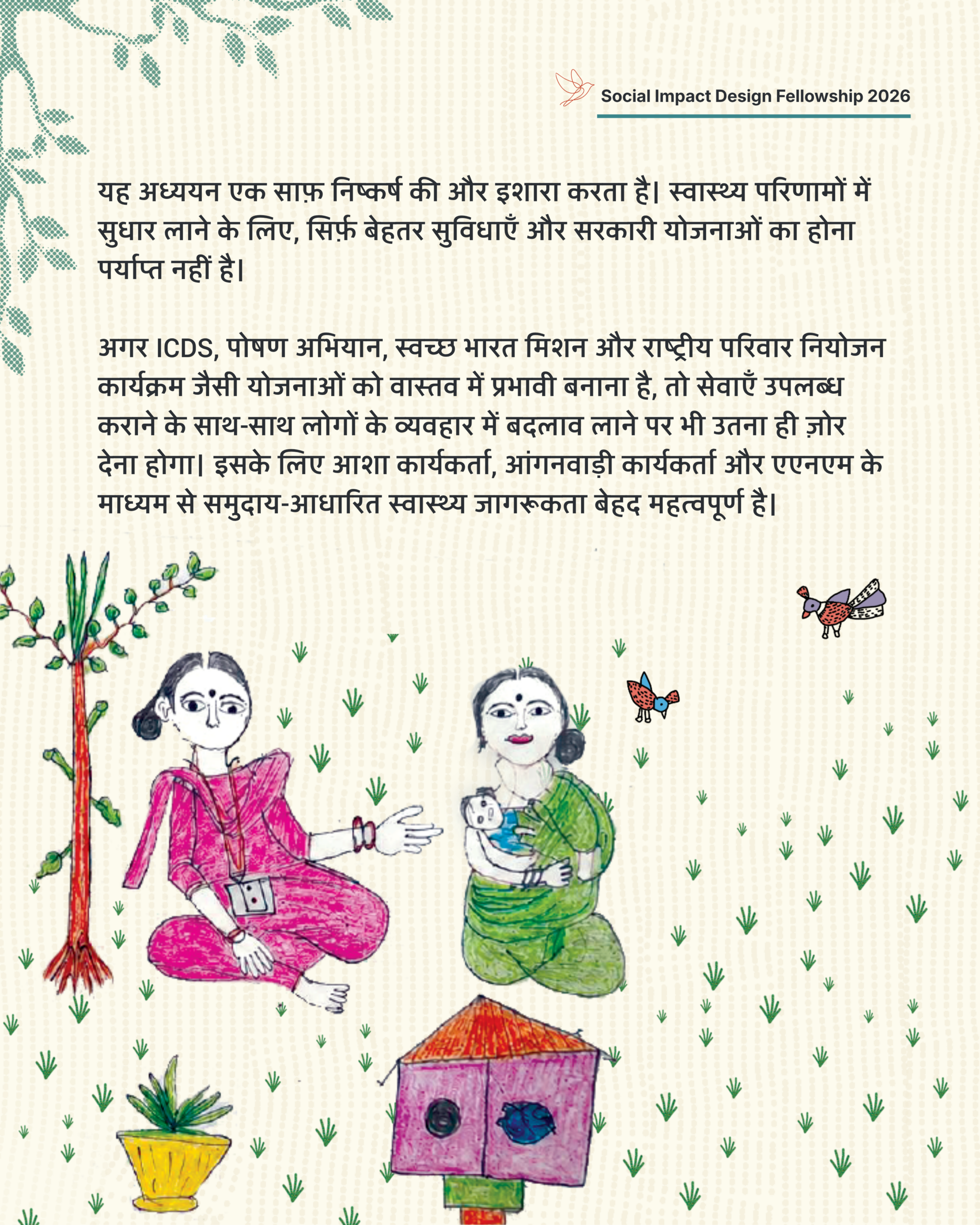
As part of the Social Impact Design Fellowship 2026, this project examines women’s knowledge, attitudes, and practices related to complementary feeding, family planning, and household hygiene in Latona village, Supaul, Bihar. The study highlights how cultural beliefs, misinformation, social stigma, and household decision-making influence maternal and child health practices, despite increased access to healthcare services and information. It identifies persistent misconceptions around infant feeding and contraception, alongside gaps in everyday hygiene practices. These findings have been translated into hand-made illustrations, using visual communication to make key health-related information and research findings more accessible. The project underscores the importance of culturally relevant health education and community-based communication in addressing misconceptions and promoting healthier practices.
To read the full paper, download the pdf from top right corner.