Introduction
“When I dried my fish under the sun, birds, insects, and dust spoiled it, and I earned very little,” says Premalata Behera of Maa Women Self Help Group, Dalimbapur village, Odisha (Ratha, 2025). Behera’s experience shows how inadequate post-harvest infrastructure can directly affect the quality and value of fish, raising broader questions about India’s fish processing infrastructure and the financing mechanisms available to improve it.
Post-harvest practices therefore have important implications for the value realised from the catch. Studies have found that losses in dried fish are higher in comparison to fresh fish at several stages of the supply chain. Significant losses have also been noted at the drying-unit level, totalling 58.07 percent. At the wholesale level (Table 1), the same study reported losses of 8.28 percent for dried fish and 2.17 percent for fresh fish, while at the minor retail level, losses were 6.43 percent and 1.89 percent, respectively (Srinath et al., 2008). These losses point not only to a need for better processing and storage facilities but also to the question of whether existing financing mechanisms enable small-scale actors to invest in such infrastructure. Other studies have also demonstrated losses and their drivers but don’t evaluate how existing policy instruments finance the necessary infrastructure (Diei-Ouadi and Mgawe 2011; Srinath et al. 2008).
Against this background, the paper examines whether formal eligibility for fisheries infrastructure finance ceases to be a productive possibility for improving processing infrastructure. The paper adopts a desk-based and national-level perspective and uses government scheme documents, official records, and secondary literature to appraise the financing architecture from the perspective of the entities that the government schemes identify as eligible borrowers.
The Current Reality
The Fisheries and Aquaculture Infrastructure Development Fund (FIDF) considers women, self-help groups, cooperatives, and collectives as eligible borrower categories. The criteria between eligibility and realization can be clustered into assets, which include land and margins; knowledge-based hallmarks such as preparing a feasible project report; and structural determinants like organizational form, lender appraisal, and project viability. These determinants have differential significance.
Evidence on the workforce relies heavily on the latest 2016 Marine Fisheries Census, and the Fisheries and Aquaculture Infrastructure Development Fund (FIDF) reporting does not routinely report gender-disaggregated projects even though women are heavily engaged in various post-harvest practices, including curing, processing, peeling, drying, and marketing fish. Women in small-scale fisheries often merge productive and domestic activities and according to the latest census data on marine fisheries, women account for 74.0 per cent of the workforce engaged in fishing-allied activities; of those, women make up 90.3 per cent of the workforce engaged in curing & processing and 94.6 per cent of those involved in peeling fish (Johnson et al., 2023).
Over the decades, the fishing sector has seen major government funding, modernisation projects, and technology integration. Yet, processing infrastructure remains inadequate, with only 330 curing yards and 352 peeling sheds in 3,477 marine fishing villages (Central Marine Fisheries Research Institute, 2016).
| Market channel | Fresh fish | Dried fish |
| Wholesale market | 2.17% | 8.28% |
| Minor retail market | 1.89% | 6.43% |
Table 1: Post-Harvest Losses in Fresh and Dried Fish, by Market Channel
Source: Adapted from Srinath et al. (2008) “Post-harvest losses in marine fisheries” Fishery Technology, 45(1), p. 112. Data collected in Ernakulam district, Kerala, in 2002
While existing literature provides evidence on different aspects of the problem, the evidence remains fragmented. Technology research shows that improved technologies help to reduce post-harvest losses, increase shelf life, and have been adopted by women’s groups (CIFT 2021; Ratha 2025) but says little about scaling. Gender research highlights the disproportionate role of women in post-harvest activities and their limited access to credit and other services (Johnson et al. 2023). Still, it does not establish a link between eligibility for financial services and actual receipt of a productive asset. This failure is not exclusion but the distance between formal eligibility and a completed asset and is administrative, which means it can be closed.
The Financing Funnel
By March 2026, 228 FIDF projects had been approved for funding, of which 111 had loans sanctioned and 68 had reached completion (Press Information Bureau 2026; Figure 1).
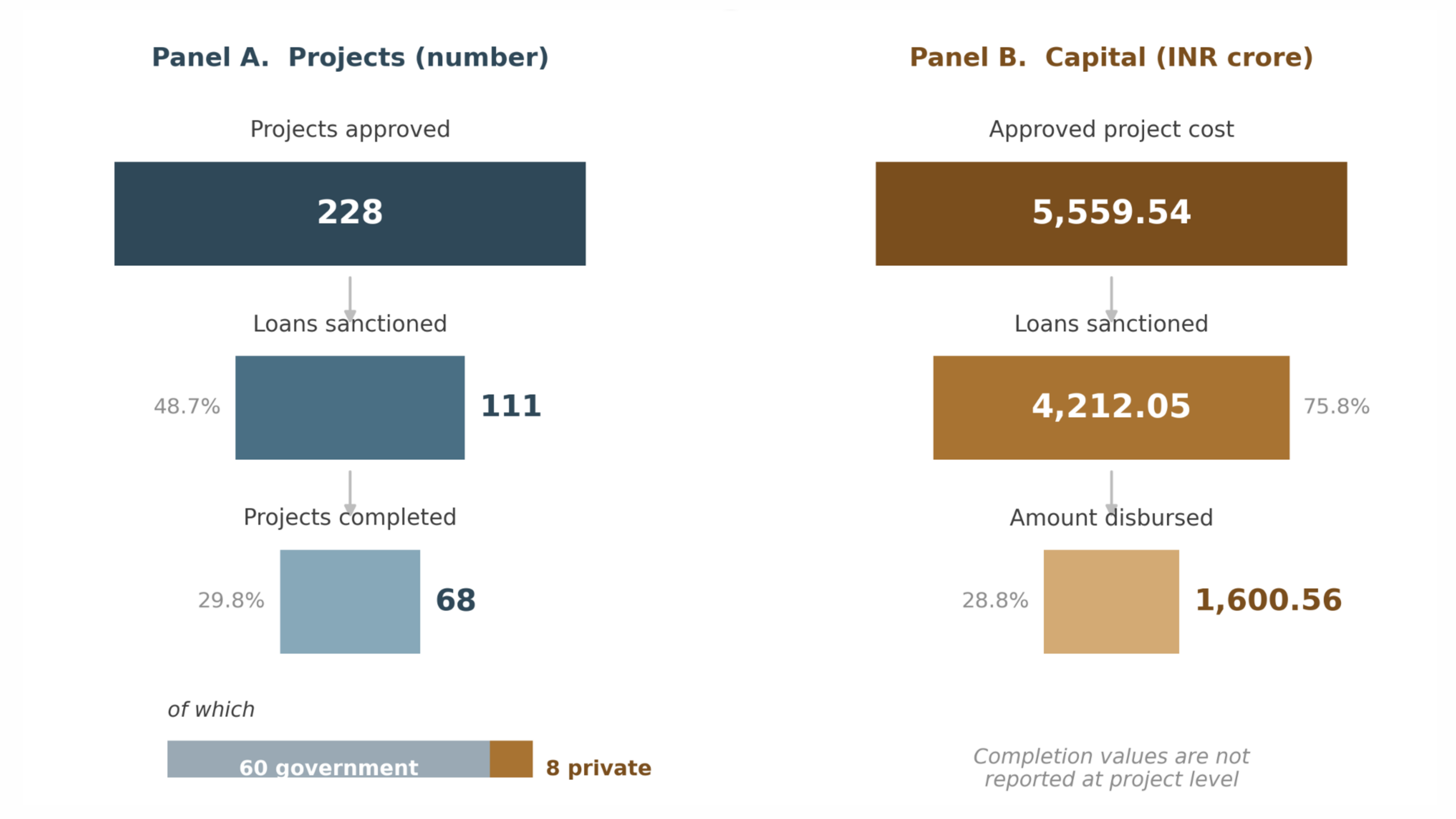
Figure 1 – Attrition in the FIDF Financing Sequence, March 2026
Note: Panel A reports project counts, and Panel B reports capital in INR crore. Percentages are shares of the approved baseline. Of the 68 completed projects, 60 were government projects and eight were private. Completion is not reported in value terms, and approval dates are not published, so a conventional completion rate cannot be calculated. Adapted from Press Information Bureau (2026).
The FIDF financing sequence contains three observable points of attrition:
- Approval to sanction,
- Sanction to disbursement, and
- Disbursement to completion
Tamil Nadu and Maharashtra, taken together, account for 150 approved projects, or 65.8 per cent. Their portfolios also differ sharply: Tamil Nadu has 101 government projects and 7 private projects, while Maharashtra has 36 private and 6 government projects. Maharashtra, Andhra Pradesh, and Jharkhand together account for 51 of the 95 private approvals.
Private applicants accounted for 42 per cent of approvals but only eight of 68 completed projects (12 per cent). The activity-wise allocation shows another skew. Fishing harbors and other harbour works account for ₹3,803.86 crore, or 68.4 percent of the approved project cost. Fish landing centers account for another ₹343.46 crore, bringing the total to 74.6 per cent. The fish-processing units comprise 15 projects worth ₹370.17 crore, with an average project cost of ₹24.68 crore,, while drying and curing are not specified as separate activity heads.
This distribution indicates a concentration of approvals within the reported FIDF portfolio but does not by itself establish whether this reflects differences in project pipelines, state-level implementation capacity, lender behavior, or infrastructure demand. Moreover, the official reports of project approvals from 22 states/UTs have no data available for 14 states/UTs. Among these are coastal jurisdictions of Andaman and Nicobar Islands, Lakshadweep, Dadra Nagar Haveli and Daman and Diu. The absence of data for these jurisdictions raises questions about the reasons for such gaps in reporting and whether they reflect a lack of approved projects, limited implementation capacity, differences in reporting practices, or other institutional factors.
Insufficiency in the Current Design
1. Conditions between eligibility and implementation: FIDF can provide concessional finance for eligible fisheries infrastructure; however, eligibility alone does not guarantee access to finance. Applicants must still satisfy a range of conditions associated with project financing, including availability of land, margin contribution, preparation of a technical and sound project report, and appraisal by the lending institution. Some of these requirements can be supported externally, yet they cannot provide land or the applicant’s own capital contribution. For small fisheries collectives, meeting these conditions can be particularly challenging and make it difficult to convert a potentially eligible project into a project that is actually financeable.
2. The role of institutions and handholding: Even if applicants meet the basic financing requirements, they can still struggle to obtain finance because the application process involves multiple institutions. For a given project, applicants may need to deal with fisheries departments and implementing agencies, as well as lending institutions, technical agencies, and various collectives. Each of these institutions may have its own role, documentation needs, or point of involvement. As a result, applicants must not only know what documents are needed but also which institution to contact. For small collectives with limited experience in administrative and financial matters, this institutional complexity may require several visits and follow-ups before they complete the application if no handholding is available.
3. PM-MKSSY and NFDP: Pradhan Mantri Matsya Kisan Samridhi-Sah Yojana (PM-MKSSY) offers an illustration of the limitations in the registration process without implementation support. Through the National Fisheries Digital Platform (NFDP), the government has generated a digital entry point for formalization and institutional credit. As of August 2026, 35.92 lakh stakeholders registered, and only 535 bank loans worth ₹28.04 crore had been sanctioned. These figures highlight that registration is not the same as finance. A digital portal can reduce the initial information and registration barrier, but it cannot itself prepare a bankable project, resolve missing documentation, or follow an application through lender appraisal.
4. The Data Gap across Schemes: Public systems record segments of the workforce, and each captures what the others do not. The NFDP is specific to fisheries but reports only registrations as individuals or organizations, while the Pradhan Mantri Matsya Sampada Yojana (PMMSY) measures beneficiaries and not the aided activities (Press Information Bureau 2025b)
Conclusion
There are gaps between formal eligibility for fisheries infrastructure finance and its transformation into a functioning productive asset. The evidence suggests the existence of a post-approval gap: FIDF approvals significantly exceed completed projects; private applicants account for about 42 percent of approvals but only 12 percent of completed projects, and approved investments are concentrated in large infrastructure and a handful of Indian states. The problem is therefore not merely the absence of schemes but the inadequate institutional bridge between eligibility, project preparation, financing, infrastructure, compliance, ownership and market return. To overcome these limitations, several policy changes can be done;
1. Publish financing- chain data; Publish data on financing disaggregated by gender, applicant type, entity form, activity, State/UT, sanction, disbursement, and project completion. This would enable policymakers to identify where and when women collectives or individuals enter, progress through, or exit the financing chain.
2. Extend appropriate margin support to eligible collectives. Review of margin requirements should be done for registered collectives that demonstrate productive activity but lack sufficient liquid capital for the initial contribution. DBT or working-capital support may help independent workers overcome immediate income constraints but should complement capital-asset finance.
3. Strengthen the self-help group (SHG)-to-first finance premised on project (FFPO) and handholding pathway. SHGs need to have a clearer pathway to FFPOs, and from there to Fisheries Departments, technical agencies, and lenders. A designated handholding support function should guide these groups through project report preparation, documentation, lender facilitation, and application follow up.
4. Create a producer-scale post-harvest finance category. The FIDF should create a specific financing category for hygienic drying, small-scale processing, handling, and packaging which are missing in the current system.
5. Link improvements in infrastructure to outcomes and control. Post-harvest credit-linked interventions should be linked to food-safety certification, testing, and other quality-control aspects. Programme-level monitoring must be undertaken on who owns, operates, and accesses assets, as well as whether women continue to control the produce and, by extension, the incomes. Future evaluations should track prices received, post-harvest losses, food-safety practices, and working conditions instead of simply using the presence of an asset as a sole measure of success.
6. External assistance can lessen the burden of coordination and technical work. This support could include identifying a suitable financing source, preparing project documentation, coordinating with government agencies and lenders, meeting appraisal requirements, and helping applicants find other funding sources when the main scheme does not meet the full project needs. A women’s group linked to the Nayarambalam Community Development Society in Kerala installed a solar-electric hybrid dryer with institutional support. Similarly, the Maa Women Self Help Group in Odisha obtained a solar tunnel dryer through partnerships. These interventions led to better prices and a longer shelf life, indicating that with external support, the applicants can navigate through several challenges from application to operational support.
7. Further research can identify which financing barriers are most common in women’s collectives, including those related to sanction, disbursement, and completion. There is a need to look at whether the completion of assets impacts prices, post-harvest losses, food-safety practices, working conditions, and whether women control productive assets and incomes.